When was the last time you were told a story?
Sharing stories is an art that is nearly as old as humanity. They can send our minds racing with excitement, our hearts pounding in suspense, our spirits aching for love. And yet, many of us still underestimate the weight that words can carry. Stories can help us grieve, hold onto hope, or process and make sense of the world. They can motivate and inspire us. And they can give us strength in our hour of need.
I held my grandpa’s cool hand in both of mine, resting my forehead on my thumbs. His breathing was labored, eyes mostly closed. How strange to wait in limbo with another person, waiting for something that you simultaneously want and don’t want to happen. Relief from years of confusion and pain, yes, but also the end of an era.

I come from a long line of proud Danish ancestors. Despite my mixed European ethnicity, I was most in touch with my quarter-Danish heritage growing up. My grandpa, Jorgen Fog, was born on a family farm in North Dakota, along with 6 other brothers and sisters. His parents, Peter and Karen (Bredkjaer) Fog, immigrated to the United States through Ellis Island, from their home in rural Denmark. Their story deserves an entire book.
When my grandpa was older, he and and his siblings organized family reunions with their children and grandchildren starting in the 1980s. Every three years, a different side of the family took turns planning and hosting the three-day gatherings. The family’s Danish heritage and stories were always central to these reunions, with joy and reminiscing for Peter & Karen’s children, as well as their own children and grandchildren in attendance. Even as a kid, I loved being connected to such a large family, even if we only saw each other every few years. Unfortunately, I was in Alaska for my second summer and missed what would be the final reunion.
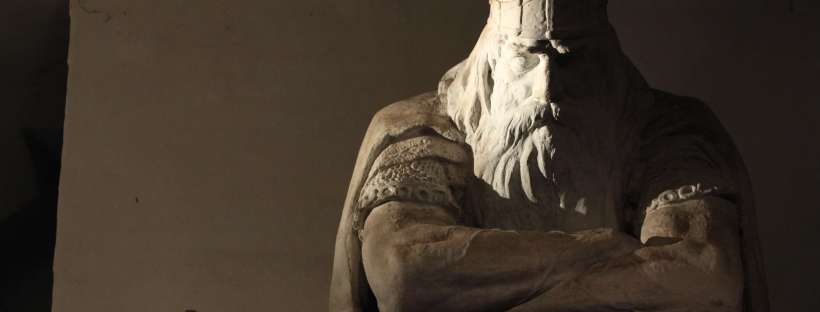
In the early 1990s, my grandpa traveled with my mom, aunts, and uncle to Denmark for the first time to see the land of his ancestors and to reconnect with his mother’s family that still lives there. Of the many places they visited, one place likely stood out as his favorite. Kronborg Castle sits overlooking a thin channel of water known as Øresund that separates Denmark from Sweden in Helsingør, Denmark. In the cool basement of the castle, the legendary Holger Danske sits sleeping in stone, waiting to save the country of Denmark in its time of need.
My grandpa was incredibly proud of his Danish heritage, and he never wasted a spare moment to tell his grandchildren stories of his Danish family using the photos on his basement walls. He was also a proud World War II Navy veteran and served on a minesweeper in the South China Sea. I wish I remembered more of it all.
His status as a navy veteran allowed him a place at the Veterans Home in Fergus Falls, Minnesota after a lengthy waiting list. He spent nearly three years there. One afternoon in February of this year, a nurse called my aunt and let her know that family may want to travel to see Jorgen Fog. My mom, Grandma, brother and I were able to pack everything up and make it there within six hours—luckily, I’d already been in St. Paul visiting family and was twice as close as my home in Madison, Wisconsin.
Grandpa was suffering from multiple bacteria infections, and though he was mostly unresponsive from his deteriorating dementia, he did look around at us from his bed. I went up to him and held his hand. One of the nurses took my mom to the door to let her know that Grandpa had told multiple nurses earlier in the day that he didn’t want to die alone. I could hear tears in the nurse’s voice.
Grandpa’s request did not strike me as unusual—who wouldn’t want someone beside them the moment they passed?—but it shook me to the core. I became acutely aware of the fact that at this stage in life, I could not do anything more for my grandpa than be there for him. It filled my heart with grief, but also conviction: if that was my grandpa’s dying wish, then I would be sure someone was always with him until the end.
In the moments I had alone with my grandpa that night, I held his hand and talked to him. I told him we were there, and that I was so lucky and grateful that he always loved me so much. I shared childhood memories, but mostly, I just sat with him. His eyes were usually closed, or barely open, like he was fighting falling asleep. He moved his arms around in the air a lot, either reaching for someone’s hand or to stretch them in front of him. I felt helpless being unable to communicate with him.
At one point, I was sitting beside him and my brother was standing behind me. Grandpa opened his bright blue eyes and his face broke into a wide smile. His hand gripped mine with a strength you wouldn’t expect.
“We’re here, Grandpa,” I said again. “It’s Lindsey and Justin.” His eyes weren’t open for long before he closed them again.
Justin and I stayed that night until 2 in the morning, then went back to the hotel while my mom slept at the Veterans Home in a gray recliner of my grandpa’s. The next day we were back early and spent most of the day in his room as other family members arrived throughout the day.
As evening set in on February 11th, most of my present family went to stay at my uncle’s lake house 45 minutes away, which he’d opened upon returning from Arizona where he spends the winters. I decided to stay with my mom and grandma, with grandpa’s wish still ringing in my ears. We were able to turn the super bowl on in his room, though it all felt very far away and surreal. My grandpa wasn’t sleeping, but also wasn’t quite awake or alert. His eyes had been heavy-lidded for many hours by this point, his mouth open all day as he breathed heavily.
I took my grandma to the hotel to settle her in again and returned to spend the night with my mom in grandpa’s room. Throughout the visit, we’d been calm and comforting, she and I, and I was proud of us for it. We were able to be the steady force that I would want by my bedside. I remember feeling remarkably composed for being on the verge of losing my first grandparent, but later that night I would text a friend that I could feel my armor cracking.
The nurses came in every couple of hours to rotate Grandpa and give him Tylenol for any pain. One young nurse talked to him while they worked, calling him “Grandpa”. It melted my heart. The care at this facility was beyond words. We could not have asked for more support, kindness, or understanding, and I am grateful. I know that there are many who are not so lucky.
Around midnight, the night nurse talked to my mom and I about hospice and morphine. I looked at my grandpa with worry. We couldn’t ask to be on hospice until the 6:30am day shift nurses arrived and it felt like it was going to be a long night. He was still getting Tylenol every four hours in applesauce, but the nurses showed us signs on his legs that his body was shutting down.
The aids brought in a rocking chair for me to sleep in, and my mom and I both faced Grandpa’s bed. Around 2:45am, my mom and I finally fell asleep in our chairs with Grandpa breathing loudly, still refusing to fully sleep with his eyes barely open. I gave my mom a coral throw we’d taken from Grandma’s apartment, and I used a white stiff blanket that the nurses lent me. I didn’t care that it was scratchy.
I didn’t wake up until around 4:30am. While we’d slept, the nurses had come in to adjust him again. They tried to give him Tylenol and applesauce, but for the first time, he didn’t take it. He also wouldn’t take any water from the pink flower-shaped sponge the nurses had used to moisten his mouth and give him water. At this point, his mouth had been open for more than 12 hours already.
I was so lethargic and drowsy that I nearly went back to sleep. But I looked up and saw that Grandpa was breathing more heavily now—his abdomen was working up and down with each breath, in addition to his chest. He was visibly worse.
I took a steadying, deep breath (don’t they say deep breaths are powerful?), stood up, and moved the small footstool my feet had been resting on over to his bedside. I sat down on the stool, remembering that it used to belong with a rocking chair my grandpa practically lived in in their basement throughout my childhood. My mom was awake in her chair just behind me, researching hospice and the effects—both positive and negative—of morphine.
I took his hand and closed my eyes, lowering my chin to my chest. His breathing was hard for me to watch. I worried he was in pain and we couldn’t get him extra pain relief until morning. As I held his hand, I told him, “We’re here Grandpa. We love you, and it’s okay.” It had become a mantra that my mom and I both repeated to him.
As I listened to his challenged breathing, all I could think was how much I wouldn’t want to be sitting—dying—in silence. How loud my thoughts and fears would be. But I felt like I’d already said all that I wanted to tell him, and my brain felt sluggish, making digging for childhood memories that I hadn’t called up in years challenging.
I’m not sure where the idea came from or what sparked it. I looked at my mom while holding my grandpa’s hand in both of mine and said, “I think I should read him a story.”
Maybe it was the hours I’d spent reading lengthy tales before bed to a small boy in Madison the past two years. My mom stared at me blankly, not in objection, but perhaps slight disbelief.
“Hans Christian Andersen,” I continued.
I thought of the blue-covered treasury of Hans Christian Andersen fairy tales that I’d loved being read as a child. As a Danish author, I was sure Grandpa had known some of his stories. I did a quick internet search and found a website with all of his stories, translated to English, for free. It was called “Project Gutenberg”, a plain white webpage with Times New Roman font. There was an index of more than 100 stories, and on first glance I recognized only a few: the little mermaid, the ugly duckling, the princess and the pea. I scrambled, not knowing which one I should start with, knowing that I would likely read many as night turned to morning. I handed my mom the phone and waited while she scanned the list. My heart was starting to thump heavier in my chest.
“Holger Danske,” she said. “My grandma used to read it to him and his brothers and sisters all the time when he was growing up.”
I thought of the proud sleeping Viking statue in the dungeons of Kronborg Castle, where I’d also had the chance to visit 10 years before—the folklore Danish hero that legend claimed would wake to save Denmark in its hour of need.
“Okay,” I said. Another quick breath. “Grandpa, I’m going to read you a story, and I think it’s one you know. It’s about Holger Danske.”
In Denmark there stands an old castle named Kronenburg, close by the Sound of Elsinore, where large ships, both English, Russian, and Prussian, pass by hundreds every day. And they salute the old castle with cannons, “Boom, boom,” which is as if they said, “Good-day.” And the cannons of the old castle answer “Boom,” which means “Many thanks.” In winter no ships sail by, for the whole Sound is covered with ice as far as the Swedish coast, and has quite the appearance of a high-road. The Danish and the Swedish flags wave, and Danes and Swedes say, “Good-day,” and “Thank you” to each other, not with cannons, but with a friendly shake of the hand; and they exchange white bread and biscuits with each other, because foreign articles taste the best.
I read aloud, timidly at first, and gaining quiet confidence with every turn of the story.
But the most beautiful sight of all is the old castle of Kronenburg, where Holger Danske sits in the deep, dark cellar, into which no one goes. He is clad in iron and steel, and rests his head on his strong arm; his long beard hangs down upon the marble table, into which it has become firmly rooted; he sleeps and dreams, but in his dreams he sees everything that happens in Denmark. On each Christmas-eve an angel comes to him and tells him that all he has dreamed is true, and that he may go to sleep again in peace, as Denmark is not yet in any real danger; but should danger ever come, then Holger Danske will rouse himself, and the table will burst asunder as he draws out his beard. Then he will come forth in his strength, and strike a blow that shall sound in all the countries of the world.
My voice sounded strange to my own ears. I didn’t know why I should feel self-conscious, reading to a dying man and my mother. But stories are somehow intimate, like a gift. Adults don’t read to each other as children are read to, but maybe they should.
“Holger Danske can appear in marble, so that people in all countries of the world may hear of the strength of Denmark.”
I smiled at that line, and looked over at my mom. She asked me to repeat it, and I did.
I looked back to my grandpa, and saw in shock that he had fully opened his eyes for the first time in more than a day. They were bright blue and so familiar to me as they scanned the room above me. He was also closing his mouth repeatedly in a proud and firm expression as he stared ahead. My heart clenched in my chest.
I looked back at my mom. “His eyes are open.” She looked over in surprise and set her tablet down. I continued reading, still holding my grandpa’s hand.
And Holger Danske did dream of the little humble room in which the image-carver sat; he heard all that had been said, and he nodded in his dream, saying, “Ah, yes, remember me, you Danish people, keep me in your memory, I will come to you in the hour of need.”
I continued reading until the end of the story, with Grandpa’s breathing calming as we reaching the end.
The bright morning light shone over Kronenburg, and the wind brought the sound of the hunting-horn across from the neighboring shores. The ships sailed by and saluted the castle with the boom of the cannon, and Kronenburg returned the salute, “Boom, boom.” But the roaring cannons did not awake Holger Danske, for they meant only “Good morning,” and “Thank you.” They must fire in another fashion before he awakes; but wake he will, for there is energy yet in Holger Danske.
Tears welled in my eyes as I read the final words and looked up at my grandpa, still holding his left hand in mine. His eyes were closed finally, his breathing calm and slow. I looked over to my mom with worry and she joined me by his side. He took a deep breath, and we told him that we loved him, were were here, and that it was okay. Grandpa took another deep breath, then another. Mom and I looked at each other. There was a long pause, and then a handful of breaths, as if he were floating off into sleep. He paused, and I counted the seconds this time. Mom and I relaxed our grip on each other as we realized that he was gone.
It’s hard to overstate the intense energy that my mom and I felt together as my grandpa took his final breaths. I felt like my spirit was vibrating with the power of something greater than me, and at the very least, I believe we were feeling the power of human connection. It is not an exaggeration to say that after days of fighting the end, my grandpa died less than 3 minutes after hearing the final words of the story, and I do not believe the timing was a coincidence. It was as if Holger Danske sent him back to Denmark, or perhaps, to a small farm in Lisbon, North Dakota, where he was one of seven children huddled around a Danish mother, listening to a story of a Dane protector that would forever watch over their homeland.
My mom pulled me into a hug as I released my grandpa’s hand, and told me over and over she was so proud of me. My legs were shaking and we had tears streaking our cheeks. The rest of the day passed in a blur. All of my cousins were able to attend the veteran Honor Walk ceremony, where my grandpa’s body was covered in an American flag and taken through the center’s halls lined with staff and residents saluting my grandpa. Our family followed him to the front hall, my grandma in front, where the chaplain said a prayer and a resident played taps on a digital bugle.
The way I crumpled over the next few days made me question how long I really would have been able to sit calmly by my grandpa’s bedside. Even with those doubts sneaking into the corners of my mind, I know in my heart that I would have continued as long as I could. I had recognized it was all I could do, and I hated feeling helpless.
My grandpa was 97 years old. He loved his grandchildren and spent time fishing, playing games, watching cartoons, and driving them through the neighborhood in his pristine Model-A car. He and my grandma were married for 70 years and made it to nearly all of our orchestra concerts and many of my brother’s hockey games.
Grandpa had dementia for five years, so it had been some time since he was a constant presence in my life. The family had experienced the worst of it while I’d been traveling and working seasonally after graduating from college, but once he’d arrived at the Veterans Home, he’d been well taken care of. He loved playing bingo more than anything, and was in a club of just a handful of World War II veterans that dubbed themselves the “Last Man Standing Club”. My grandpa was the treasurer, even though they didn’t have any money.
Weeks later, my thoughts keep turning back to those final words of Hans Christian Andersen’s legend. I may not have the answers of the world, but there is something I now believe more firmly than ever: our words carry such power, and so do our stories.
But the roaring cannons did not awake Holger Danske, for they meant only “Good morning,” and “Thank you.” They must fire in another fashion before he awakes; but wake he will, for there is energy yet in Holger Danske.
Hans Christian Andersen

In loving memory of Jorgen Fog
January 23, 1927 – February 12, 2024


Lindsey, I am very thankful that you have documented Dad’s passing in such away for all of us to experience that early morning hour with Dad, your Mom (Michelle) and you. Based on this writing, I strongly believe that Holger Danske was there to be along side Dad and guide him home. Holger Danske also is very proud of you and has blessed you for guidance with Grandpa’s (Dad’s)passing. Grandpa is smiling with you today and every day when you are thinking of him.
Skol …… Thank You Z!!!!
LikeLike