For as long as I remember, the thought of time slipping away like sand through my fingers has always unsettled me. On a trip across the world, it can be even harder to stay present in the moment without getting caught up in where you are heading next or how quickly the days are passing. Our time in Patagonia proved no different, but I did my best to push back against the worry of fading time. I practiced appreciating the journey instead of always looking toward our next destination. Easier said than done.
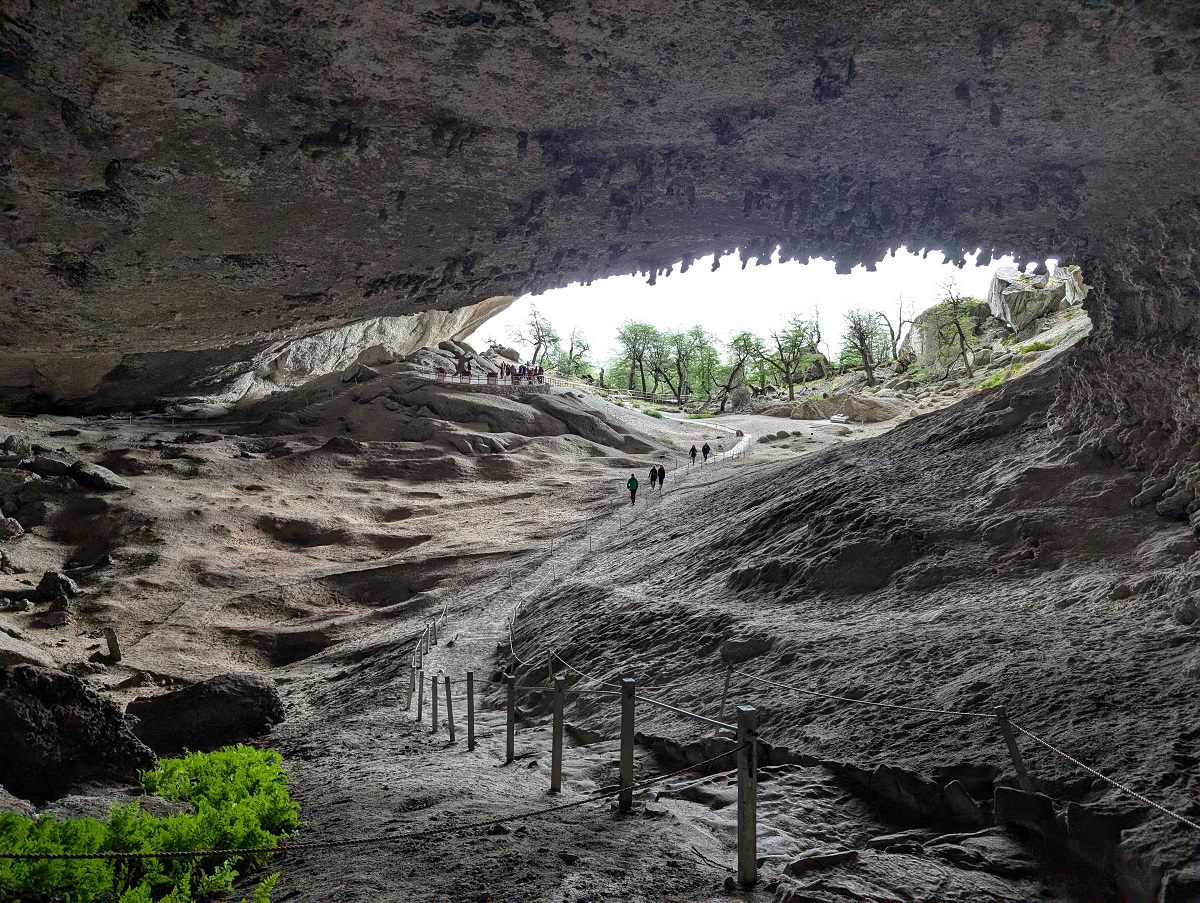
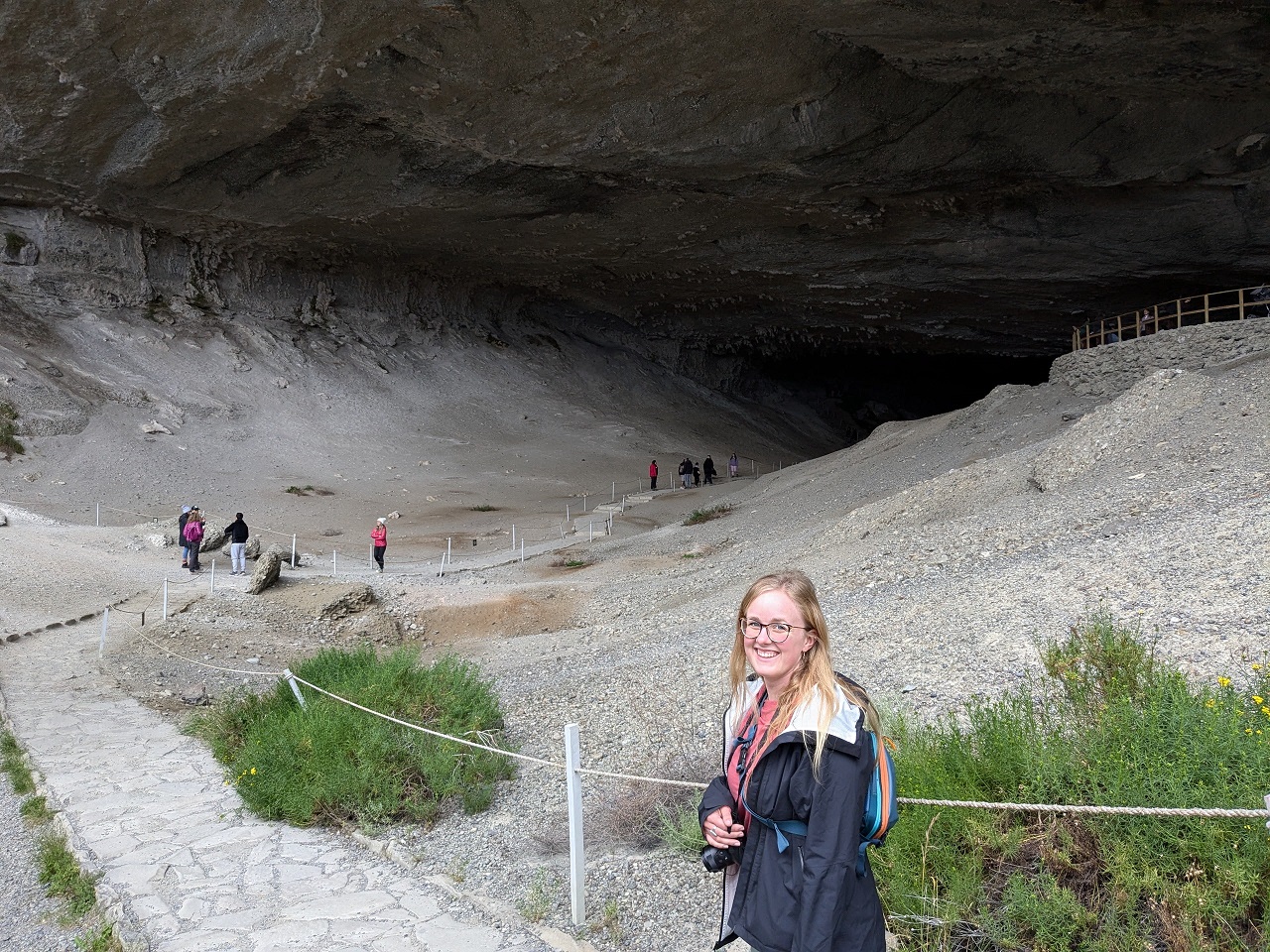
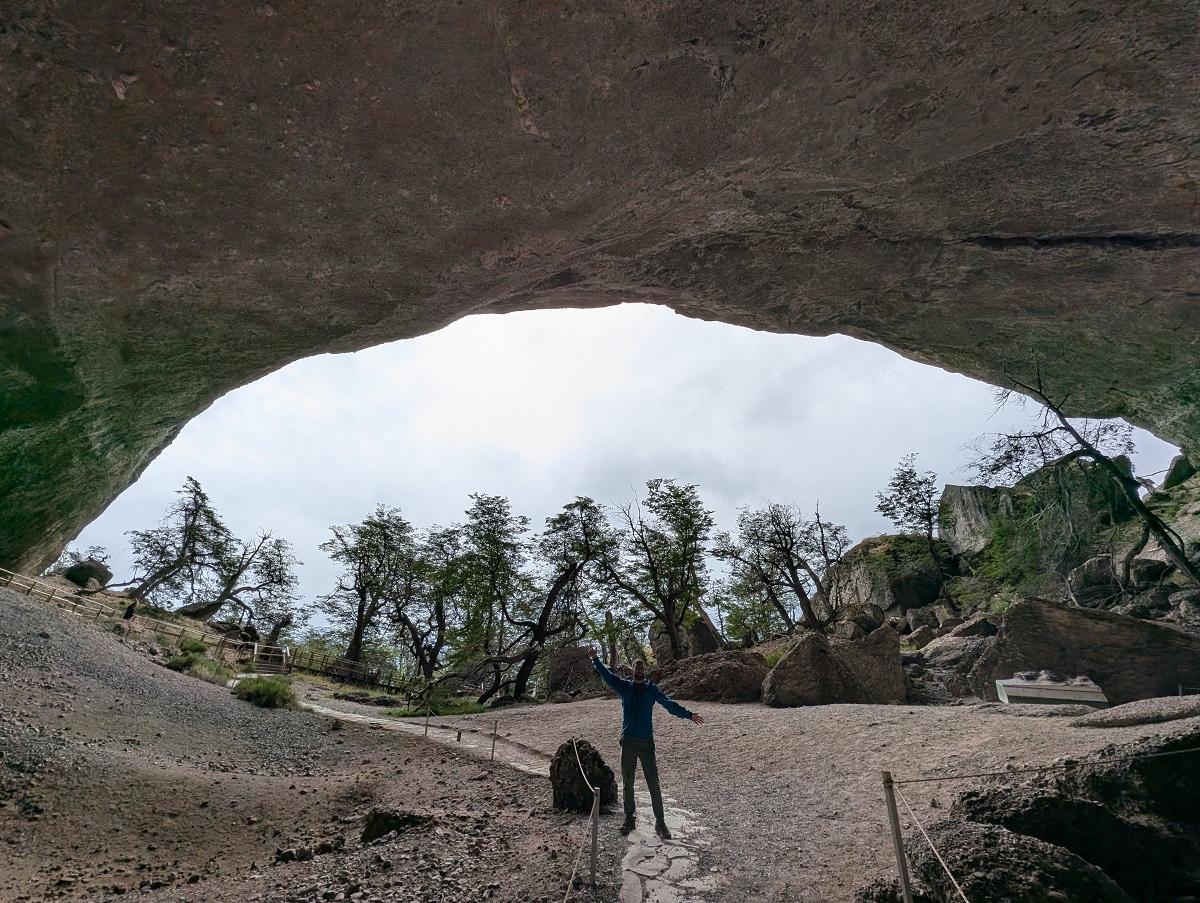
On our way south from Torres del Paine National Park, we stopped at La Cueva Milodon on our way to Puerto Natales. In the late 1880s, a still-furry skin of a giant sloth (or mylodon) was discovered in the cave, remnants of the ice age. The cave was carved by crashing ocean waves when the surrounding area was surrounded by water. John, whose enthusiasm is normally more of a slow-burn than my firecracker-style of passionate excitement, walked through the cave with wide eyes and an ever wider smile, stalactites hanging down from the conglomerate sedimentary rock ceiling above.
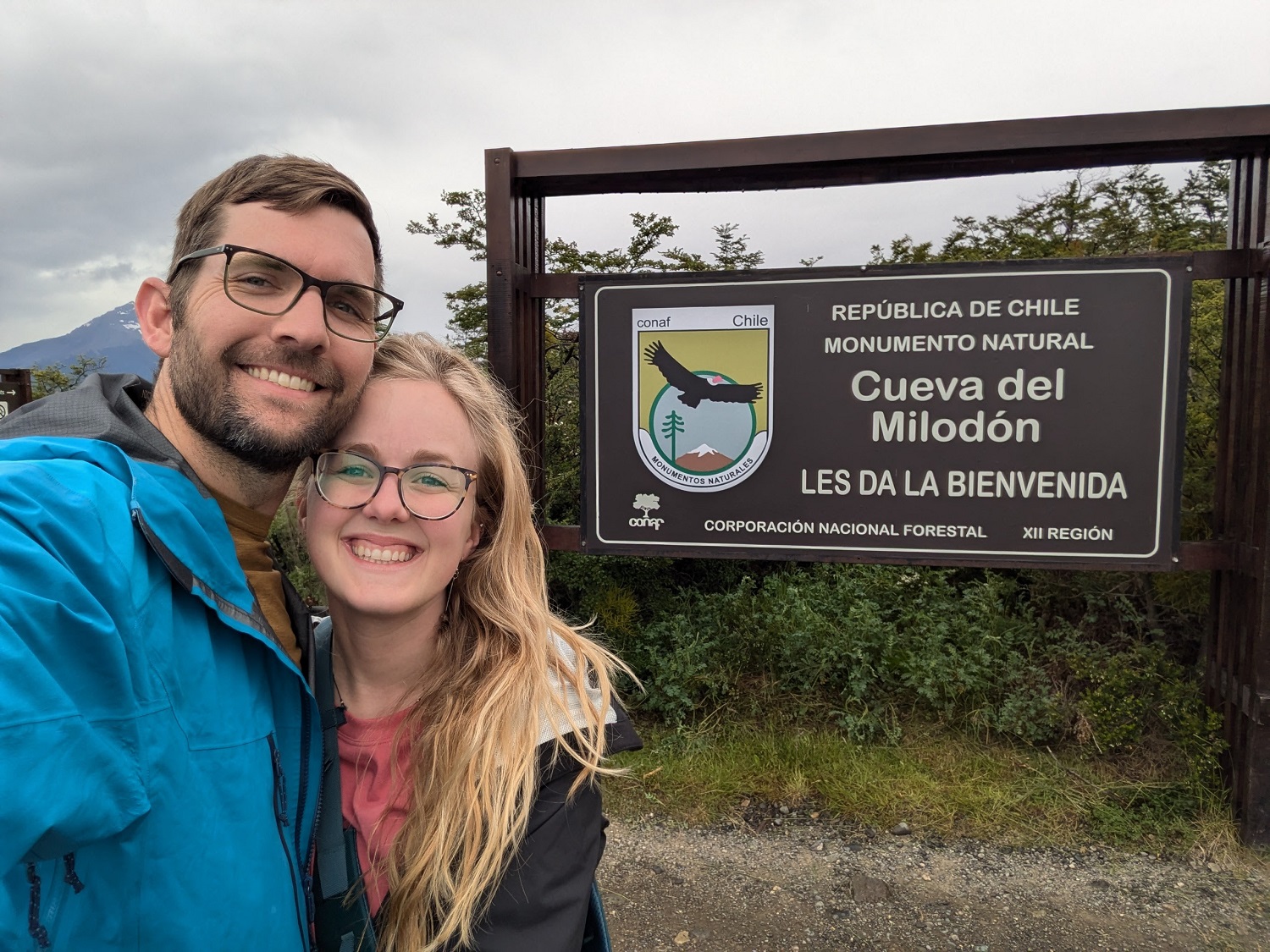
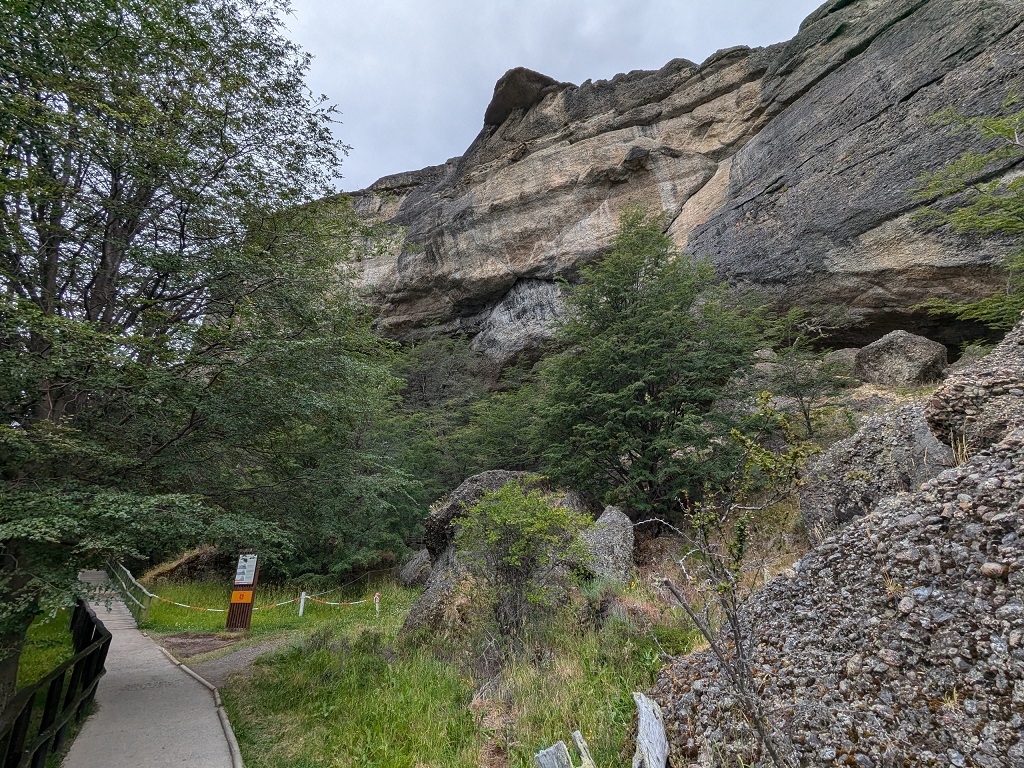
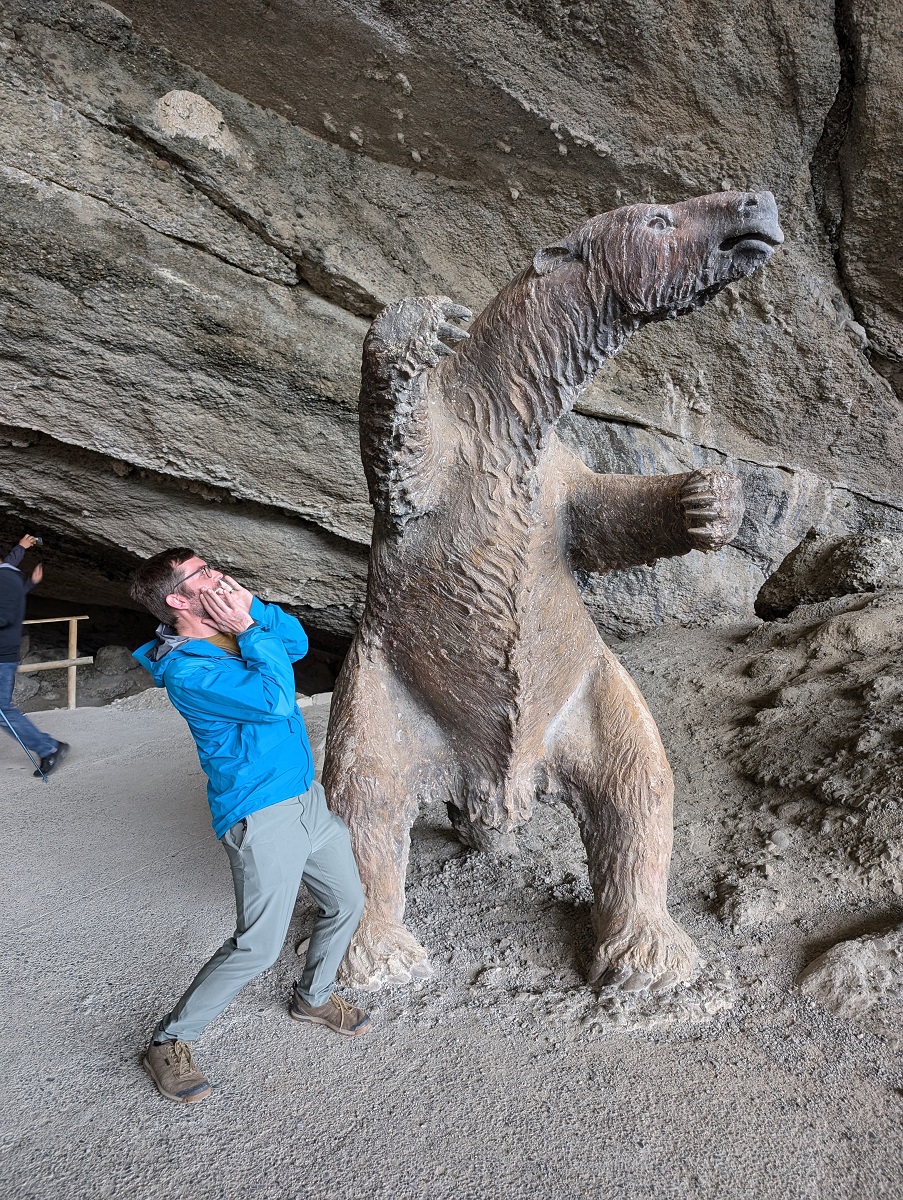
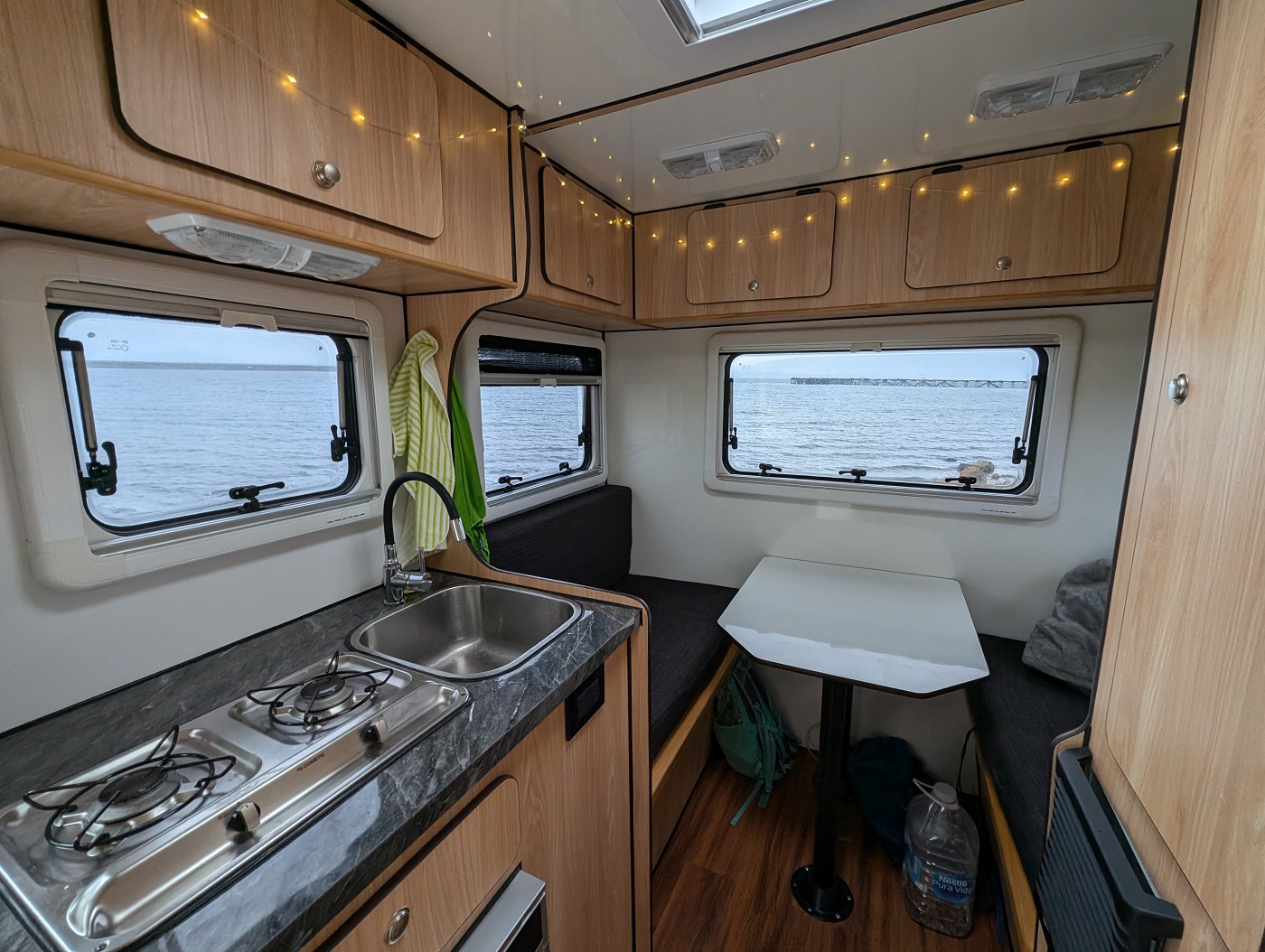
That evening we parked at the same site as our first camper night along the water in Puerto Natales.
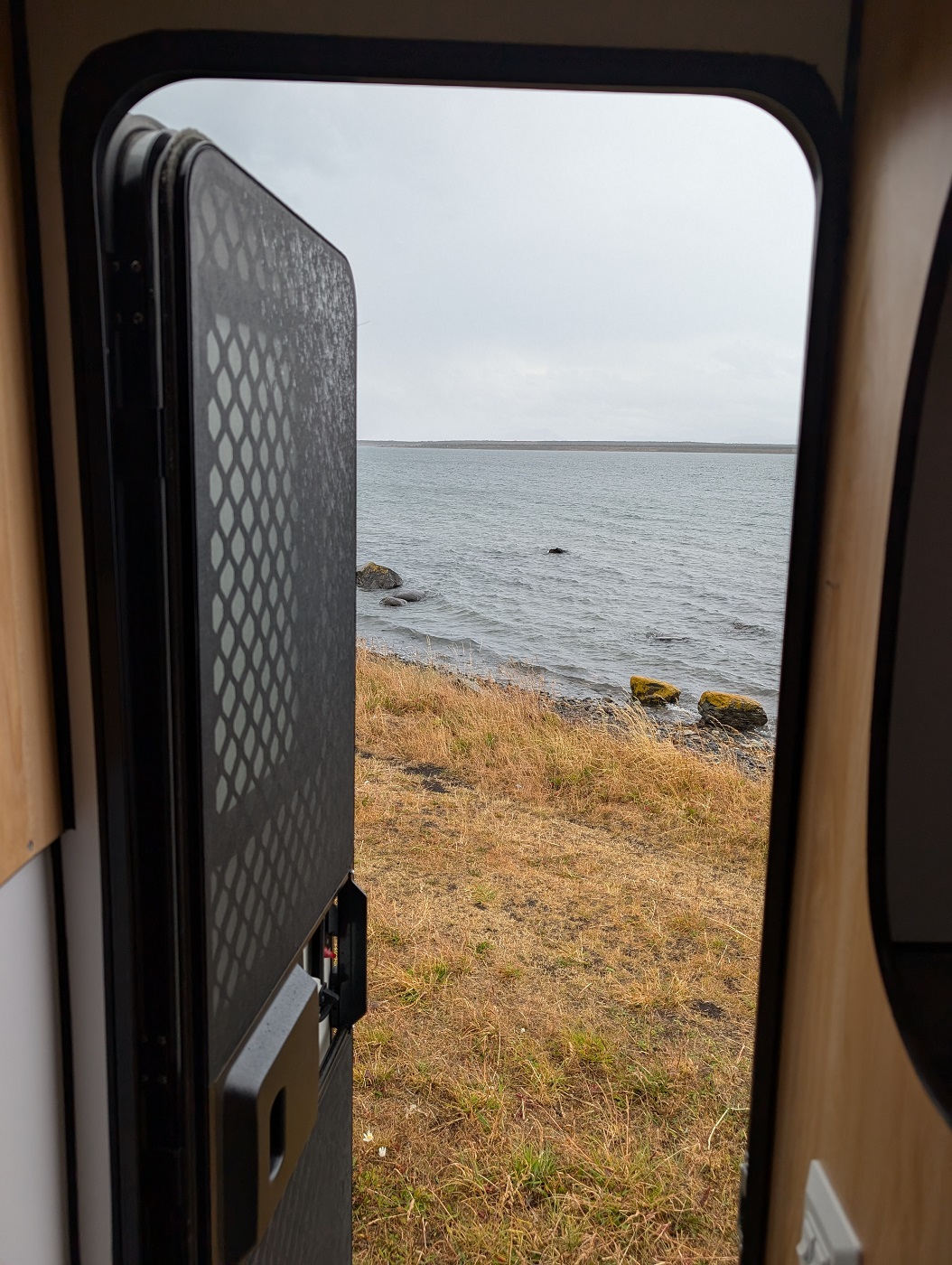
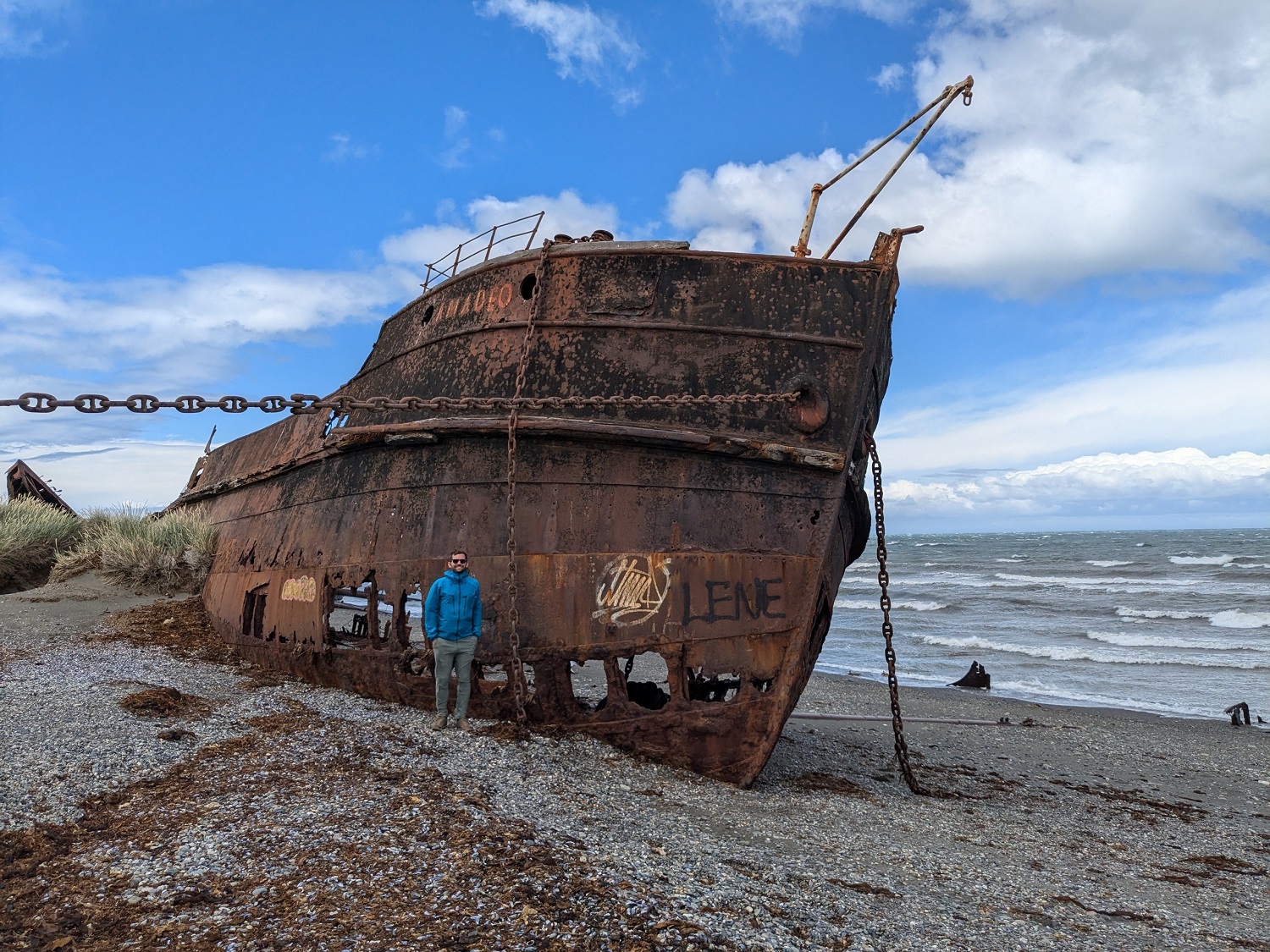
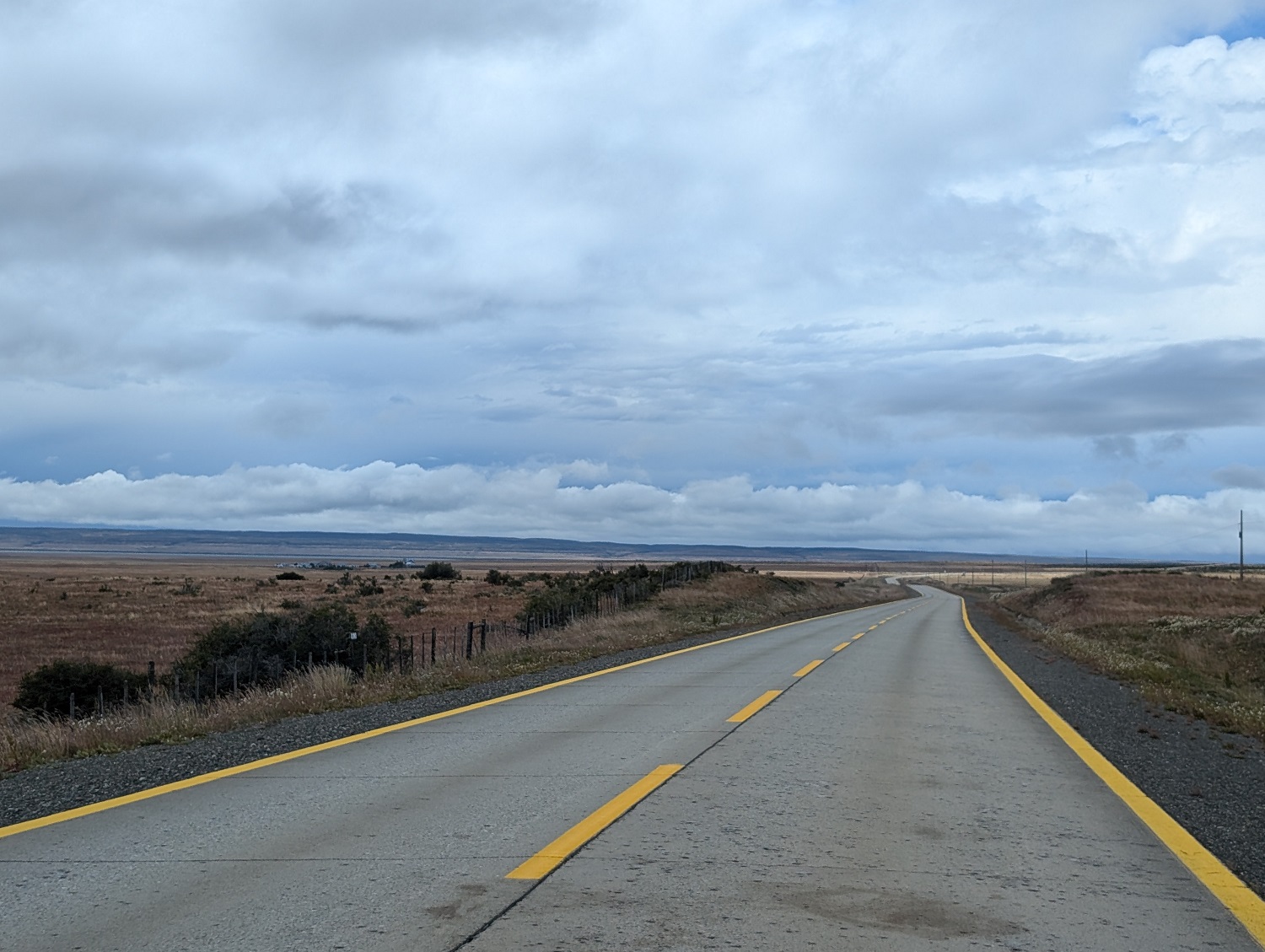
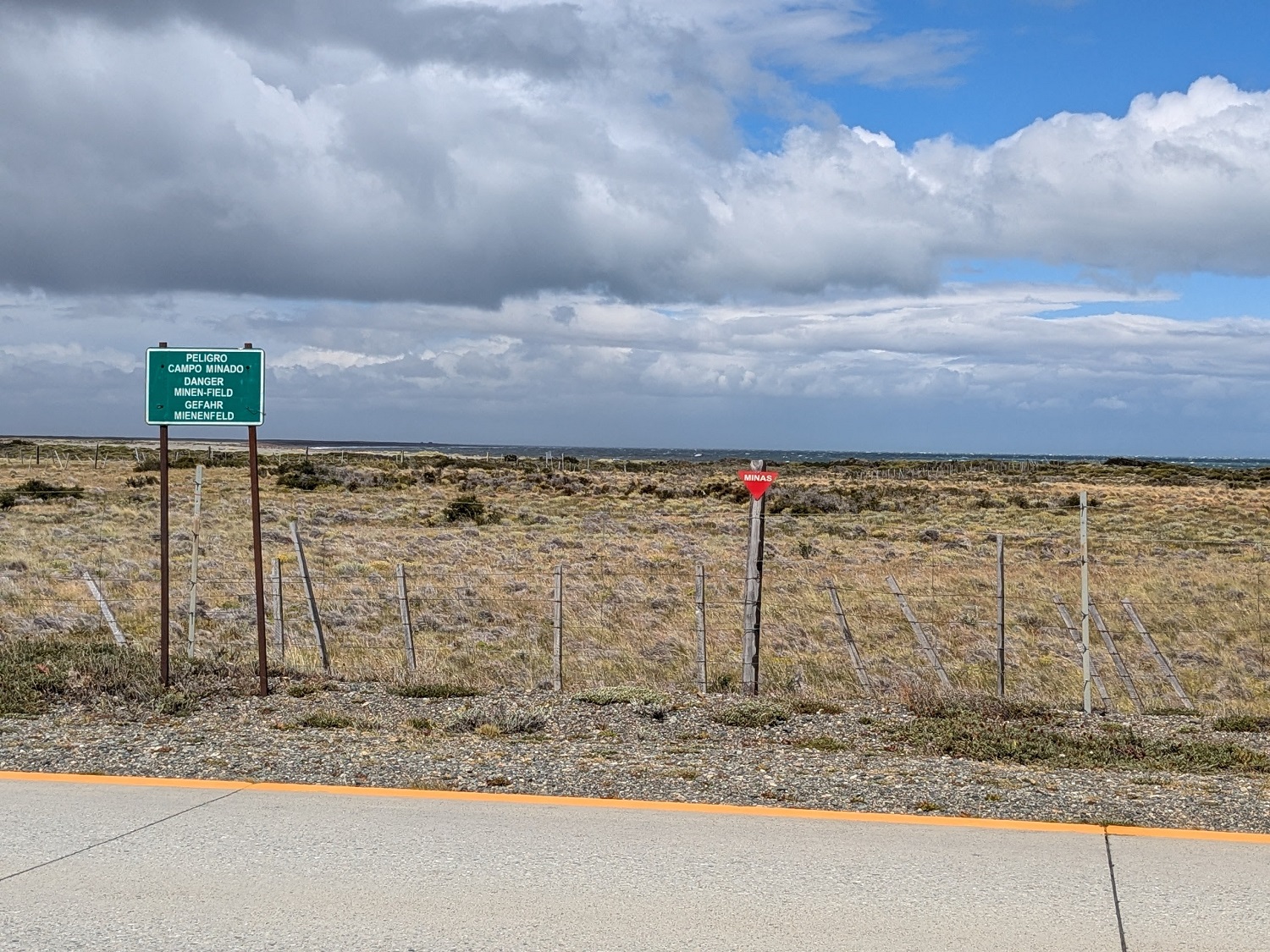
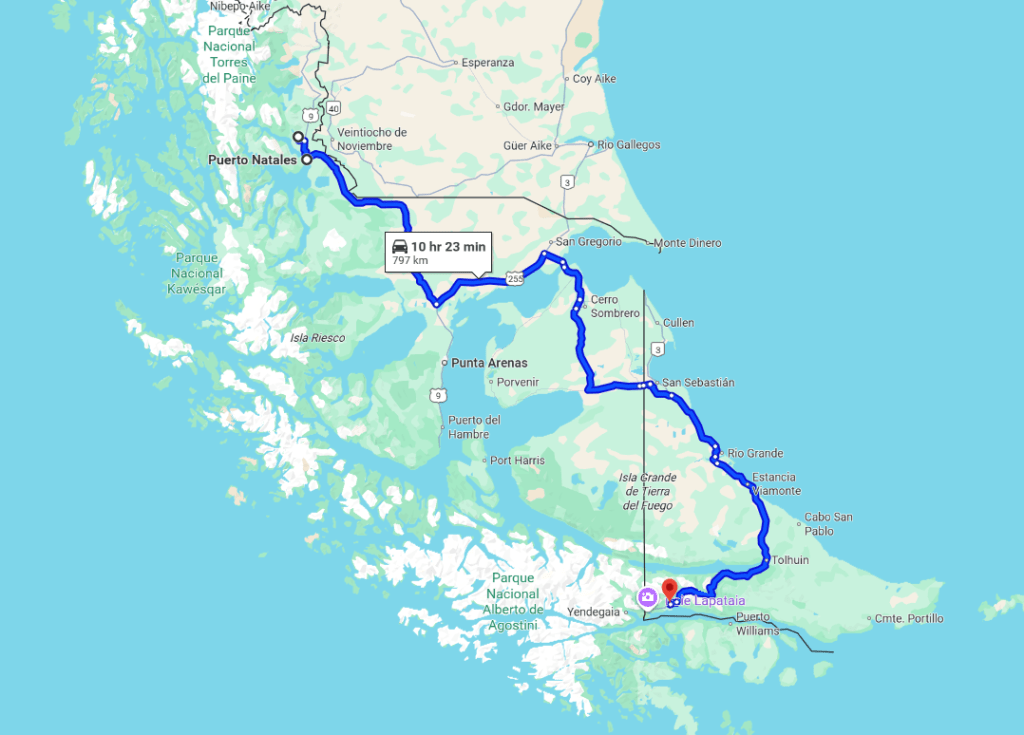
The next day we set off for the San Gregorio crossing of the Strait of Magellan. It was a couple hours of brushy steppe as we headed east, though we noted the winds were much less fierce in the morning, and better as a tailwind. As we hugged the strait on our way, we passed an abandoned town, a beached shipwreck from the 1800s, and signs that read “Tolhuin” on a fence guarding long-leftover minefields. The past felt like a ghost along the road as I imagined walking out into the innocent-looking grasslands, only to discover explosions hidden under each dry shrub or rock.
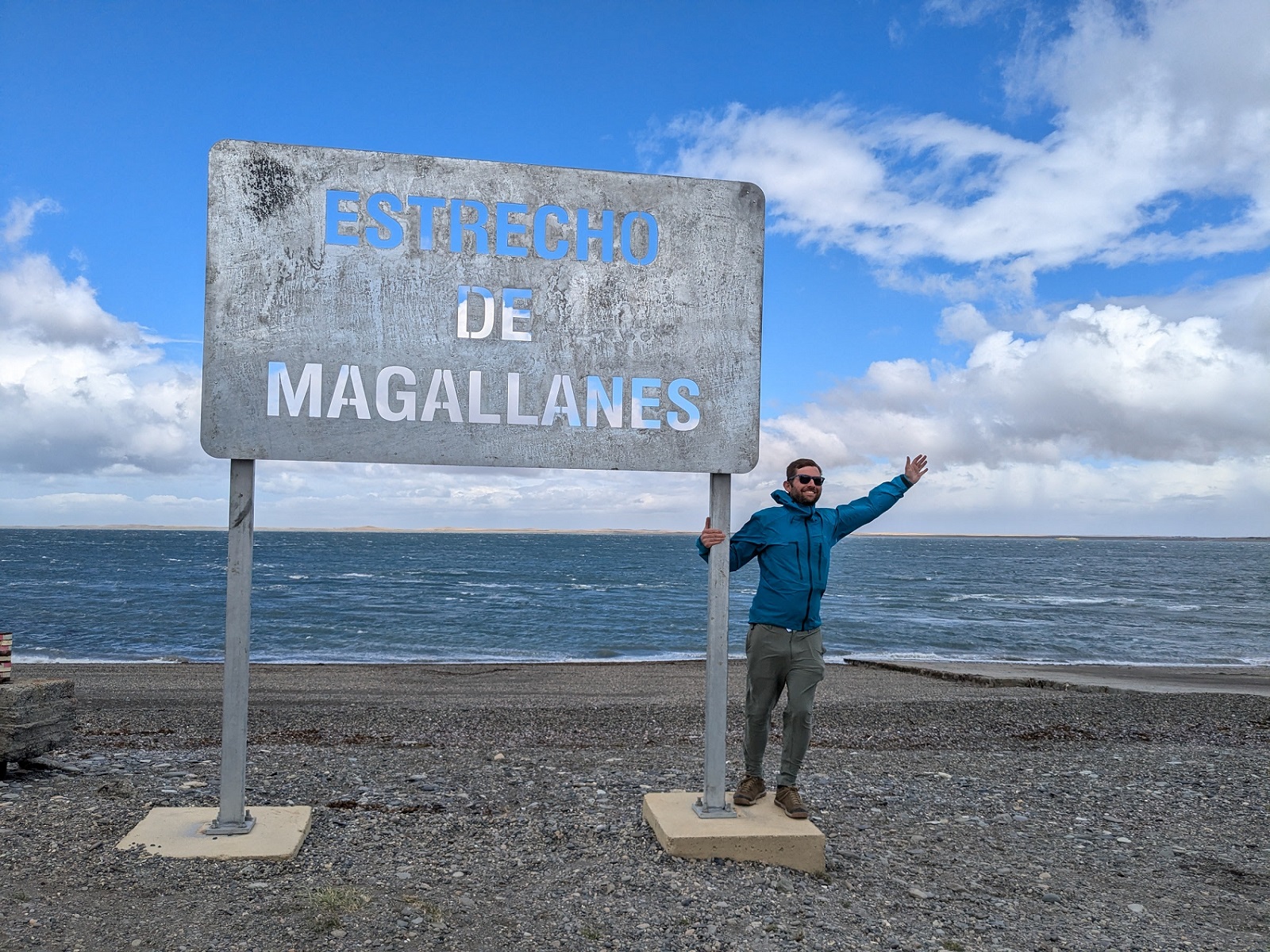
As we pulled up to the ferry station, we learned from the attendant that the next ferry would be in roughly an hour. We left our camper where it was, fourth in line pointed towards the water, and we walked to get a better view of the strait. We took photos with the lighthouse and the sign, admiring the crashing waves along shore and land on the other side, the wind threatening to carry us away.
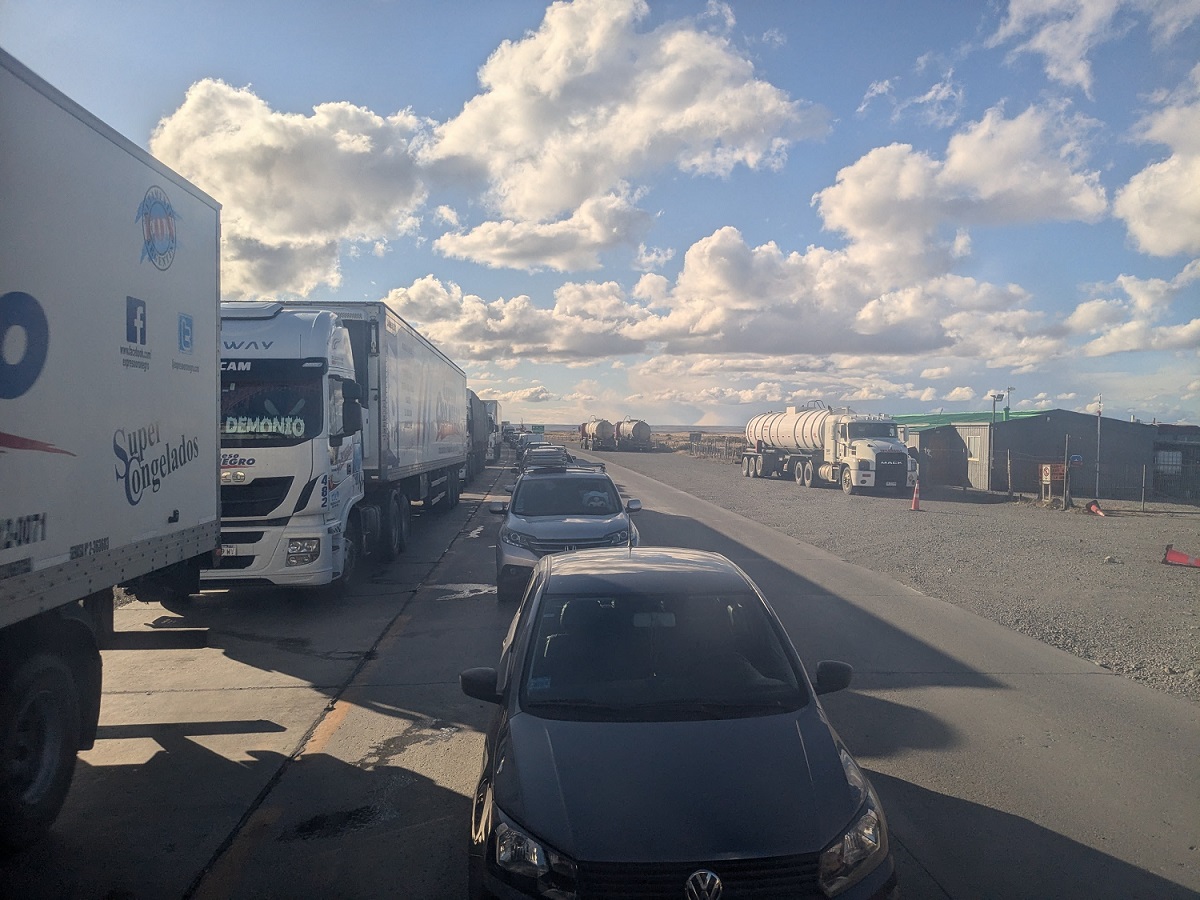
With 15 minutes left to spare, we hopped back into the cab of the truck and saw an attendant in a safety vest approaching our window. My Spanish is not strong enough to catch fast-paced sentences, but there were a few words that stood out to me: “mal tiempo” (bad weather) and “cerrado, cuatro horas” (closed, four hours). I held up my fingers and repeated it back to him and he nodded and began dashing towards the car behind us, next in a line-up of now more than 50 vehicles.
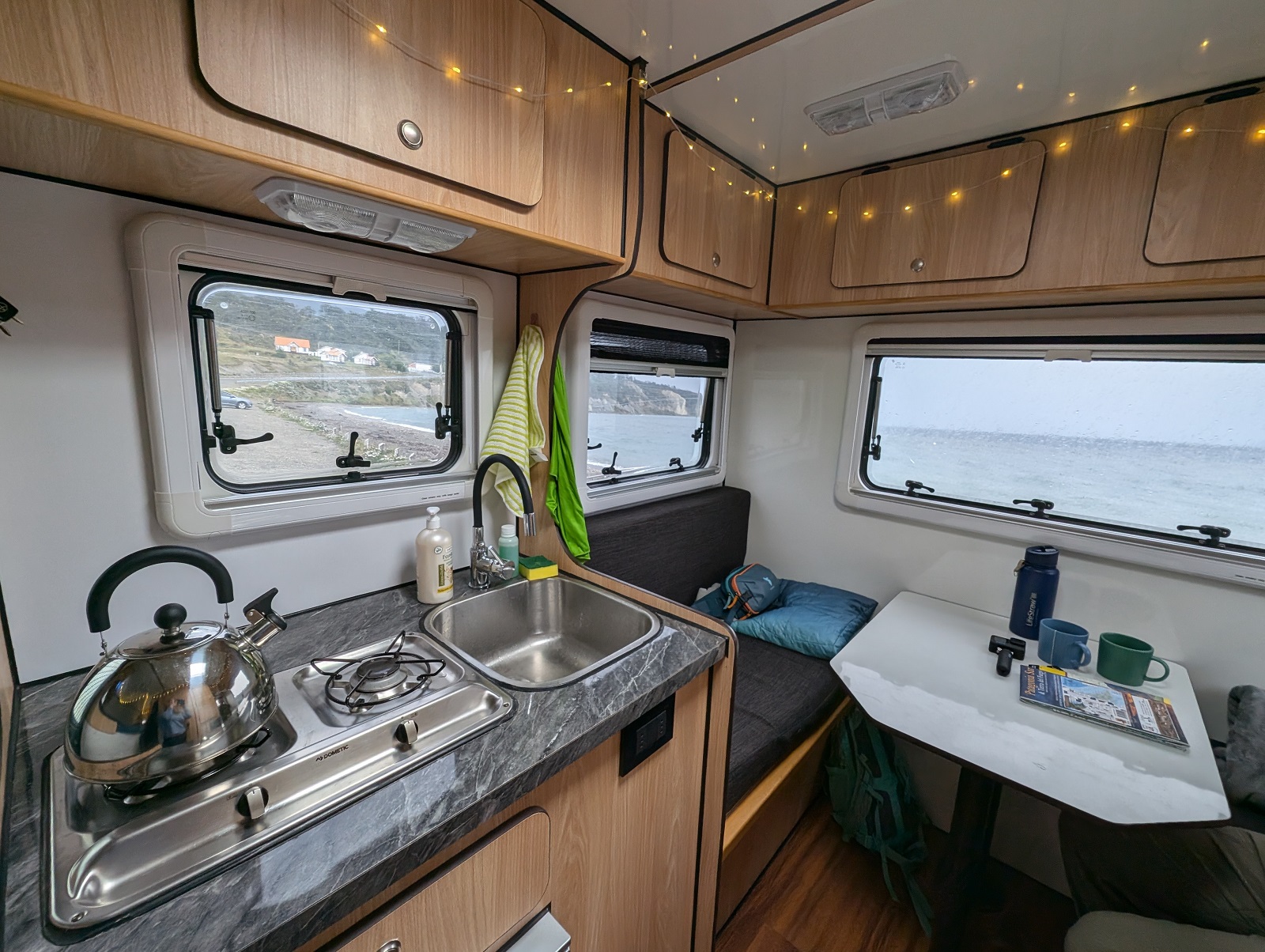
The winds were howling at more than 28 mph with gusts upwards of 48 mph. Though we were disappointed, we were not eager to cross the strait in unsafe conditions, and we climbed into the back of our camper with relief. A semi parked next to us blocked most of the wind, but our camper still rocked gently with each gust. The forced break in our road trip threatened to stress our schedule, but we used it as a chance to adapt and be flexible. We cooked lentil shepherds pie on the stove, journaled, read, and even napped in our bed. I fell asleep snuggled under the blankets, listening to the sound of the wind’s mourning call outside.
Suddenly John’s hands were shaking me as he said the ferry was about to dock. We were only 4th or 5th in line out of maybe more than 100 vehicles. We threw our dishes into the sink, battened the hatches of our cupboards and windows, and flew out the side door and back into the cab of the camper. The line of cars had already moved forward and we were being urged forward with haste.
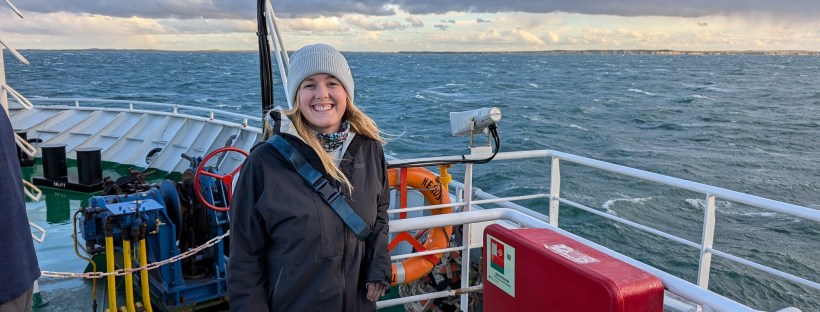
The ferry fit around 60 cars, plus a semi truck and two buses. We squeezed out of the cab and weaved through the vehicles to pay our fare at a small window. This ferry was built for transport, not tourism, and those of us brave enough to face the elements huddled together on the small platform at the top of the outdoor stairs, all of us briefly connected by this unique experience. Some of the waves collided with the boat so strongly that they sprayed water on the small group of people standing too close to the railing, showering us from 20 feet above. The ocean pitched and tossed the ferry and I was more than glad they had cancelled the crossing when it was too windy. The sun came out, turning the white-capped waters a bright turquoise.
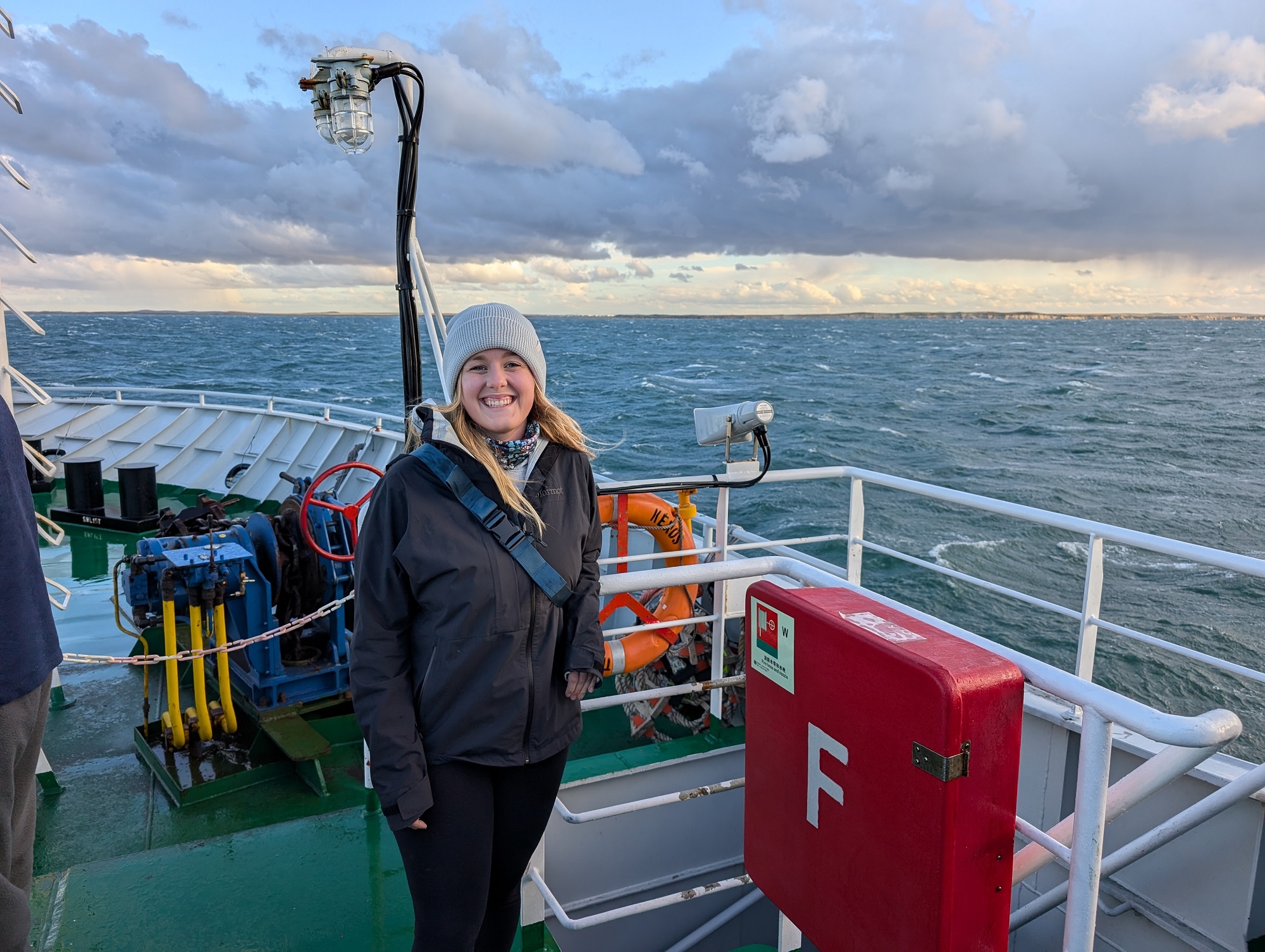
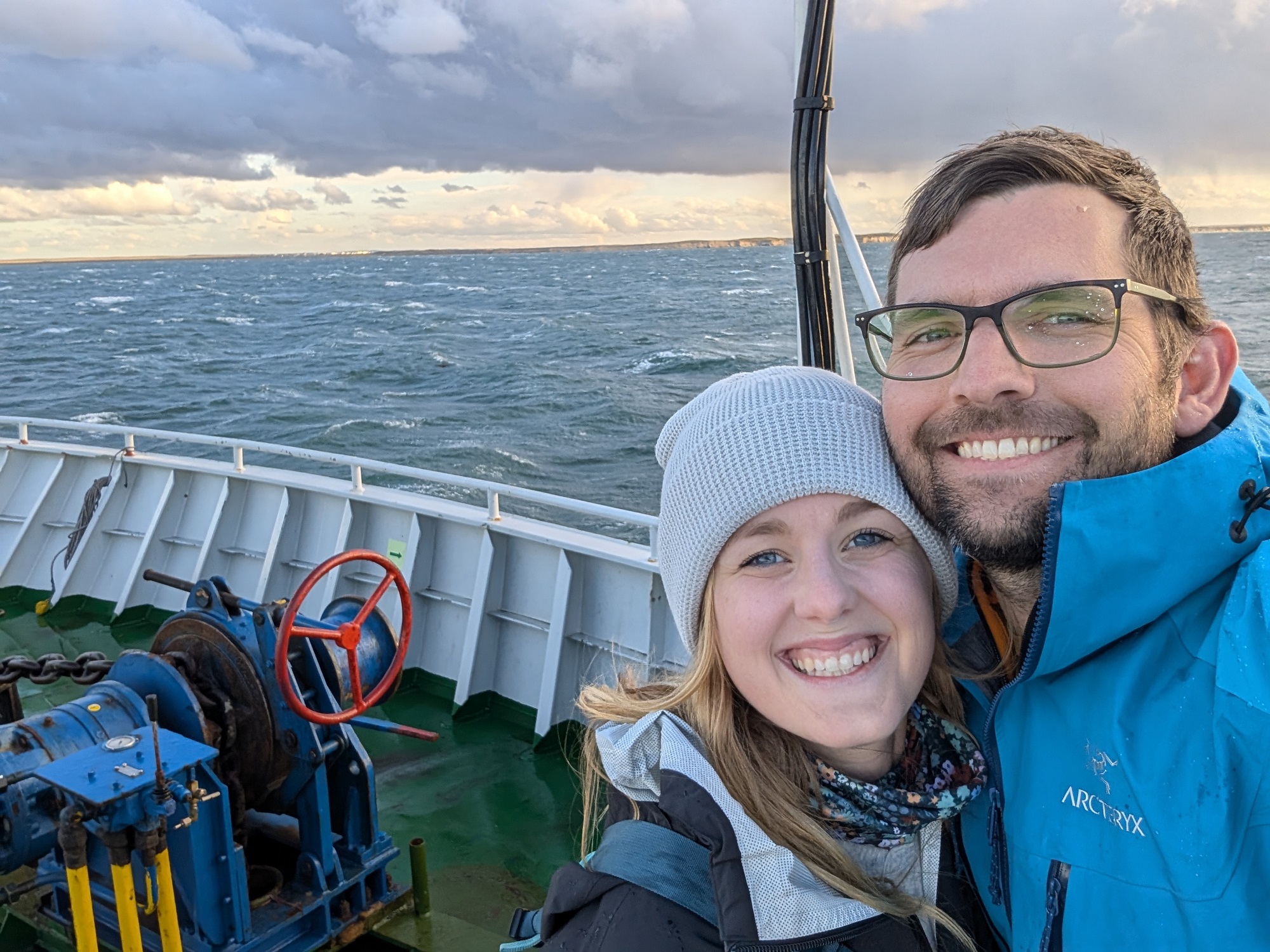
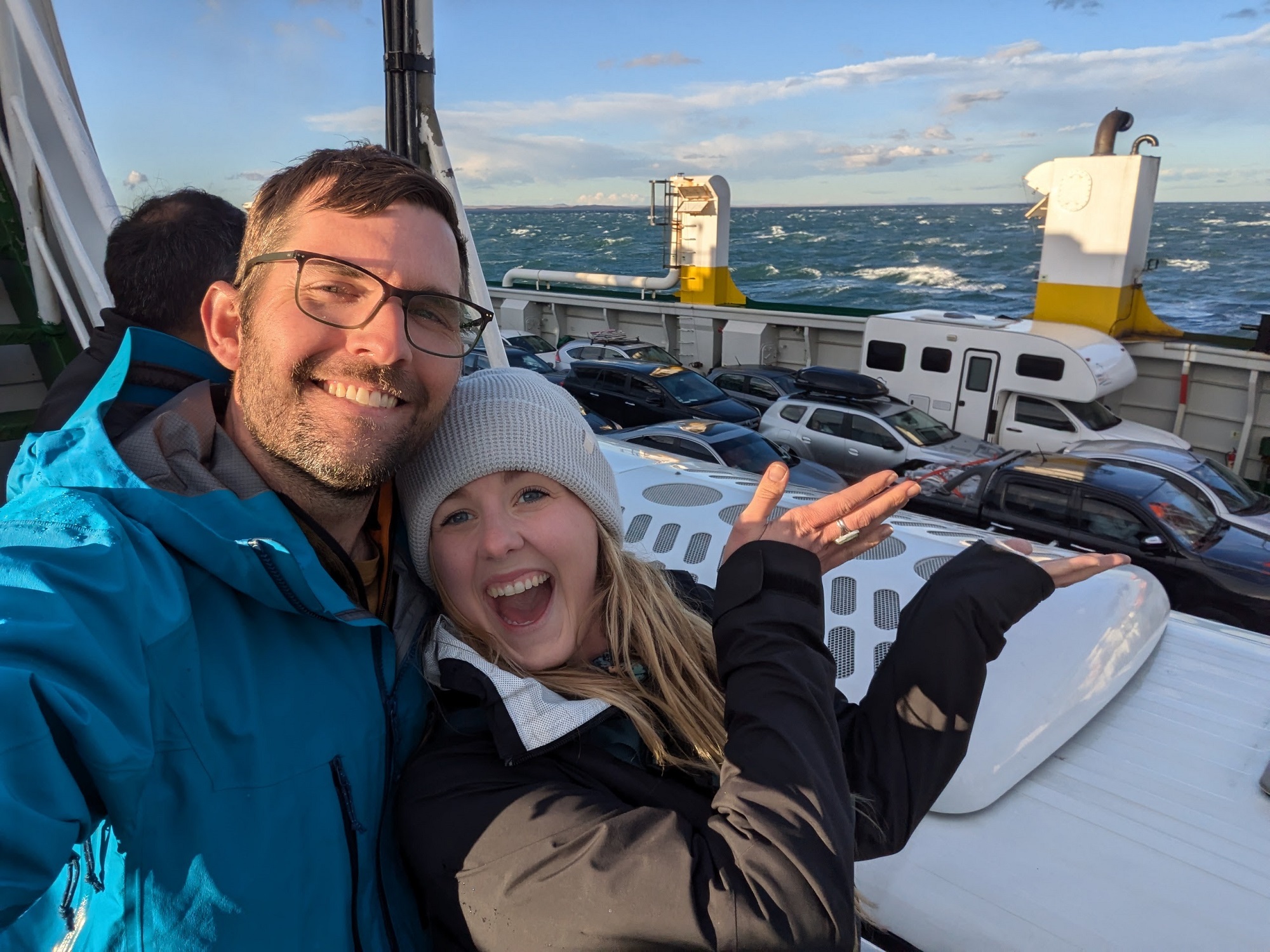
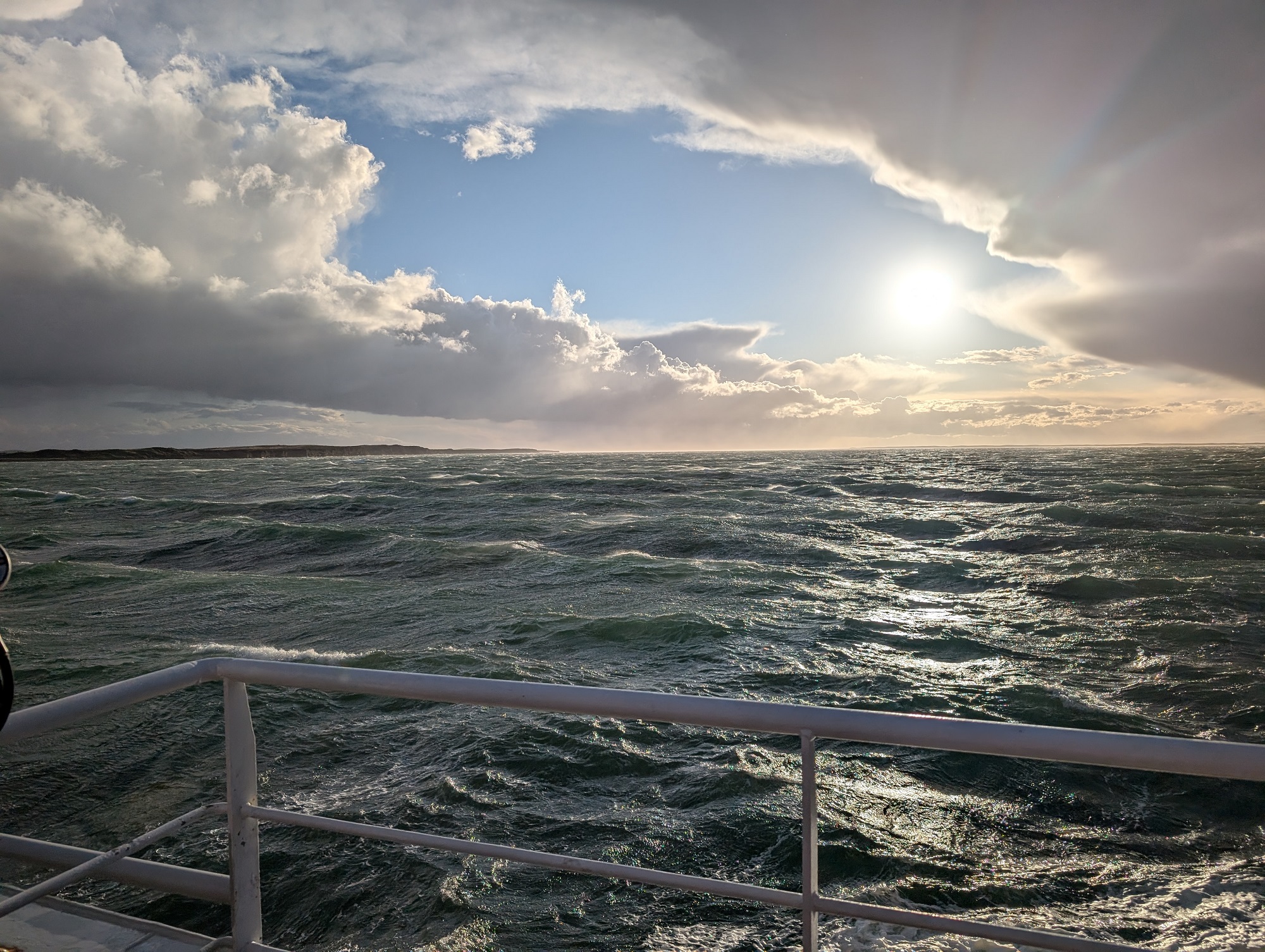
Before long, it was time to return to our camper, and we raced down the steps to get there in time. The ferry hit shore with a thud and workers were frantically launching the exit ramp.
We rumbled down the metal ramp and into a new and empty landscape. We’d made it to Tierra del Fuego.
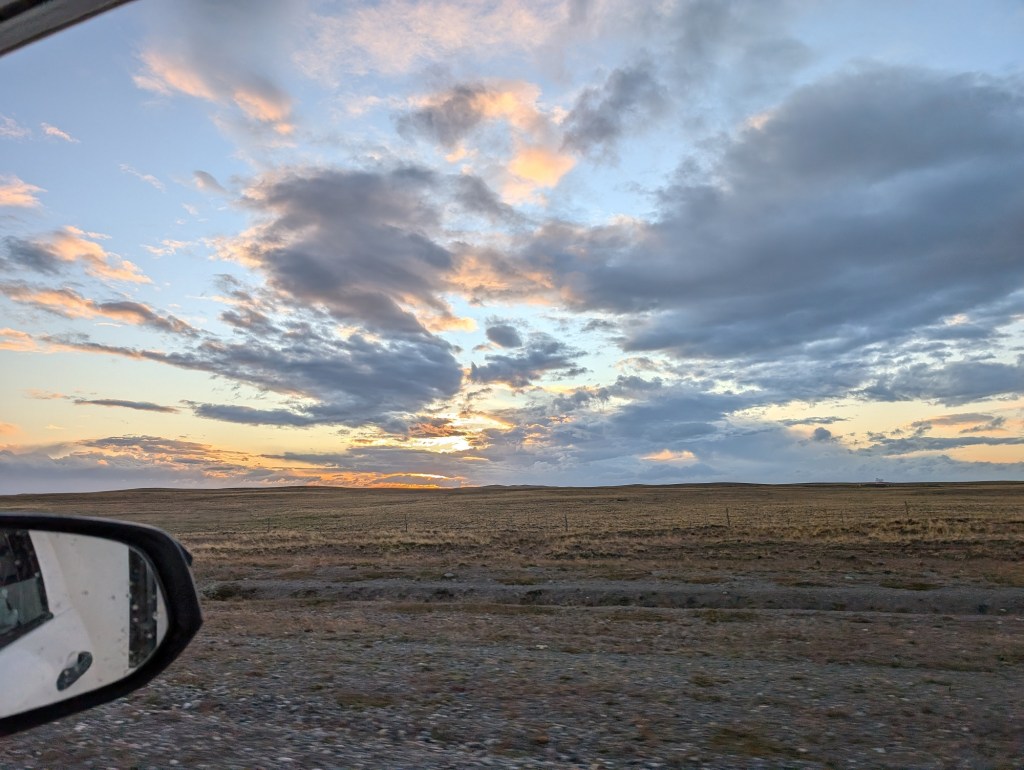
Translated to “land of fire”, Tierra del Fuego is a vast island at the farthest southern point in the South American continent. It gets its name from the days of European explorers, who saw bonfires along the shorelines built by the indigenous people. So far, it was only rolling gold pasture as far as the eye could see.
The roads were long and dusty in this region of the world, and the folksy voices of Tophouse and The Last Revel helped us pass our hours by. After a couple hours, we passed a single group of buildings and a gas station that could hardly pass for a town. The flags were so worn from the wind they were missing half of the images and ended in a frayed fringe. After sunset, we spotted a South American grey fox on the side of the road in the fading light. Another hour of driving and we found a quiet place to camp on an already very quiet road.
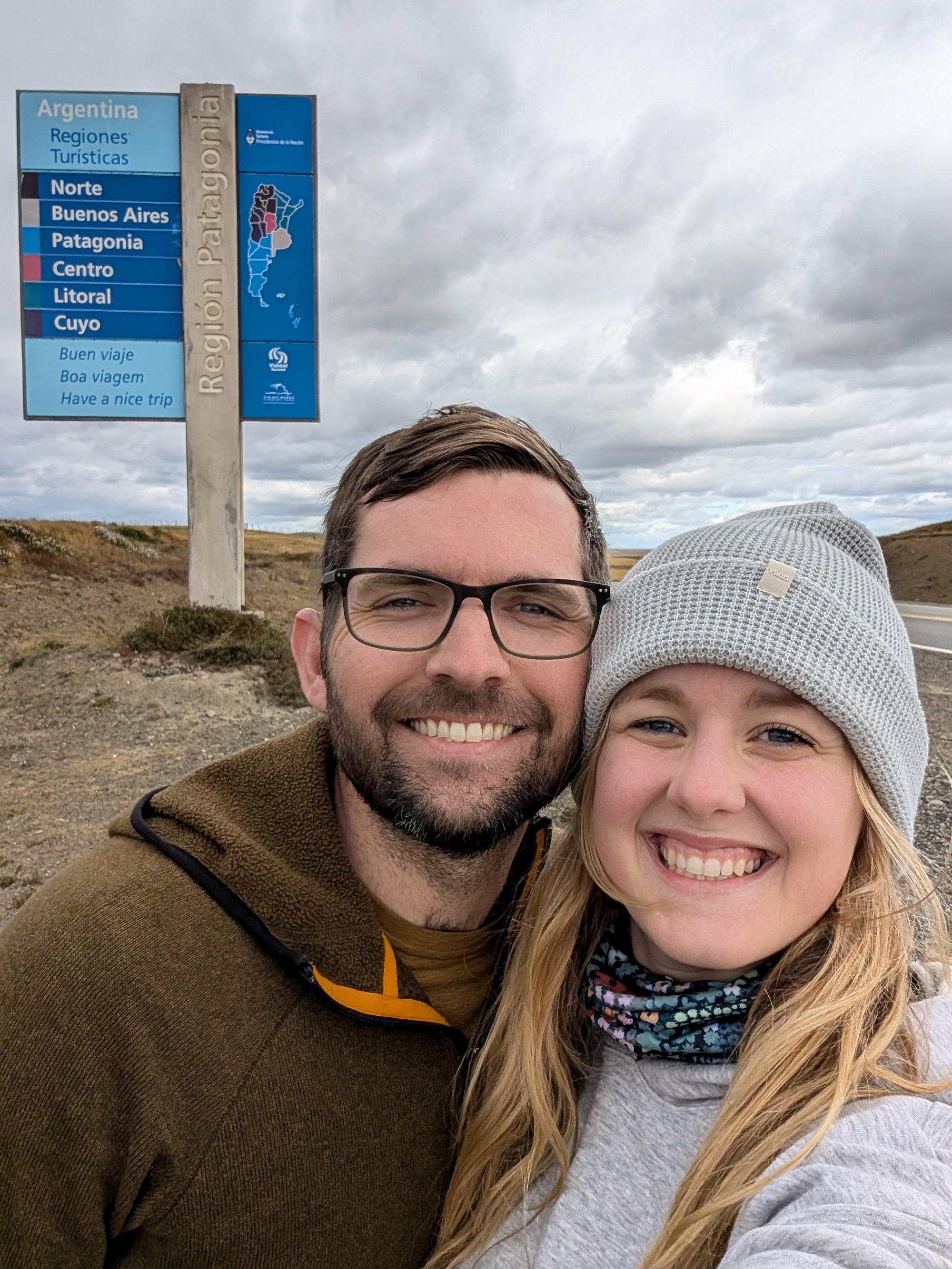
The temperatures were dropping at night as we journeyed south, closer to the south pole. We continued through the grasslands in the morning and crossed the Chile-Argentina border for the third time. Like the other times, no one spoke any English, but we managed to pass through within just a few minutes.
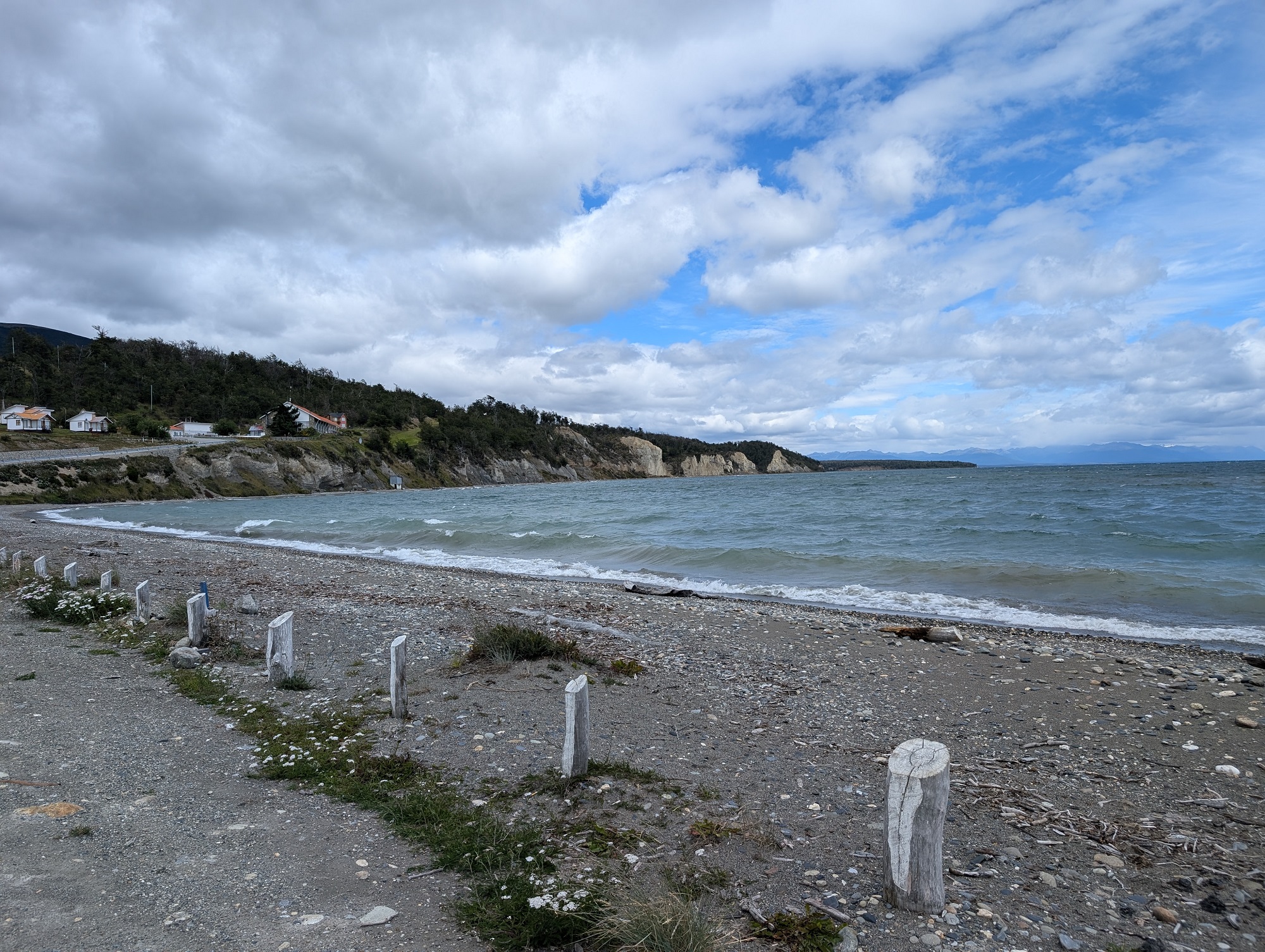
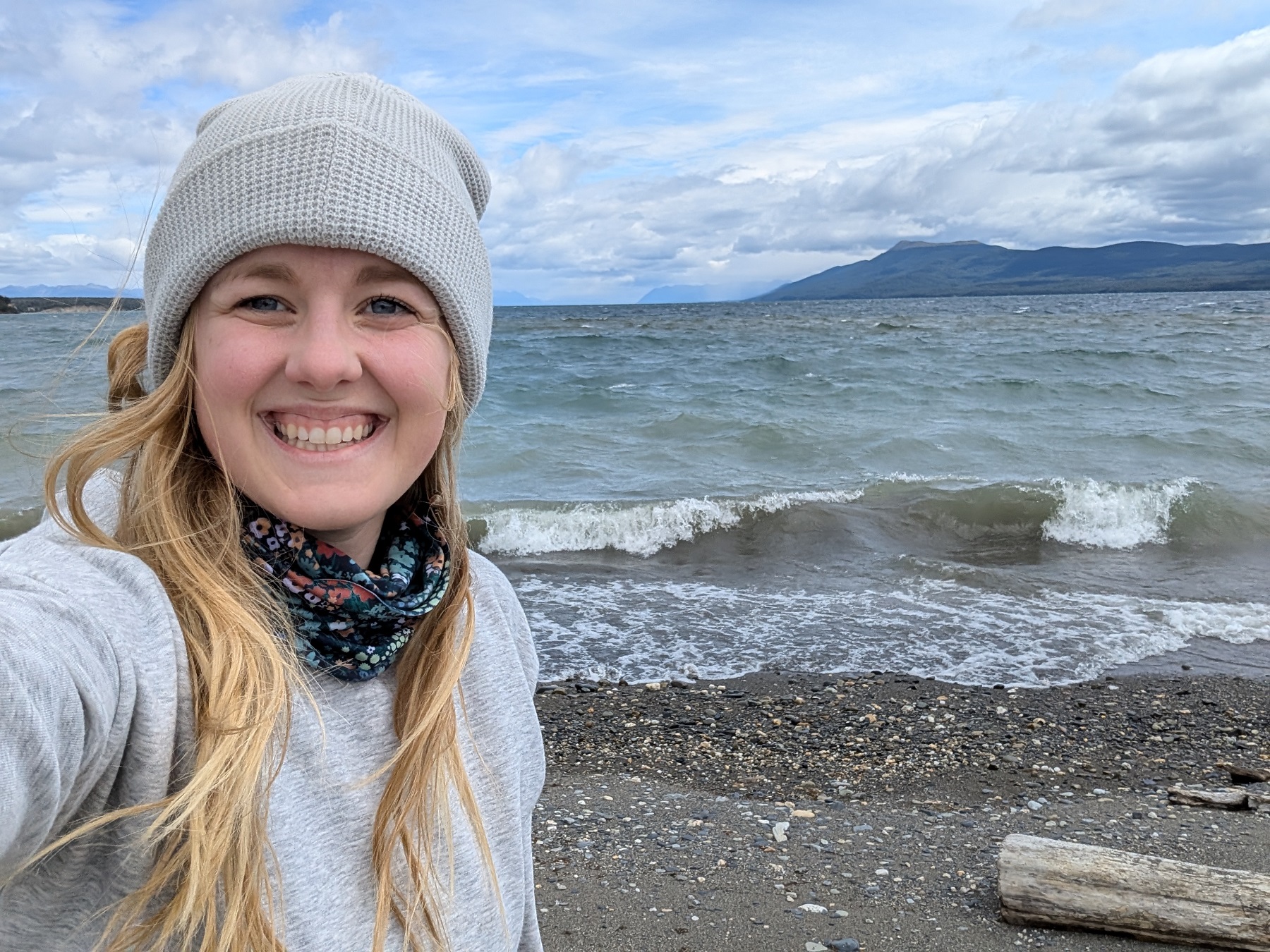
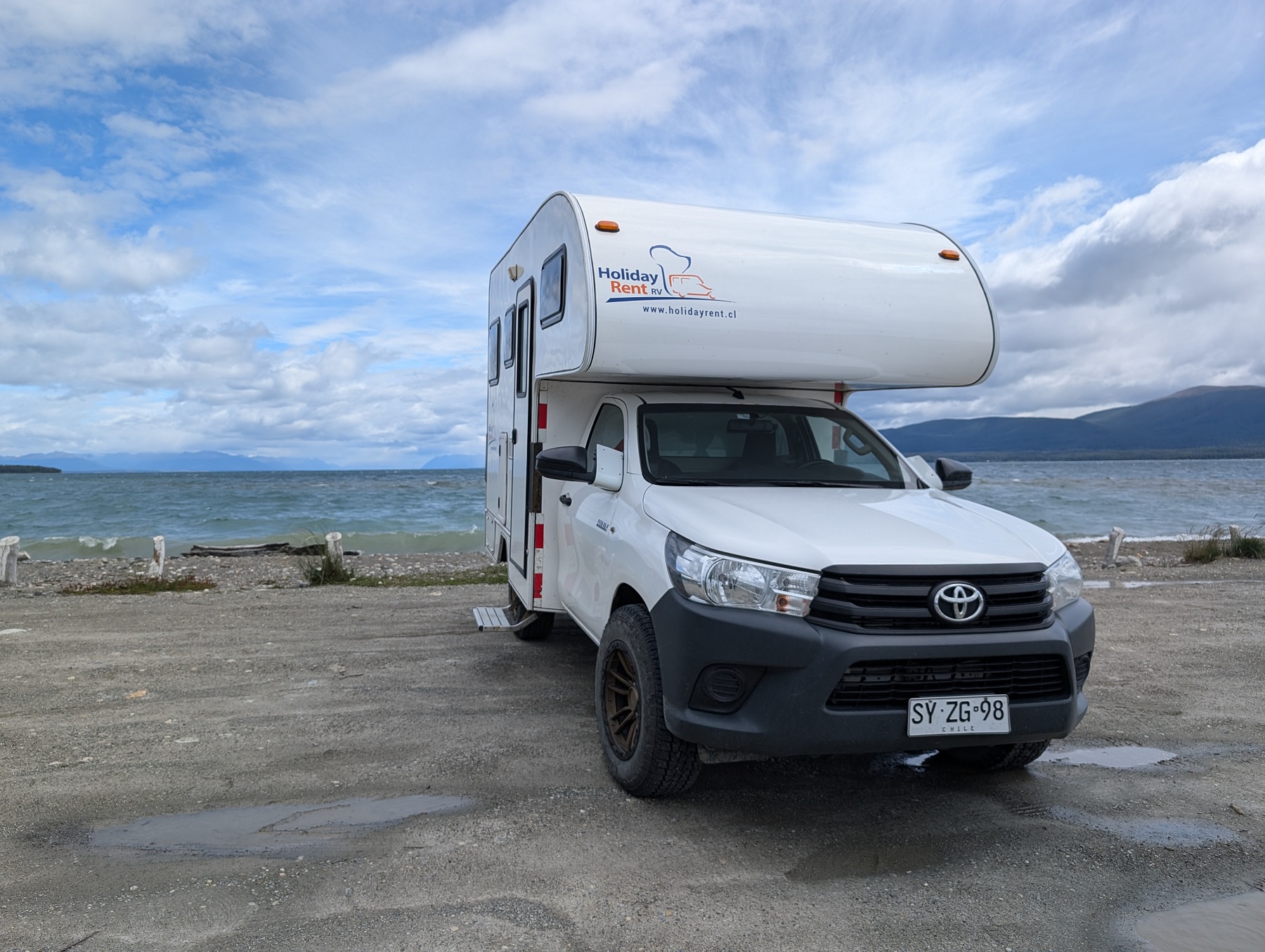
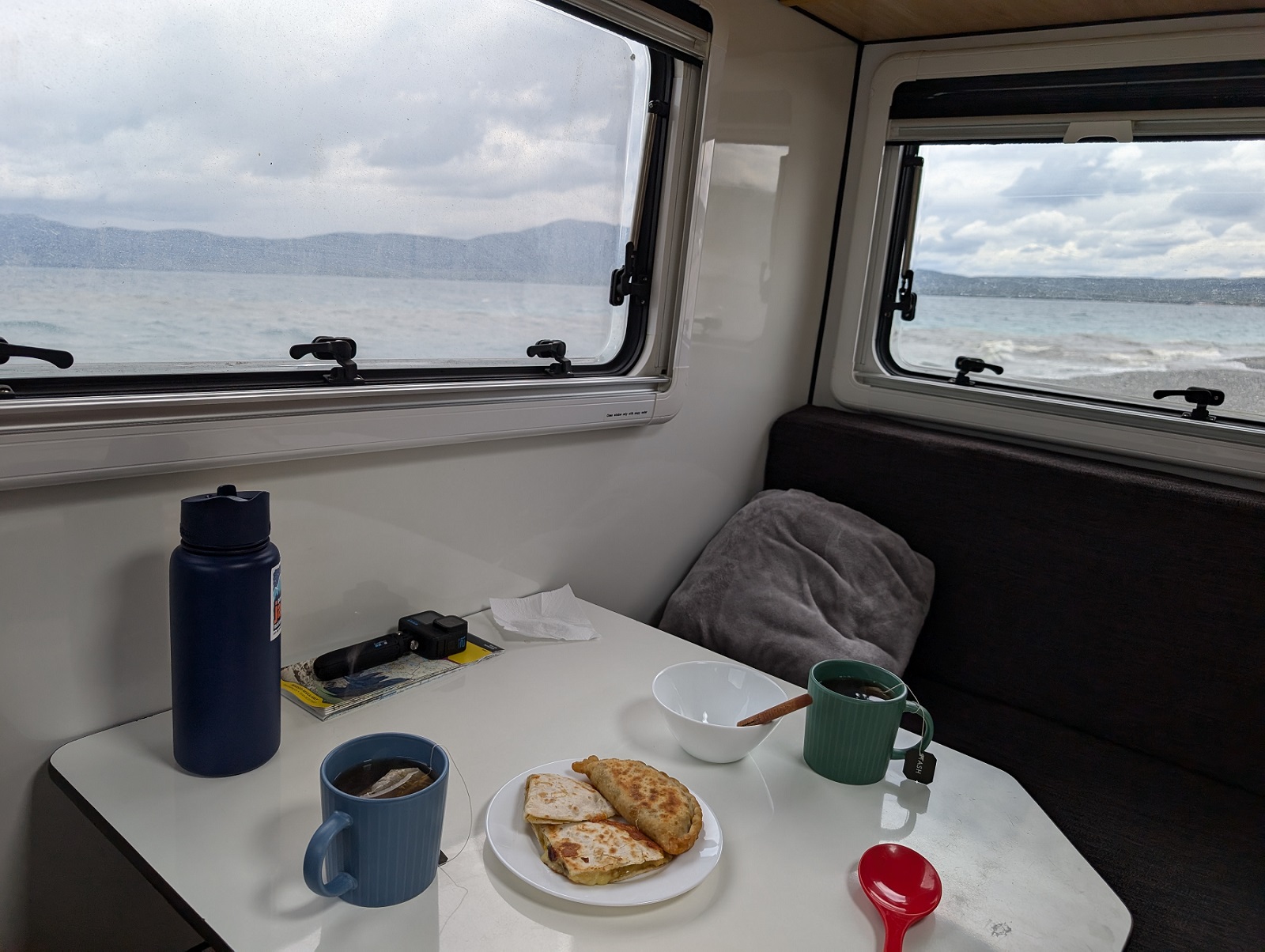
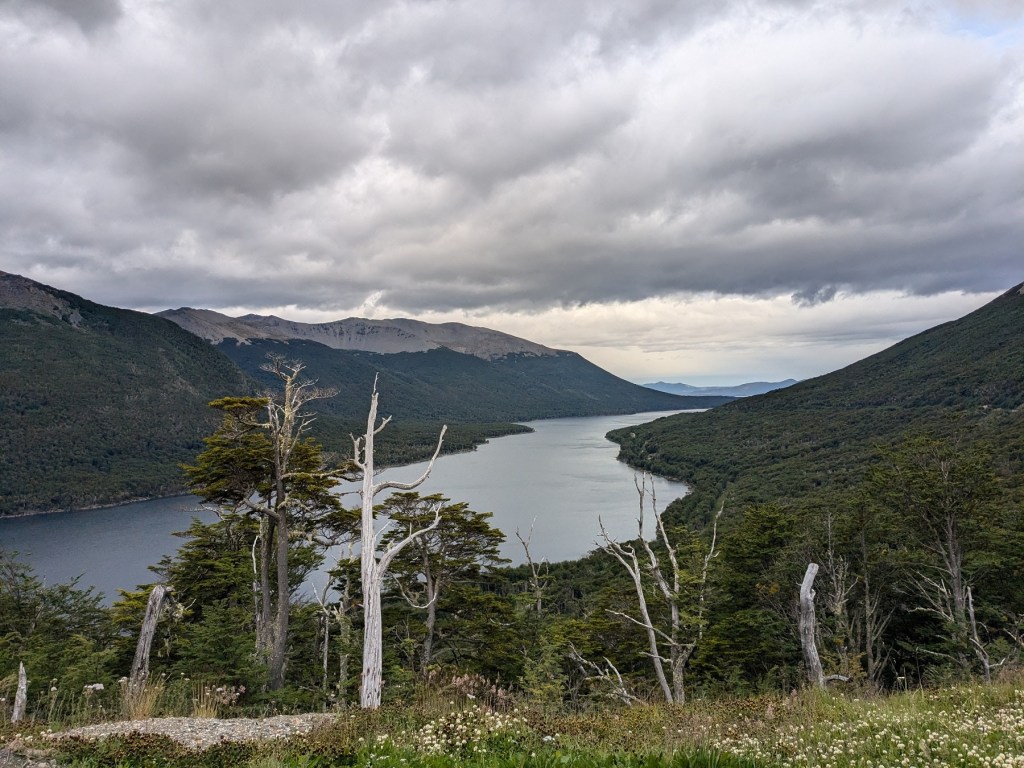
Guanacos grazed along the road in ditches and leapt over fences into the pastures. Then suddenly, trees. Scrubby trees covered in bright green lichens that could be seen far in the distance. The terrain shifted. Low purple mountains glowed in the distance and suddenly we felt like we were in Alaska. We decided to stop at a rocky beach on Lake Fagnano for a hot lunch.
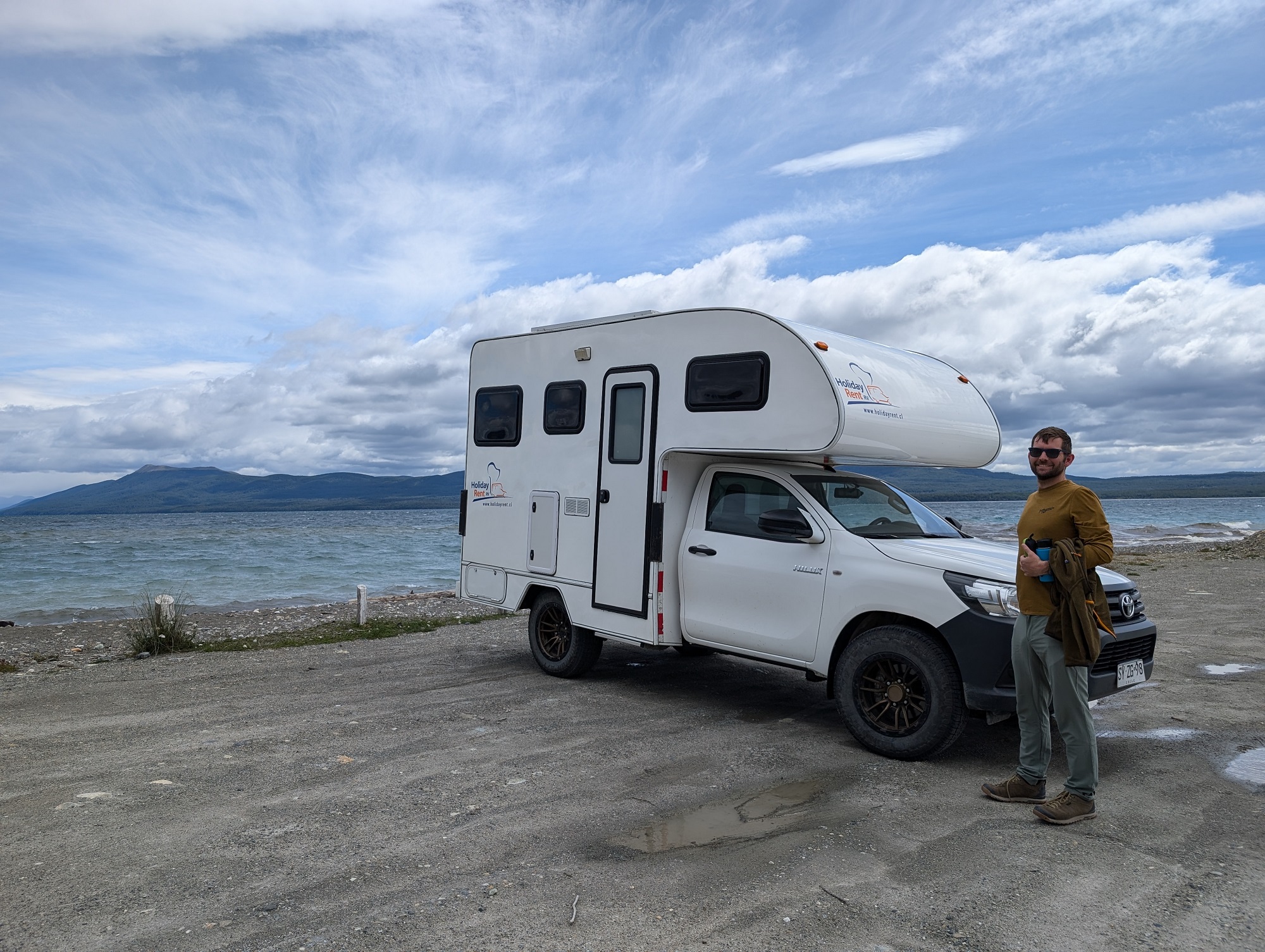
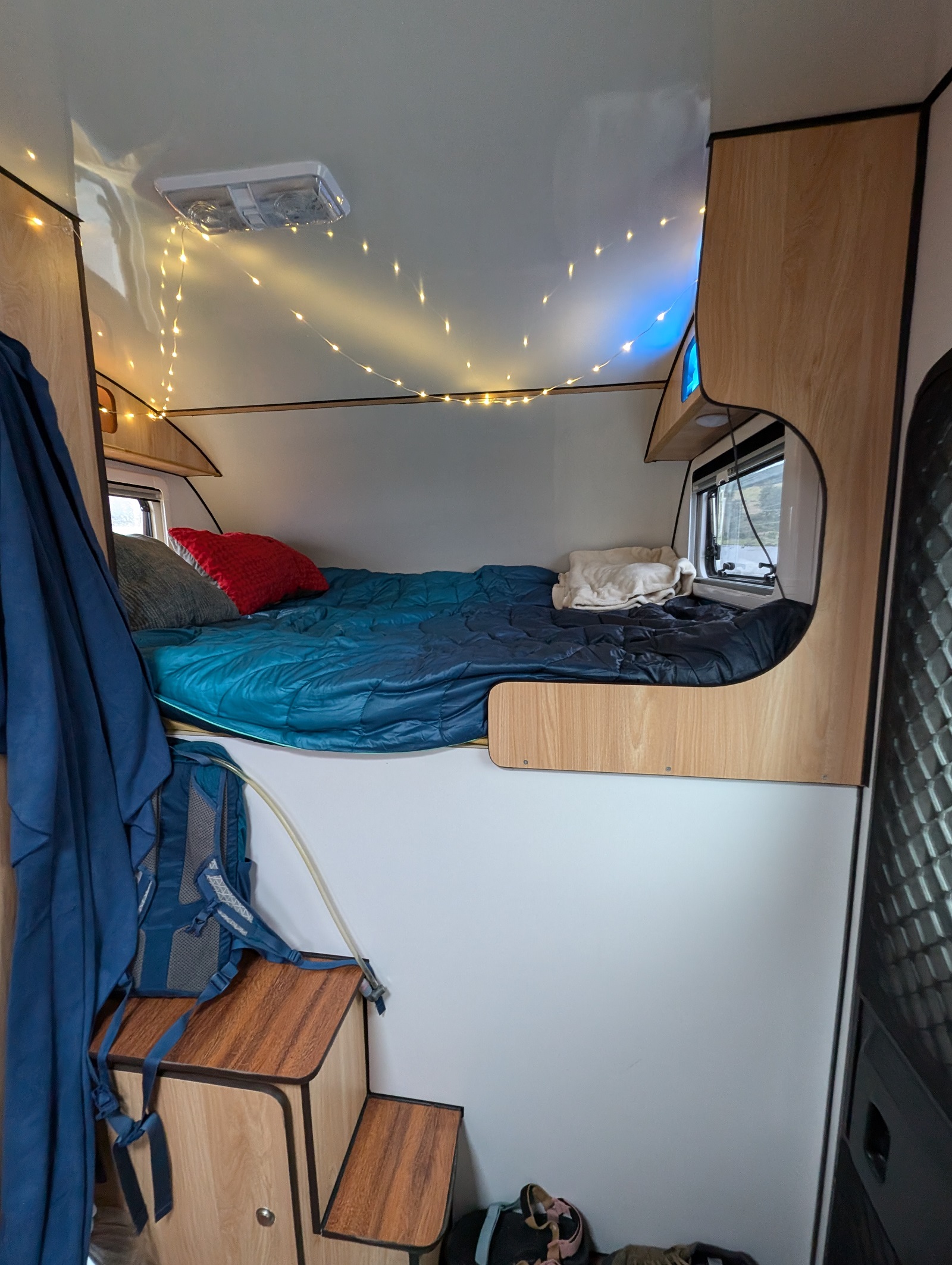
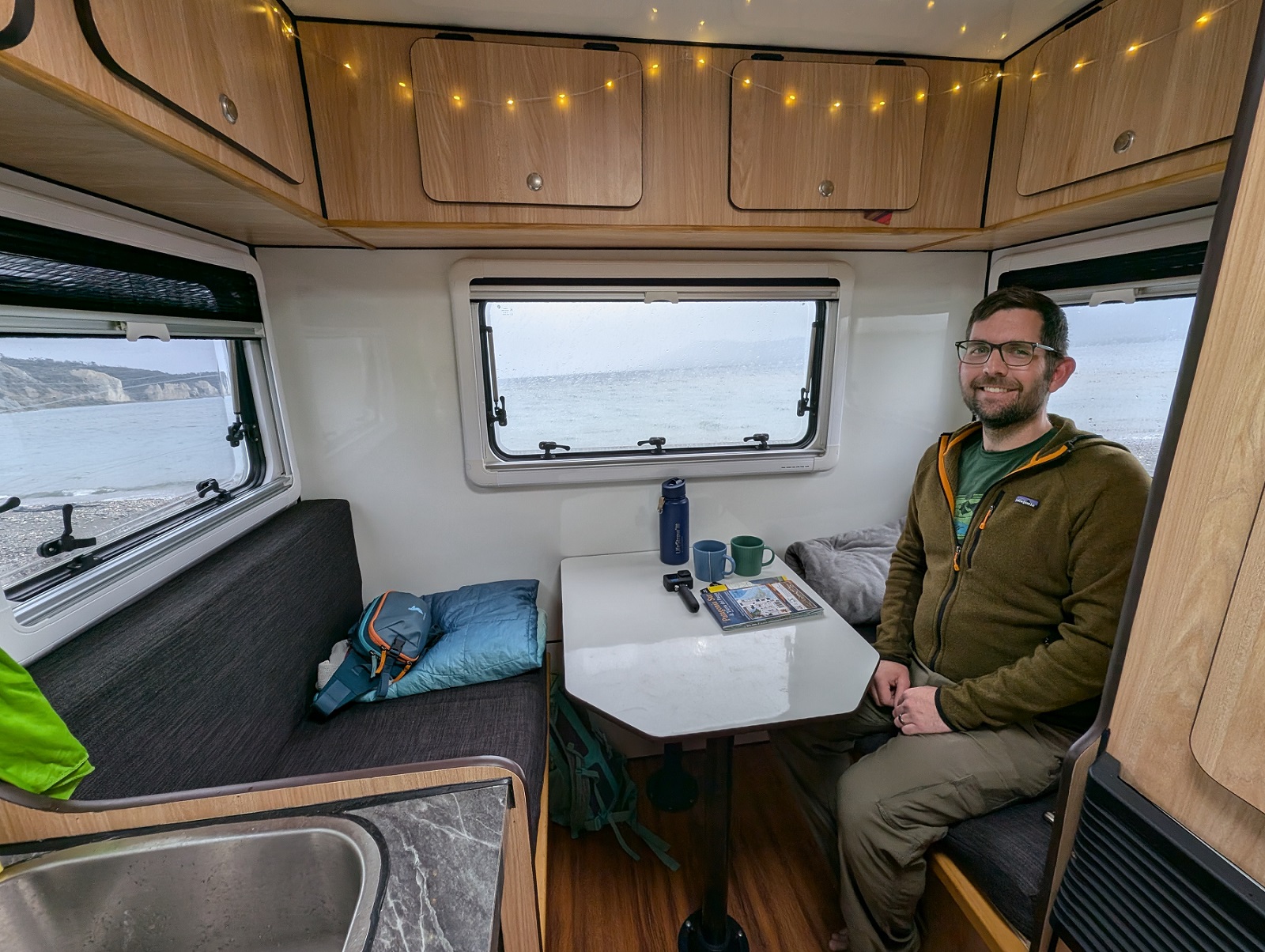
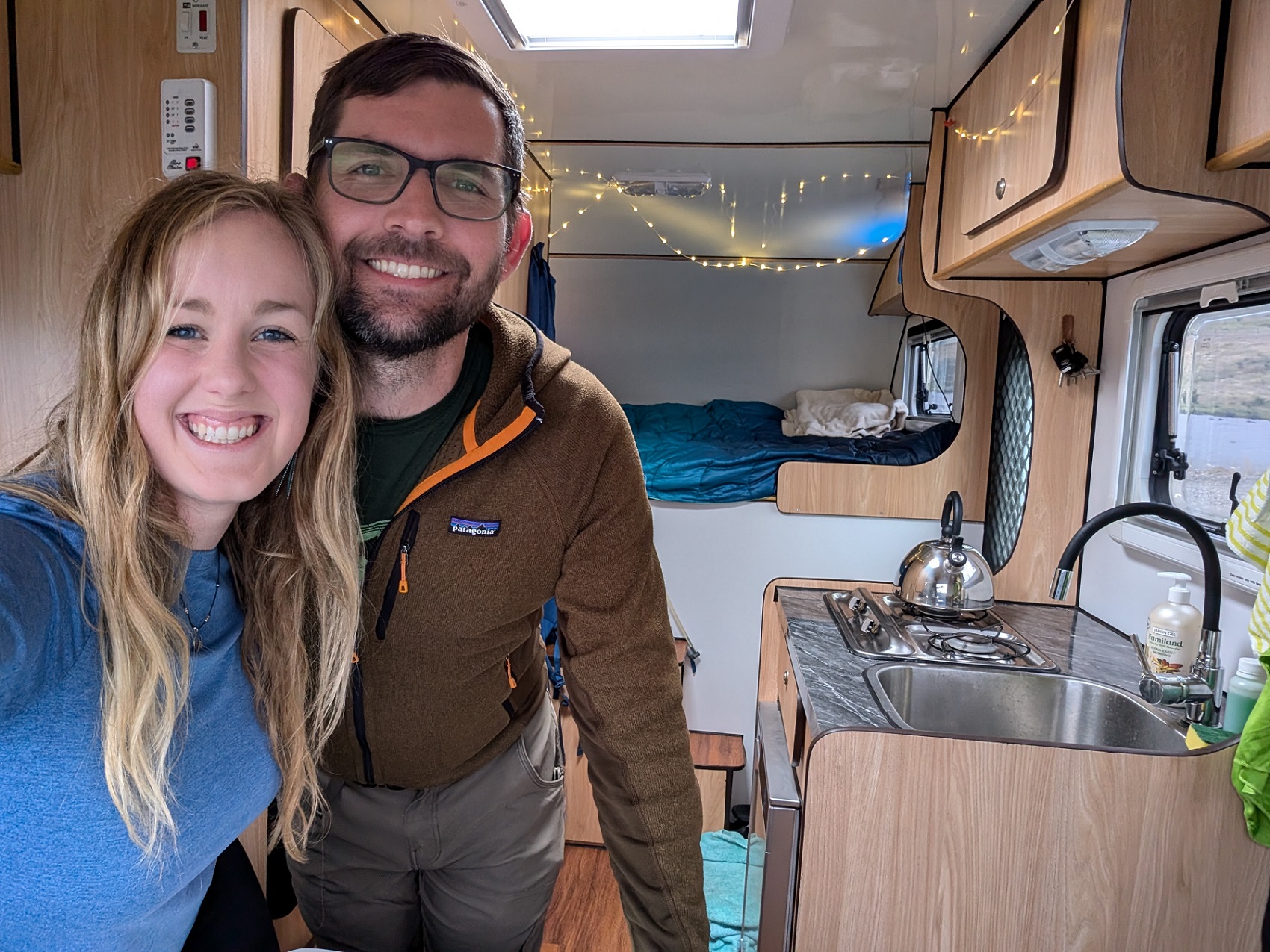
With so many tools geared towards improving efficiency in our world, it can be hard to enjoy a journey instead of focusing on the destination. Google Maps constantly reminds you how many minutes or miles you have until you’re there, taking you on the fastest route possible. Just 30 minutes til we get there. Let’s get there, then we can explore. I am a task-oriented person, so I am often feeling the need to get to the next destination or stop as soon as possible, so then we can relax and rest.
But why not rest now? Our beach stop, especially in a place of such unnerving and grounding beauty, was an intentional push against my internal clock that says go, go, go. With so much daylight in Tierra del Fuego, it does make it easier to relax into the day. That was certainly a benefit coming in January instead of March as we had previously considered.
Funnily enough, knitting helps me practice this mindset. Recently, someone asked me how long it takes me to knit a sweater. I wouldn’t even know how to make an accurate guess.
“Maybe… 200 hours? Give or take?” I ventured.
“Wow,” they replied. “I could never be that patient.”
I felt stunned. For me, knitting doesn’t require patience, because I just love to knit. The fact that I get sweaters or shawls or gifts I love out of the hobby is like a big bonus. I love the meditation of the stitches, allowing the yarn to soak in my energy and leave me with a centered focus I get from few other activities. I love the colors and textures of the yarn, the places I can knit and the things I learn or talk about while I work on it. It’s why I prioritized bringing a knitting project on our trip. Enjoying knitting for the sake of knitting is just like enjoying the journey. Sure, the destination is in mind, and it’s exciting. But there is no rush to get there. No deadline or need to hurry, because once I finish a project I have to choose a new one, which is both exciting and overwhelming in possibility.
If you want a new sweater tomorrow, that’s cool too, but you’ll have to buy one. If you want to focus your energy and travels on a single city or destination, don’t take a road trip, fly instead.
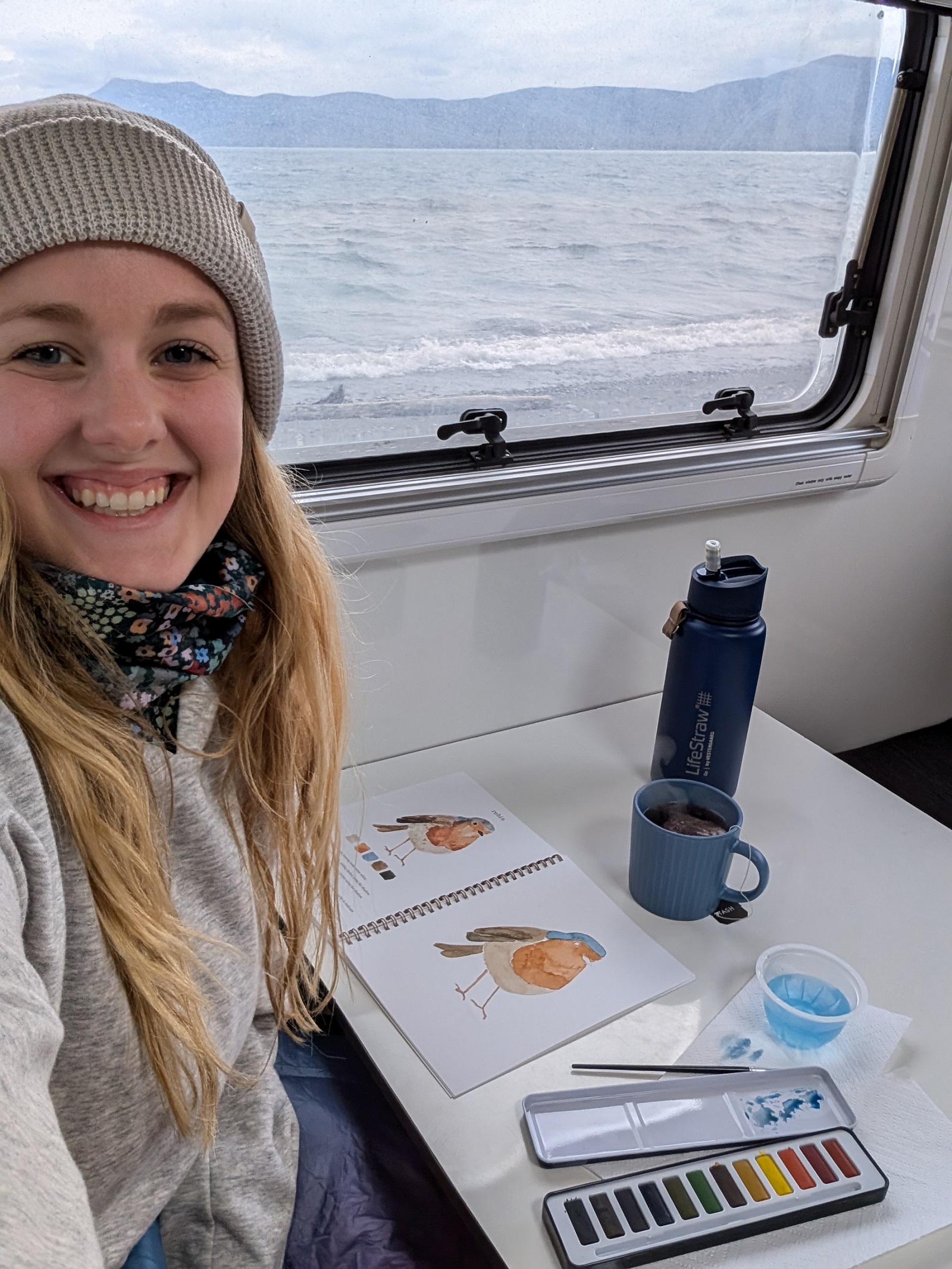
We stayed at the beach until nearly 6pm before heading to Ushuaia. While John napped, I watercolor painted with a view of the crashing waves and mountains beyond. I marveled at how a few hours of stillness allowed me to witness the changing weather patterns of the landscape as the clouds and rain rolled in. The land and water came alive. I drank tea and watched the waves and took a hot shower.
We hit the road with a renewed appetite and open minds ready to explore. And just around the corner: Ushuaia.
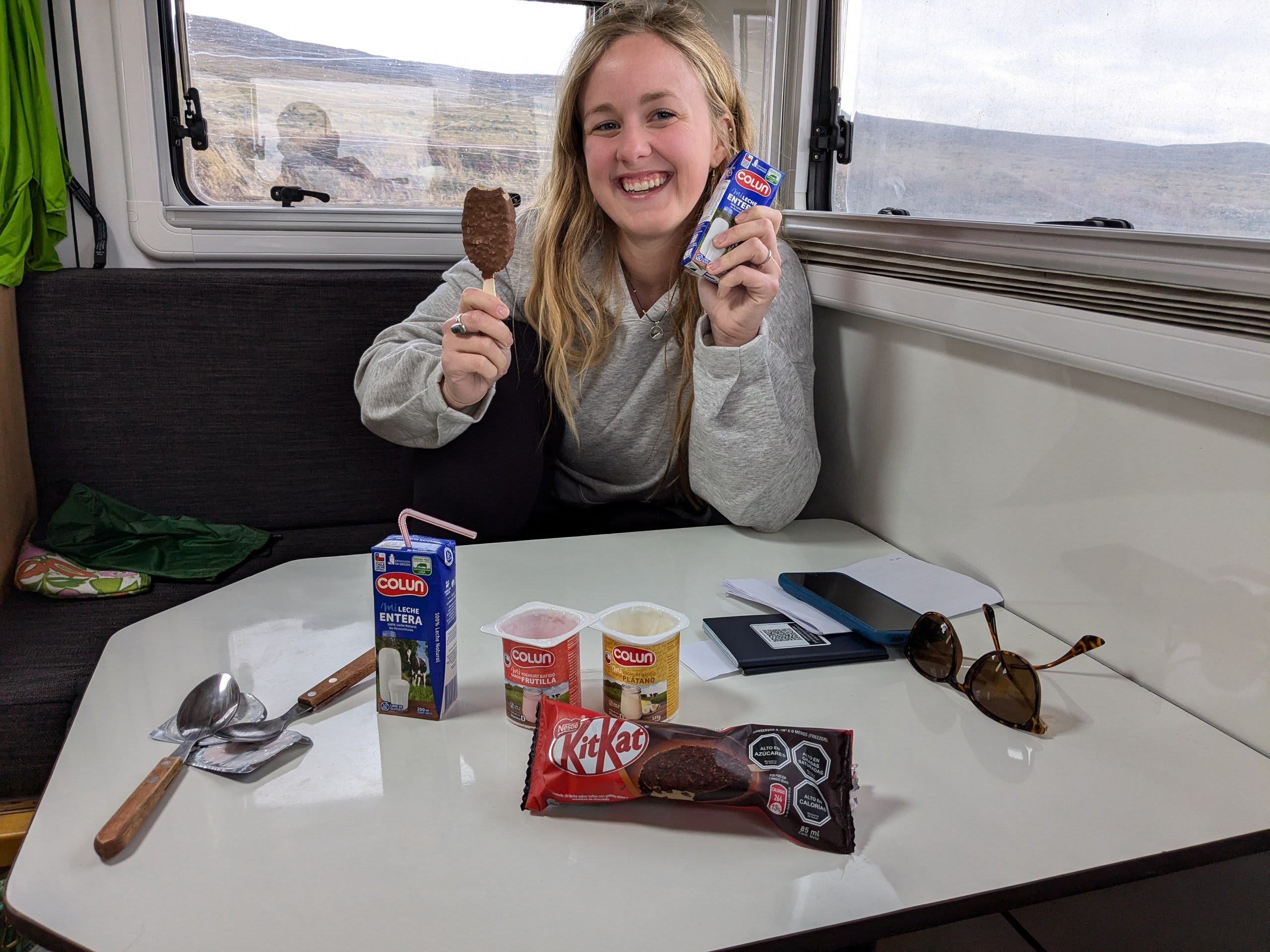
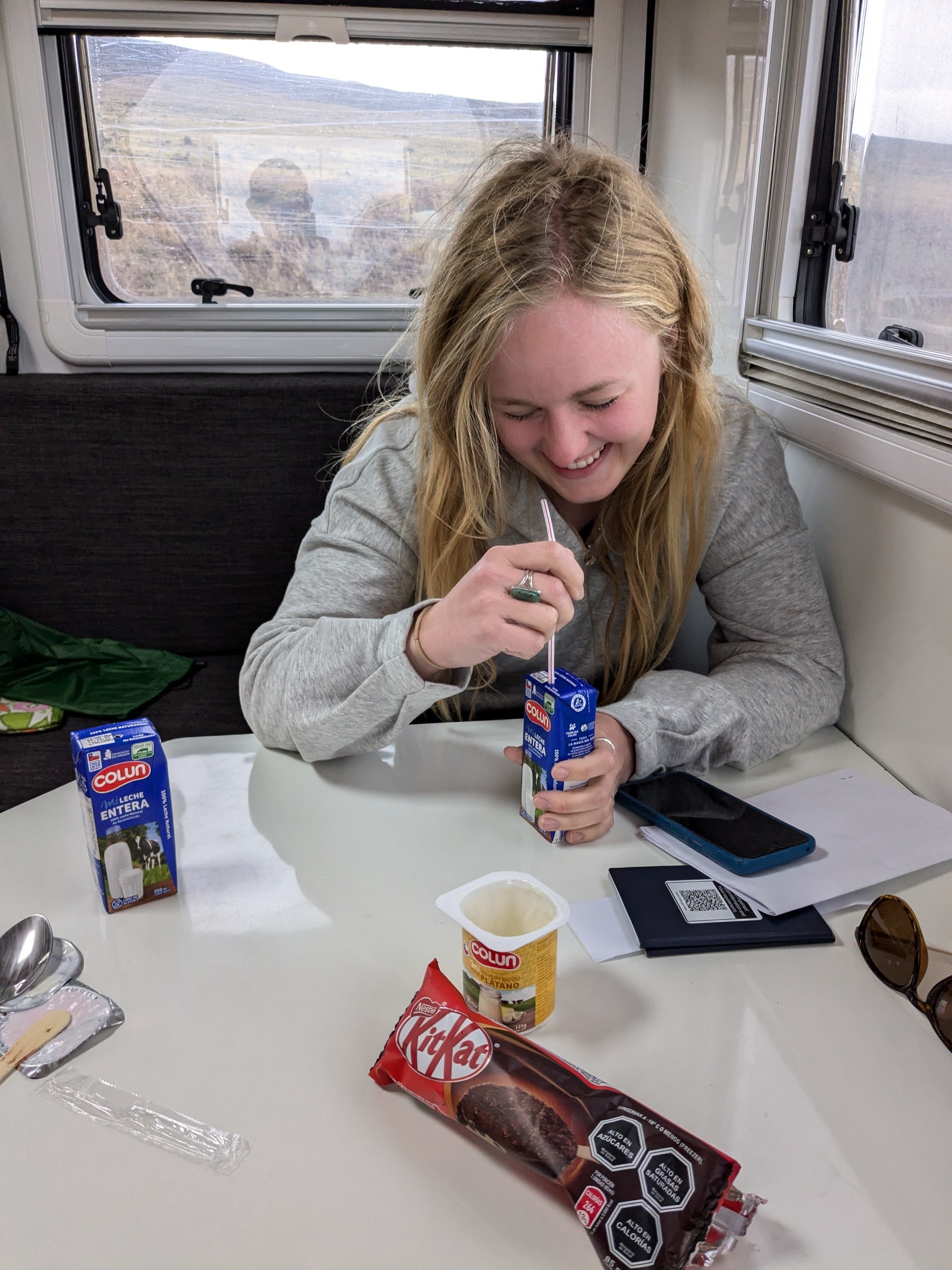
Every time we crossed into Argentina, we needed to get rid of any fresh food products to prevent transporting pests across the border. This included all fresh vegetables and fruit, meat, and dairy products. We managed our food stock as well as we could, and then tried to eat as much as we could before crossing to prevent as much food waste as possible. We called this our “dairy buffet”.
 The Curiosity Chronicles