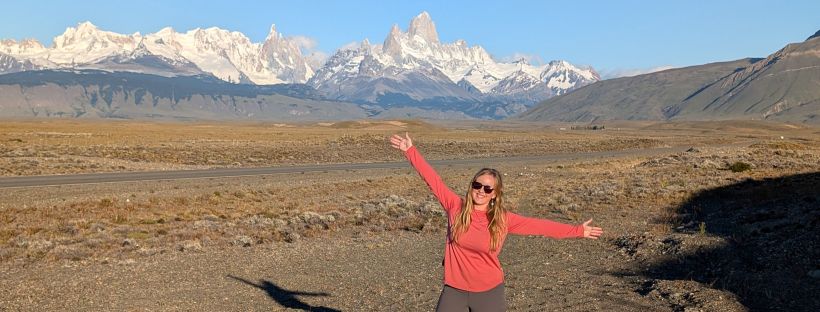
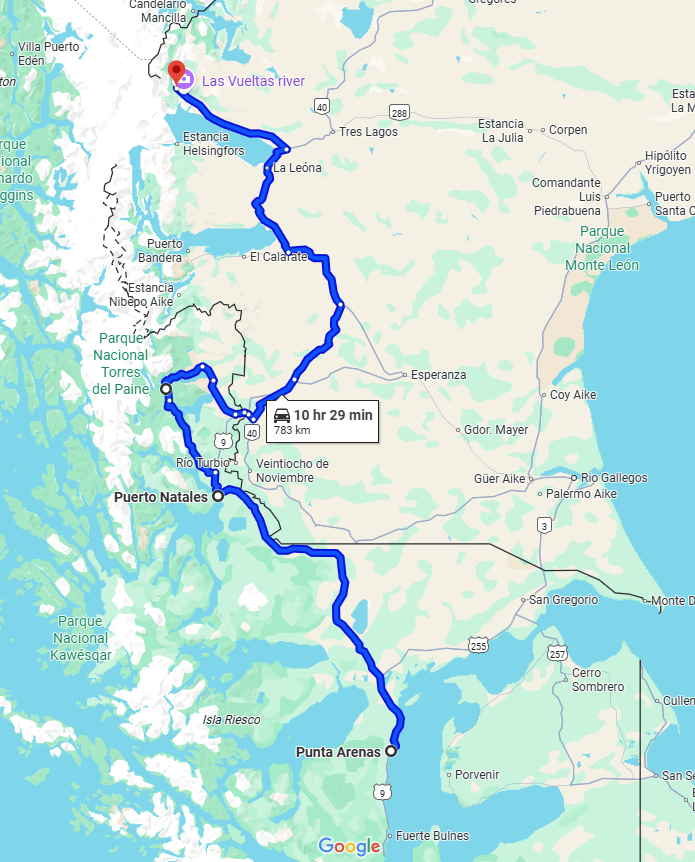
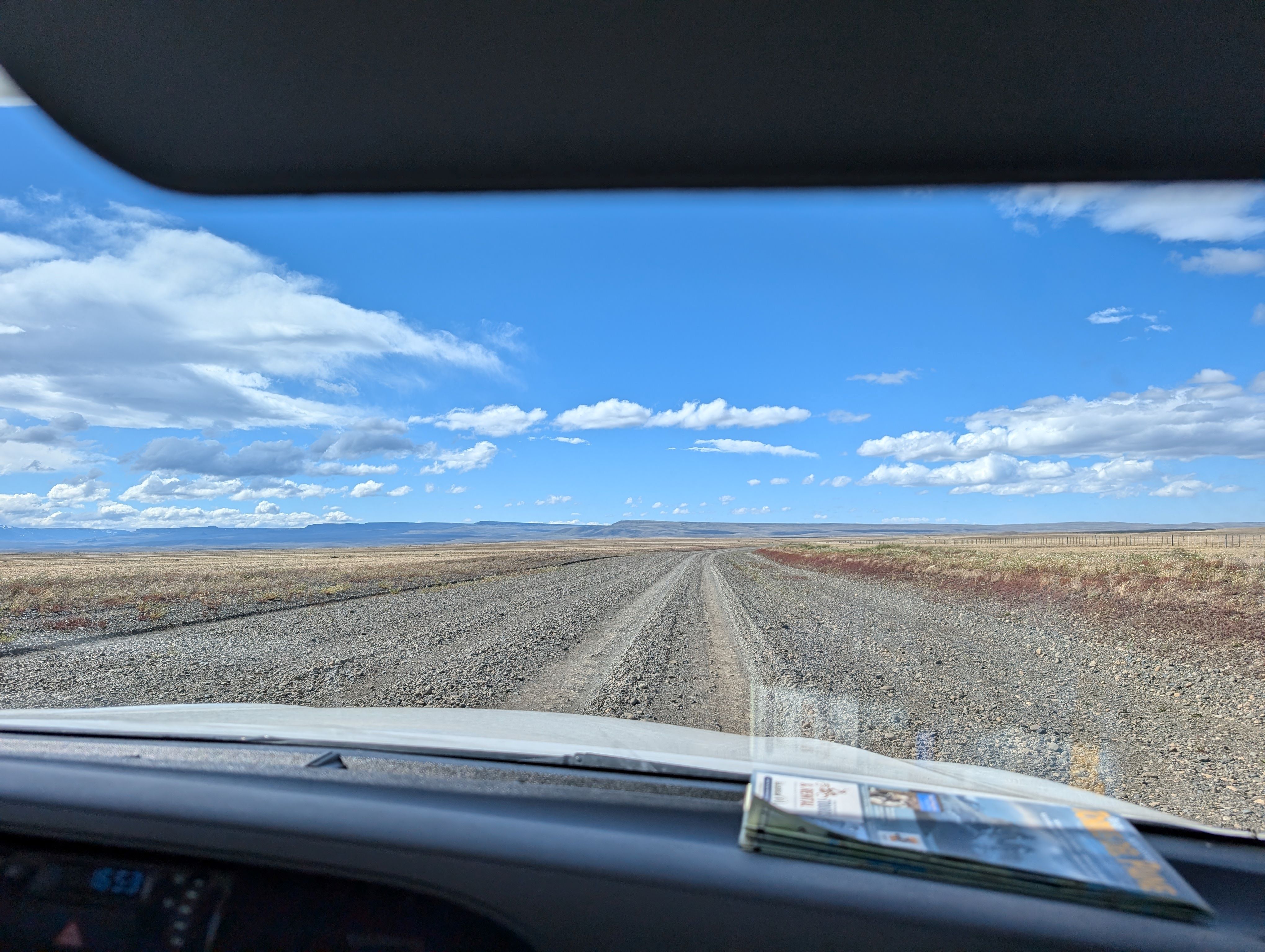
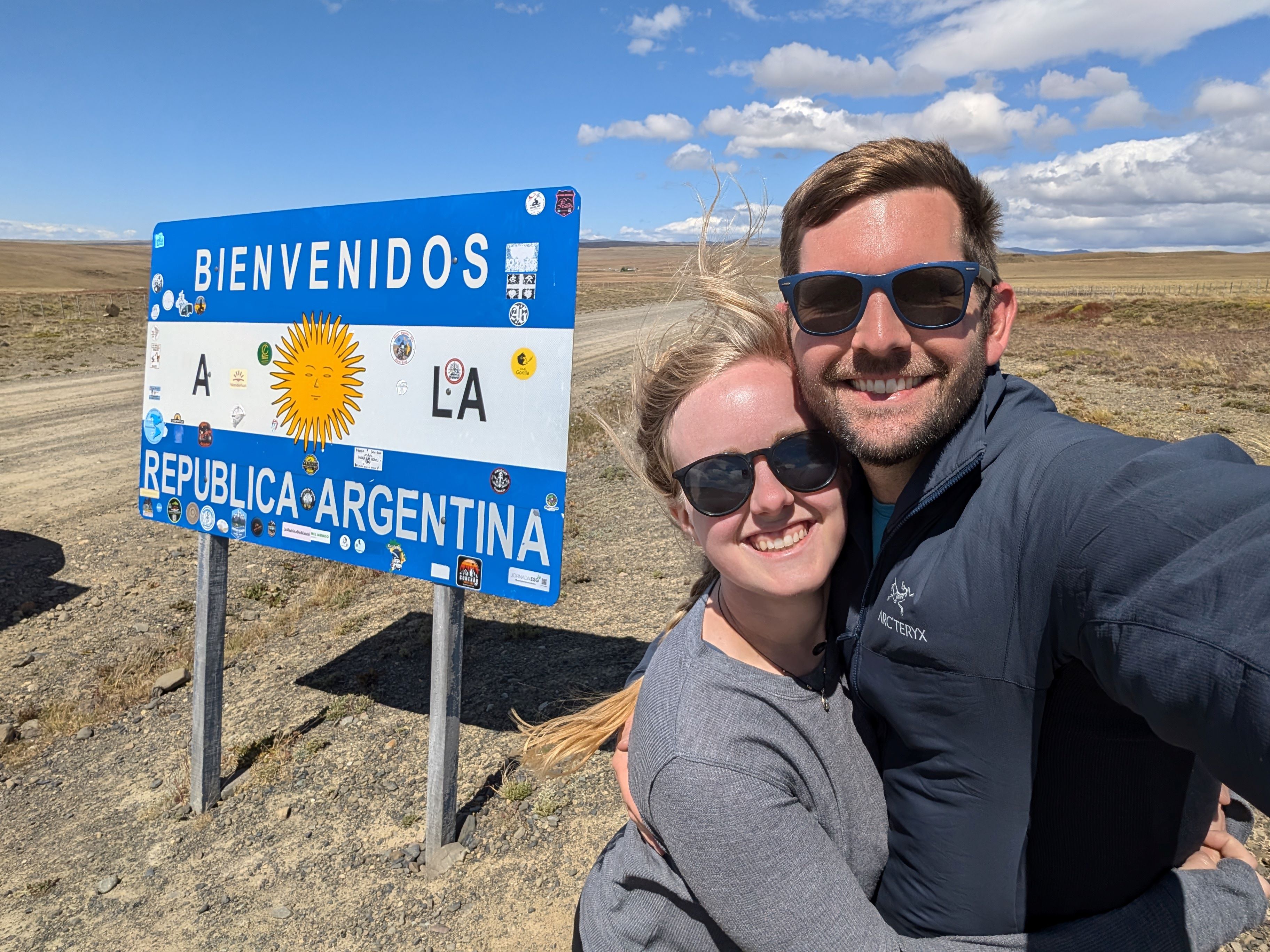
We had a big drive to get to El Chaltén, Argentina, a young town that was only just founded in 1985 during border disputes in the mountains it was nestled beneath. After three hours in the car and our first border crossing (which was completed entirely in Spanish), we reached a crossroads: continue on the pavement, or turn off onto the gravel road. The road sign pointed towards the gravel road with EL CHALTEN displayed in clear, bold letters. We forged ahead onto the riverbed-style gravel, that had rocks as big as baseballs.
Optimistic at first, we watched Google Maps in trepidation as the rough road added minutes to our total travel time for the day, until our arrival time was an hour later at night. The journey was desolate and exhausting, and we did not encounter a single car. I began to spiral, worrying that the roads would be that rough all the way to El Chaltén and down south to Ushuaia, Argentina, too. How long would this journey take us if every route took an additional two hours? We were already stretched thin for time.
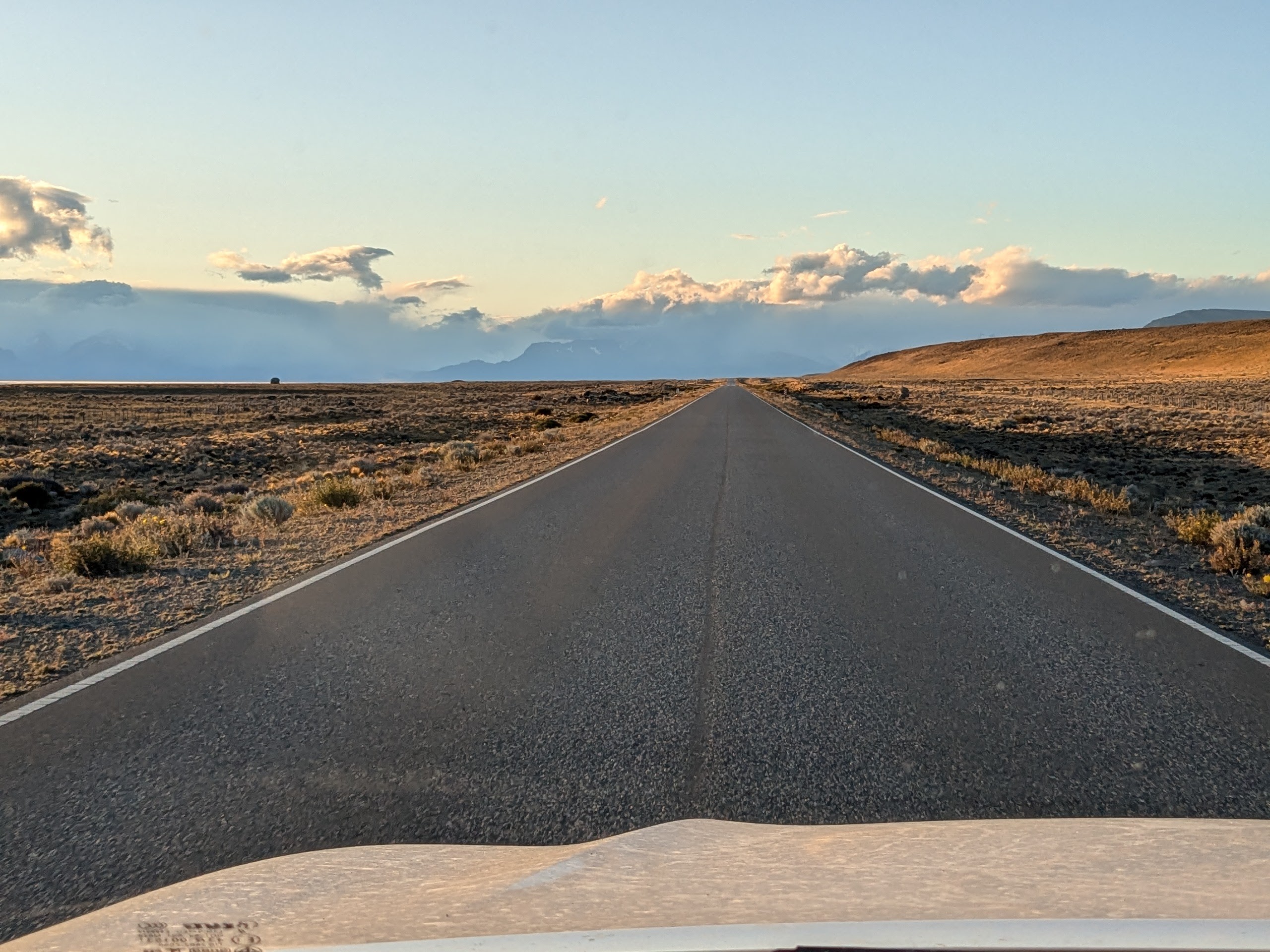
Eventually, after miles and miles of flat and empty desert, we reached pavement once more. It turns out the “main” route is actually a major detour in mileage, but miraculously faster in time (see the road that heads east to Esperanza before north again). Once we realized that we had taken an extra off-the-beaten-path route, our spirits began to lift.
That is, until the winds picked up.
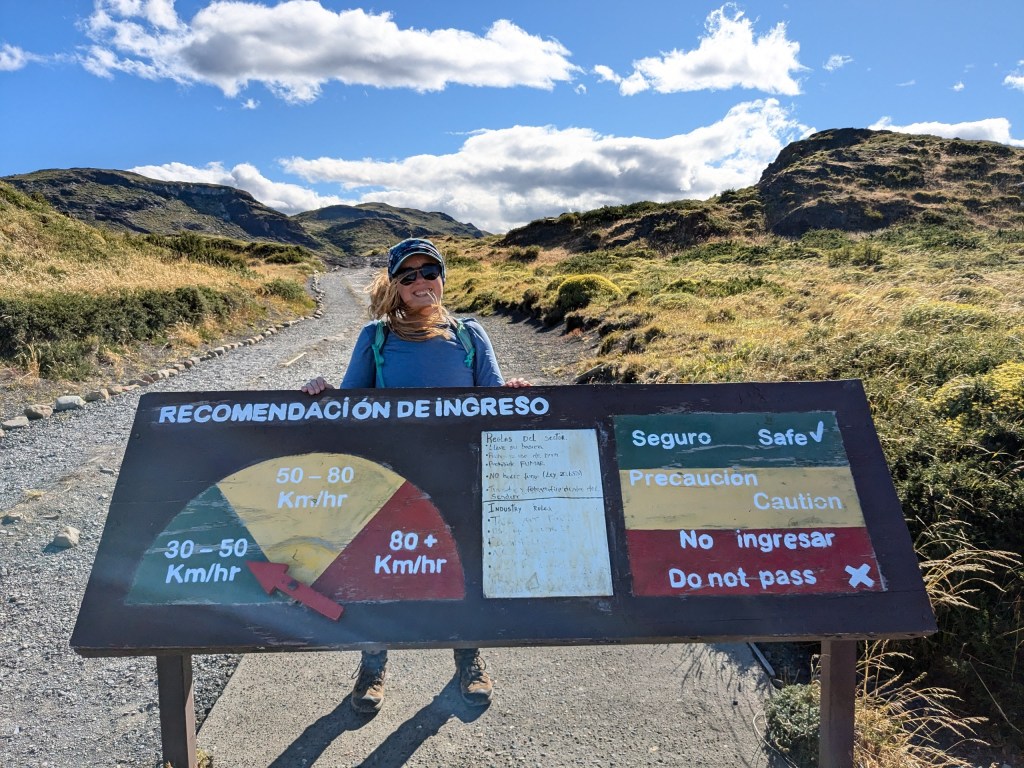
The winds in Patagonia are extreme. For safety, some parks have “stoplight” signs at hiking trailheads: green means safe, yellow means proceed with caution, and red means do not hike this trail. Everything we had experienced so far was only “green”, but in a camper van traveling more than 100km/hr in the open desert steppe, the noise could be so loud that John and I could barely hear each other speak. It aggravated my nerves, and I again was worried that we planned (I planned) too much driving on the trip, even though a road trip was exactly the point. But wind and road conditions can be tiring, and take longer than planned, so anxiety sat heavy on my chest.
“Why didn’t I plan us a super-relaxing trip on a beach somewhere for us, with nothing to do and nowhere to go?” I asked John that day.
“Because that’s not who we are,” he replied without hesitation. “We’d spend two days doing nothing and then be bored.”
I knew he was right. We’d signed up for adventure, and this was it.
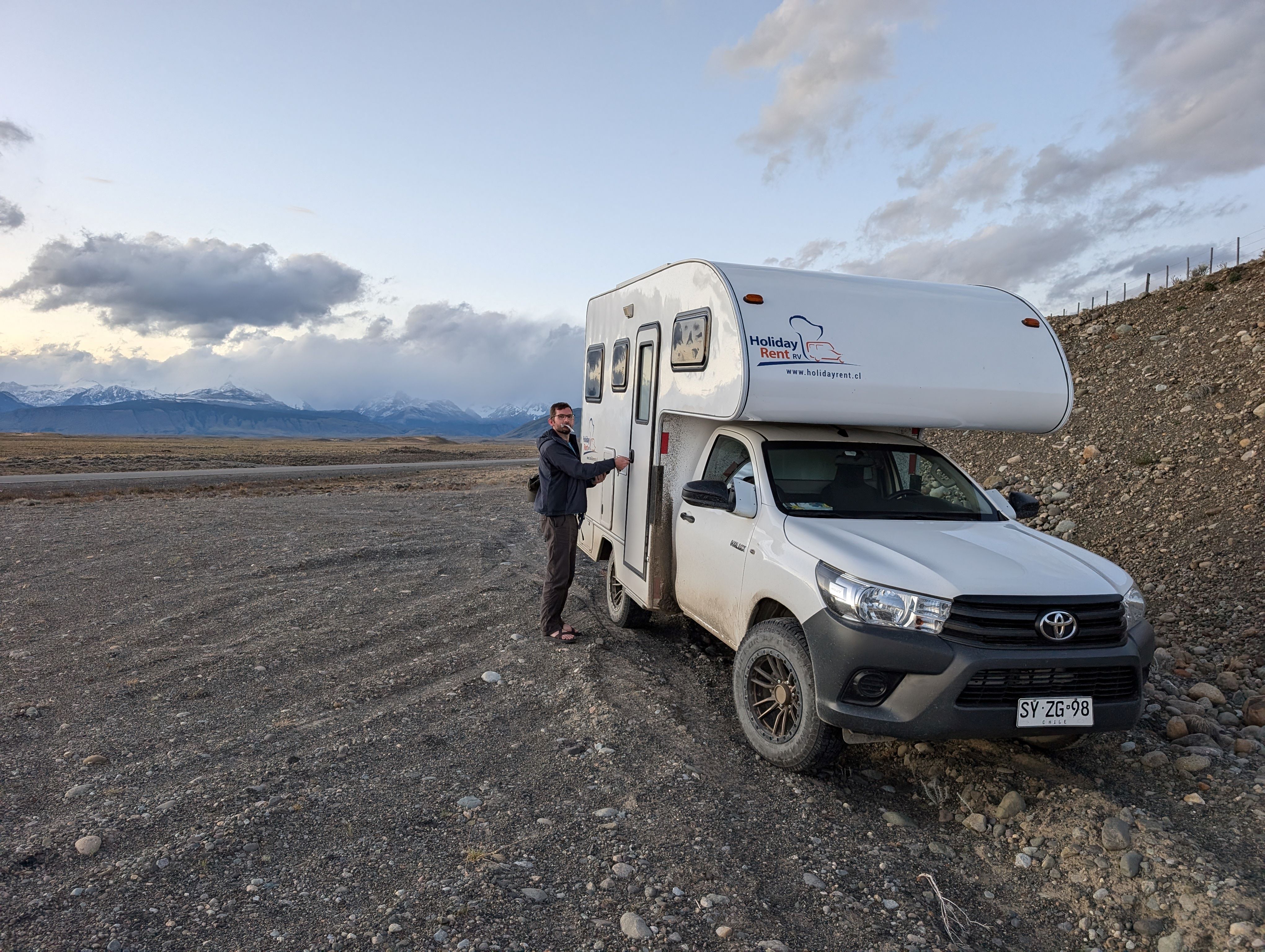
We pushed through the desert and found a wild camping site on our iOverlander app before getting to town. It was quiet and windy, but a lake sparkled in the distance, the mountains behind it shrouded in dark clouds. We cozied up in the camper, the wind gently rocking us back and forth. Exhausted as I was, a realization crept in: it was the last night of my twenties.
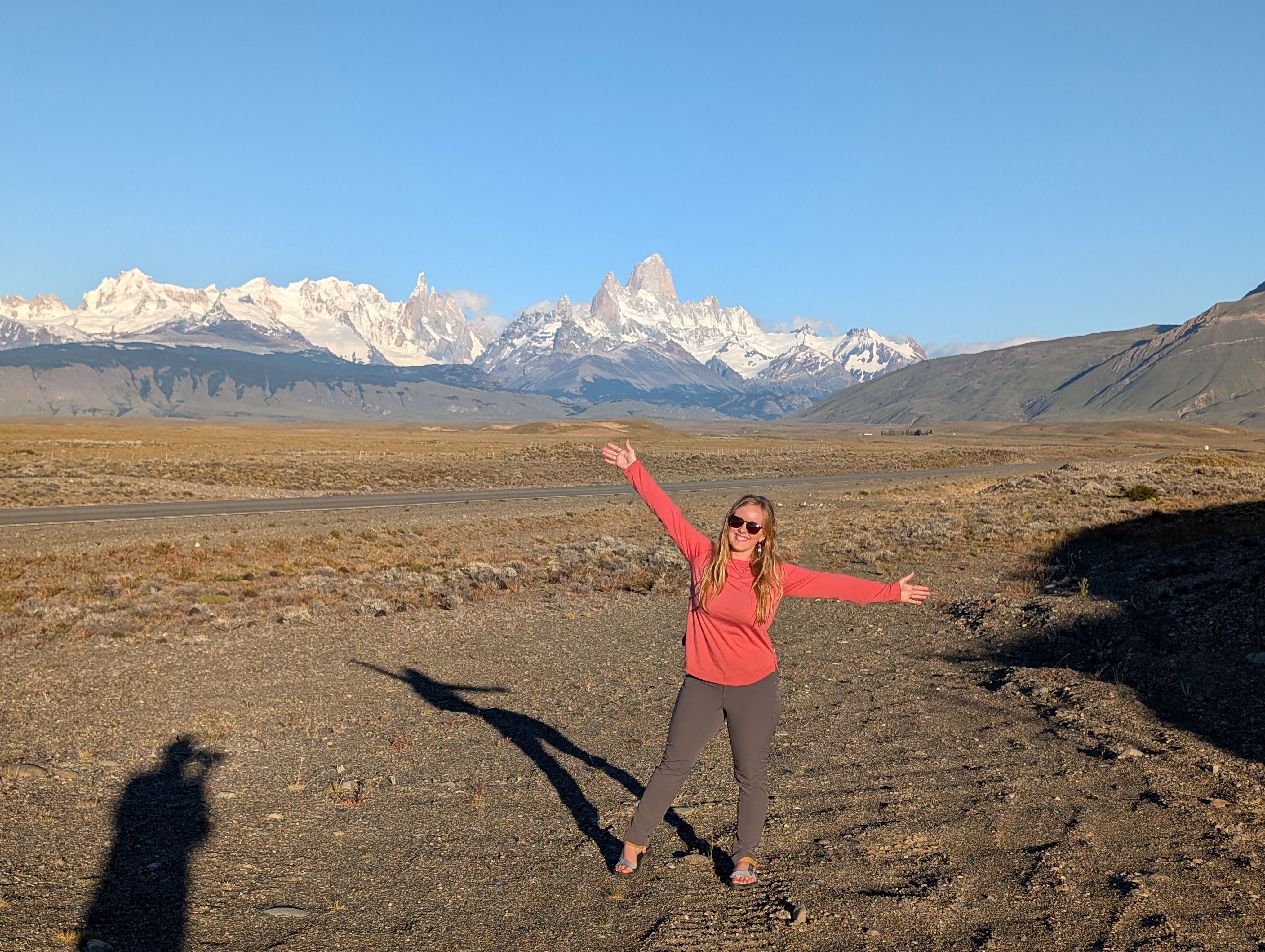
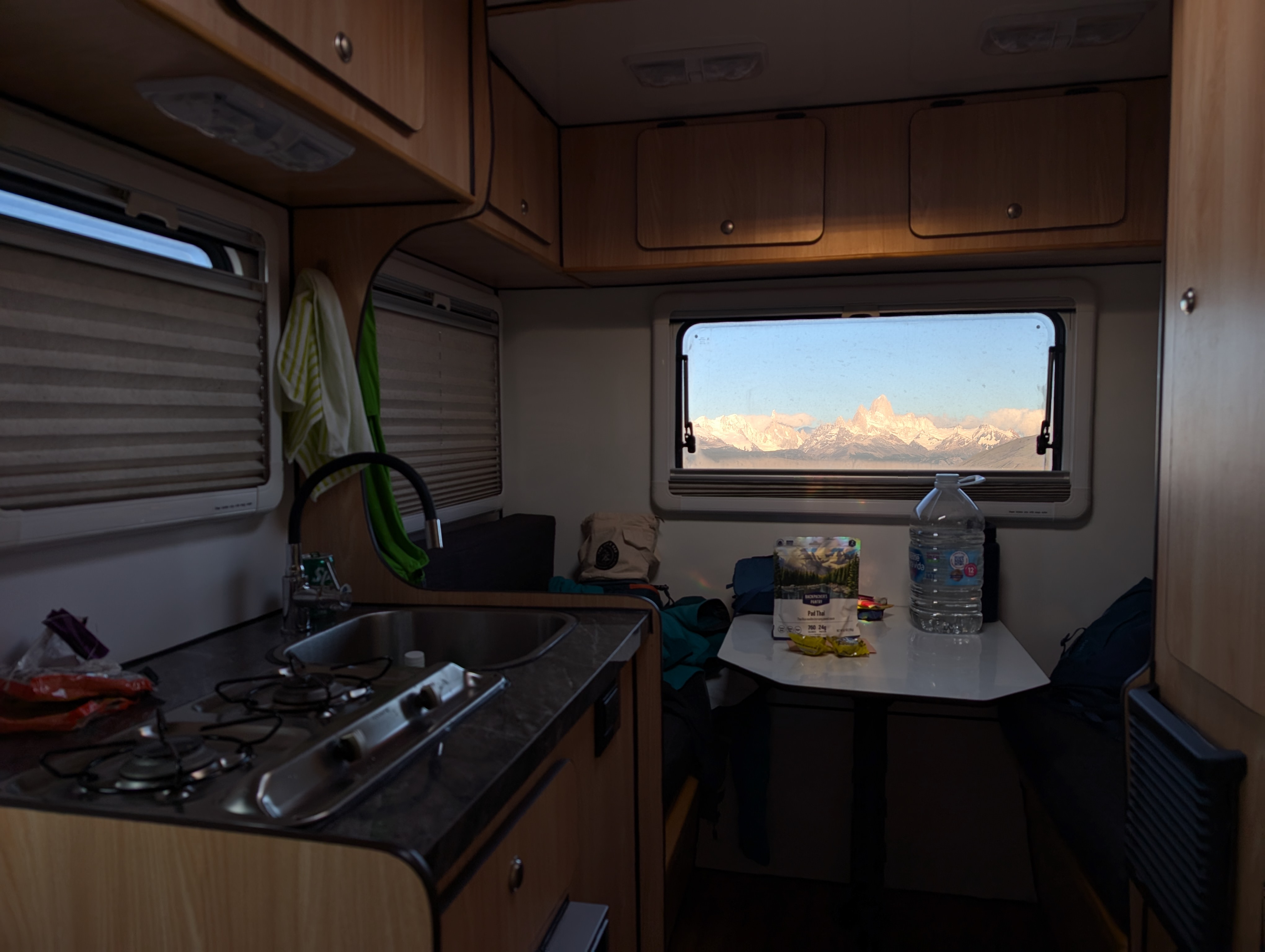
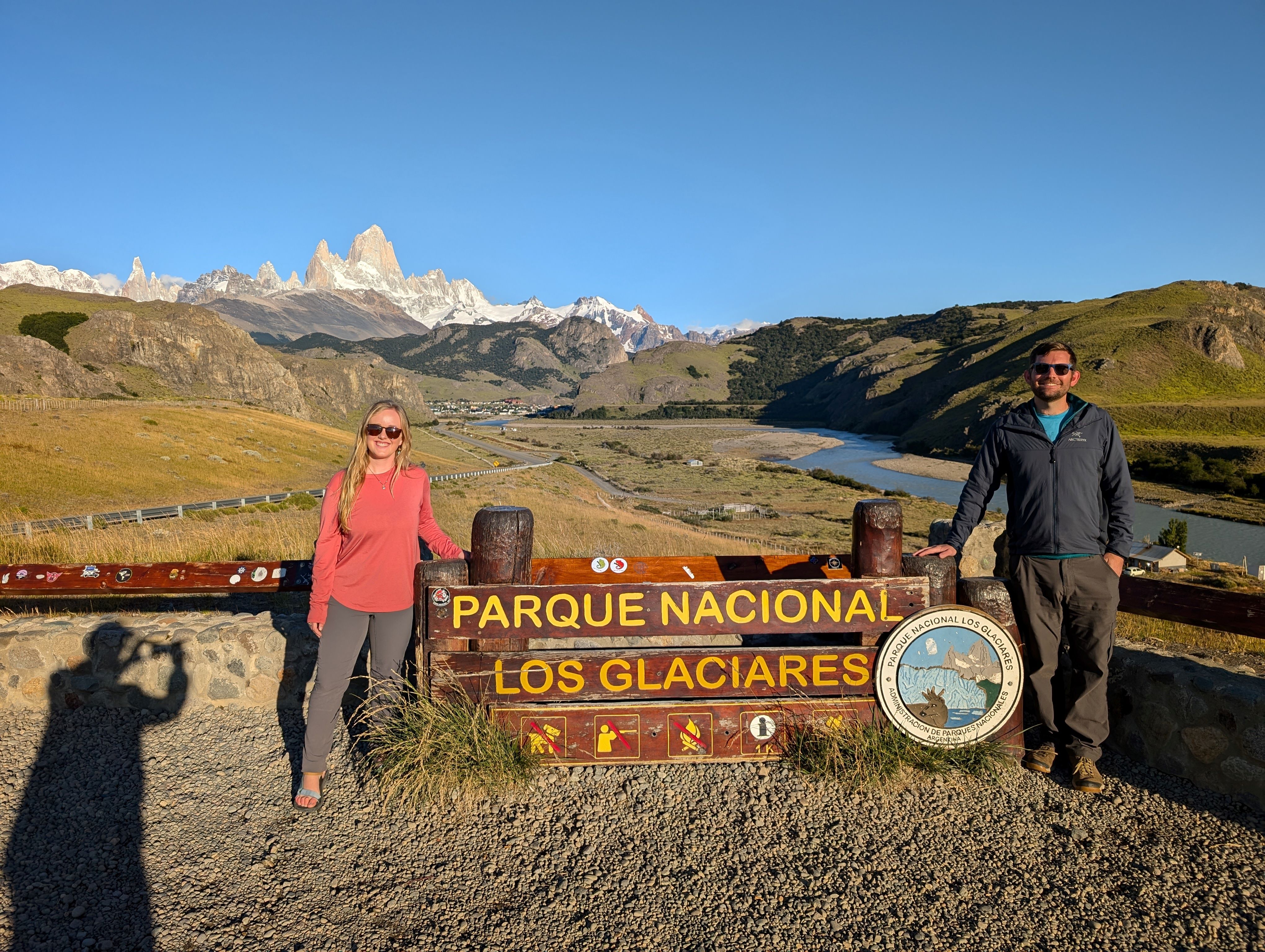
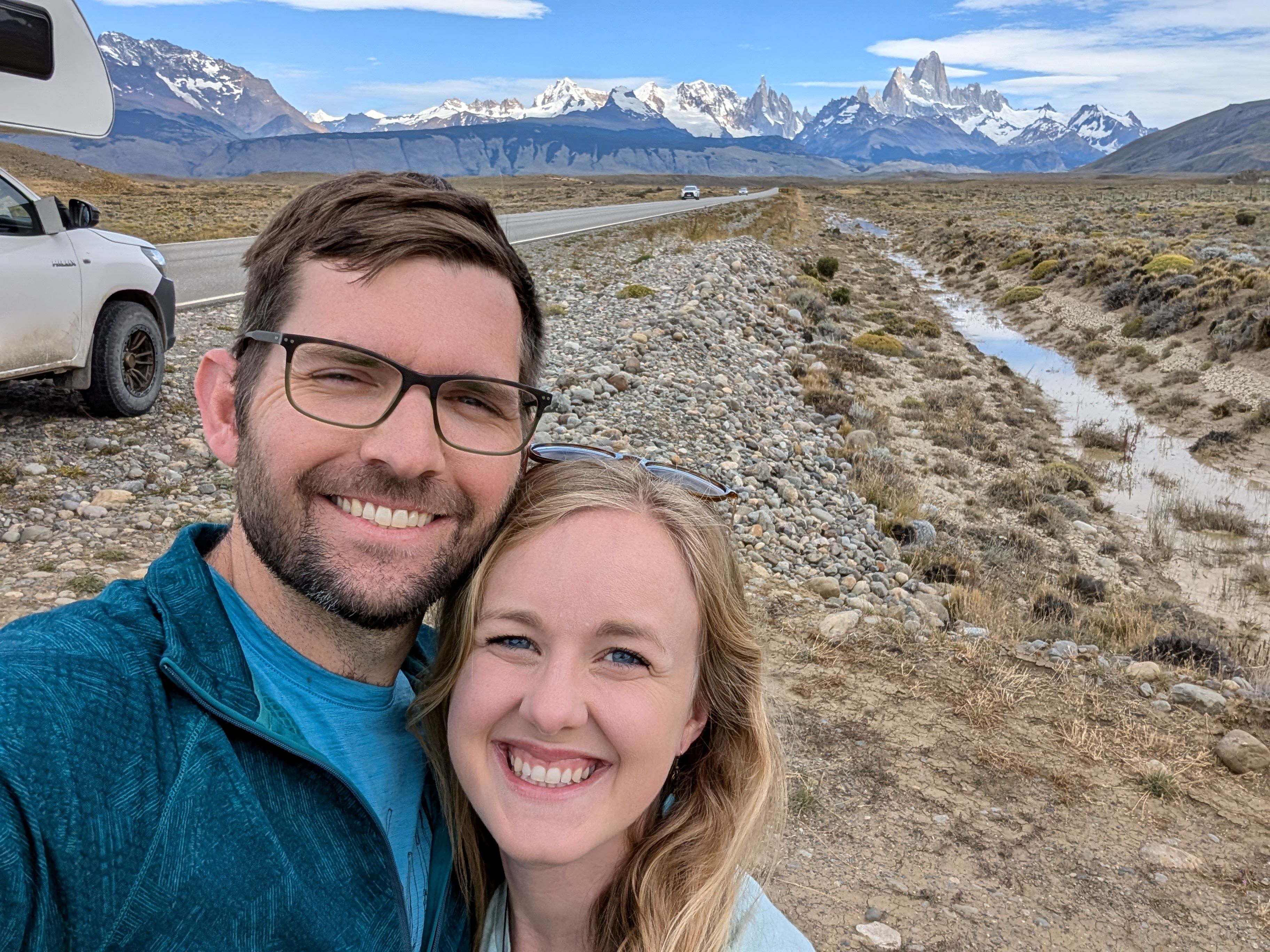
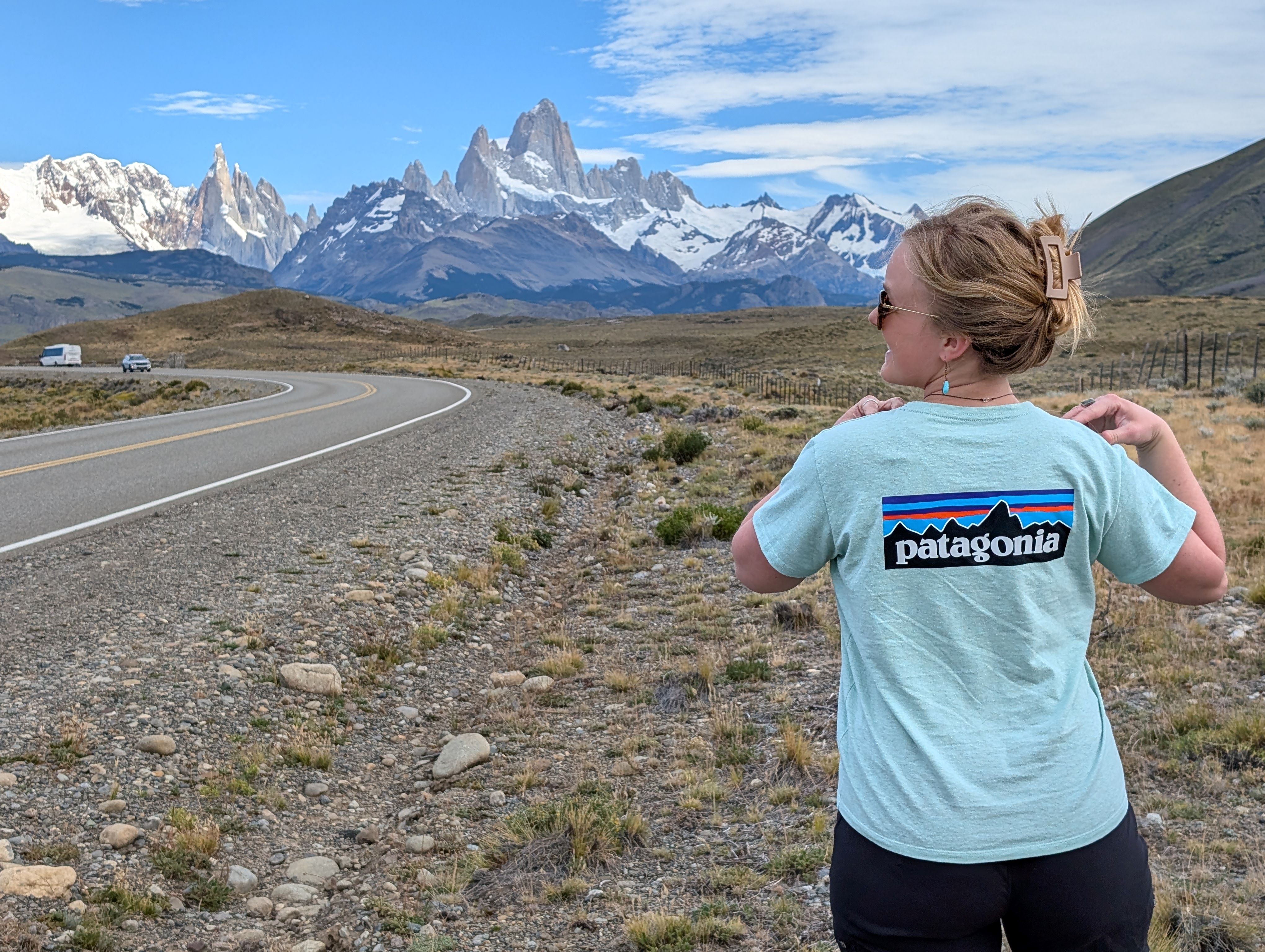
The next day was quite possibly one of my best and favorite birthdays ever. I was ready to dive headfirst into my thirties and our adventures did not disappoint. I jumped out of bed in the morning to see the entire mountain range and Mt. Fitz Roy illuminated pink in the sunrise. These peaks are most famously known as the mountain skyline in the logo from the clothing and gear brand that shares a name with this region, Patagonia.
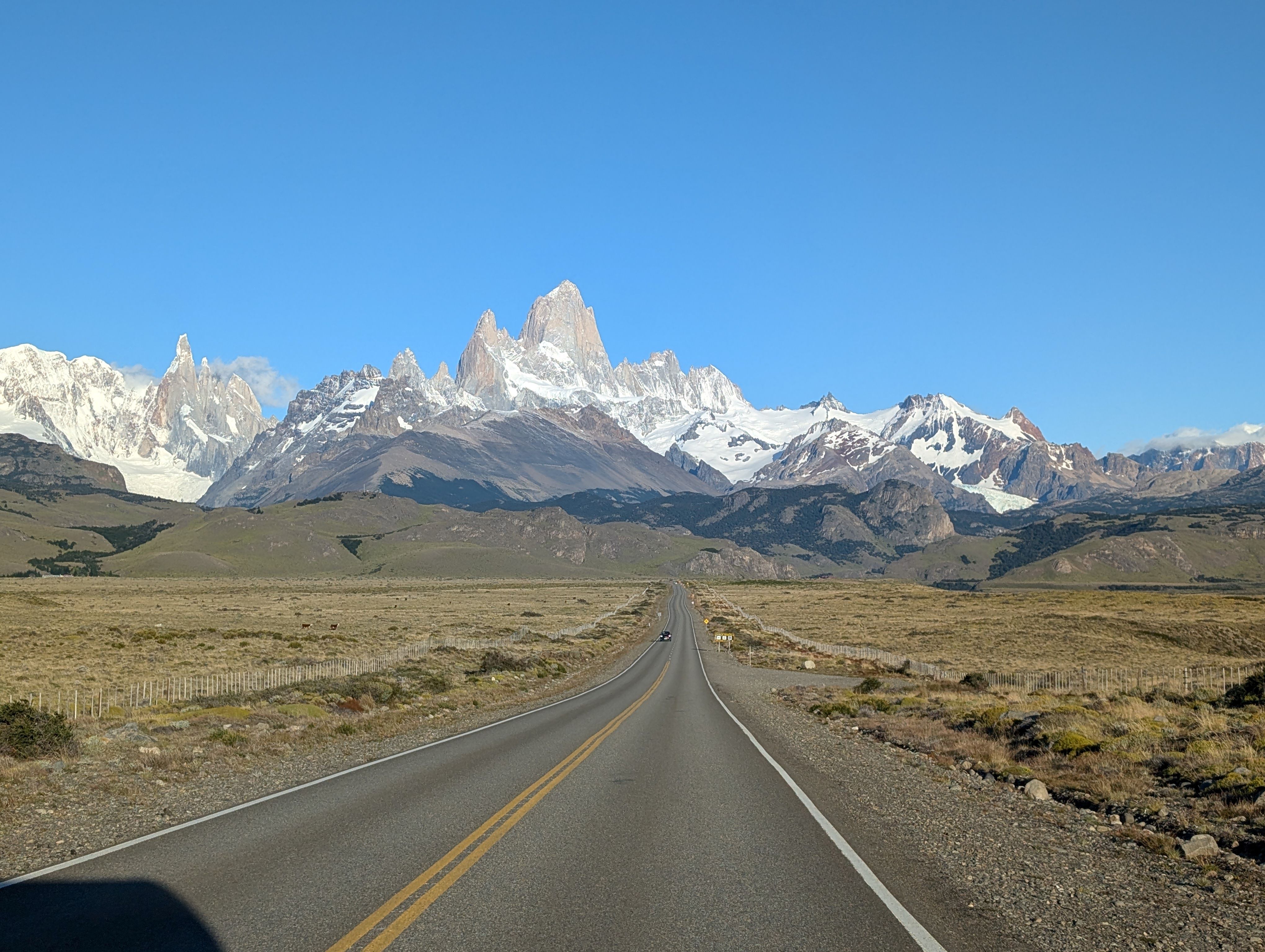
A completely clear blue sky awaited us. We finished packing up to drive to town and Los Glaciares National Park, where El Chaltén is settled. I still wasn’t used to the fact that we were always driving our “home” around with us. Every time we drove, we needed to lock cabinets and put our belongings away, but the ease and convenience of being self-contained helped us do more with our limited time. As we neared the mountains, the road began to rise and fall, eventually stretching toward Mt. Fitz Roy ahead of us like the yellow brick road leading to the Emerald City.
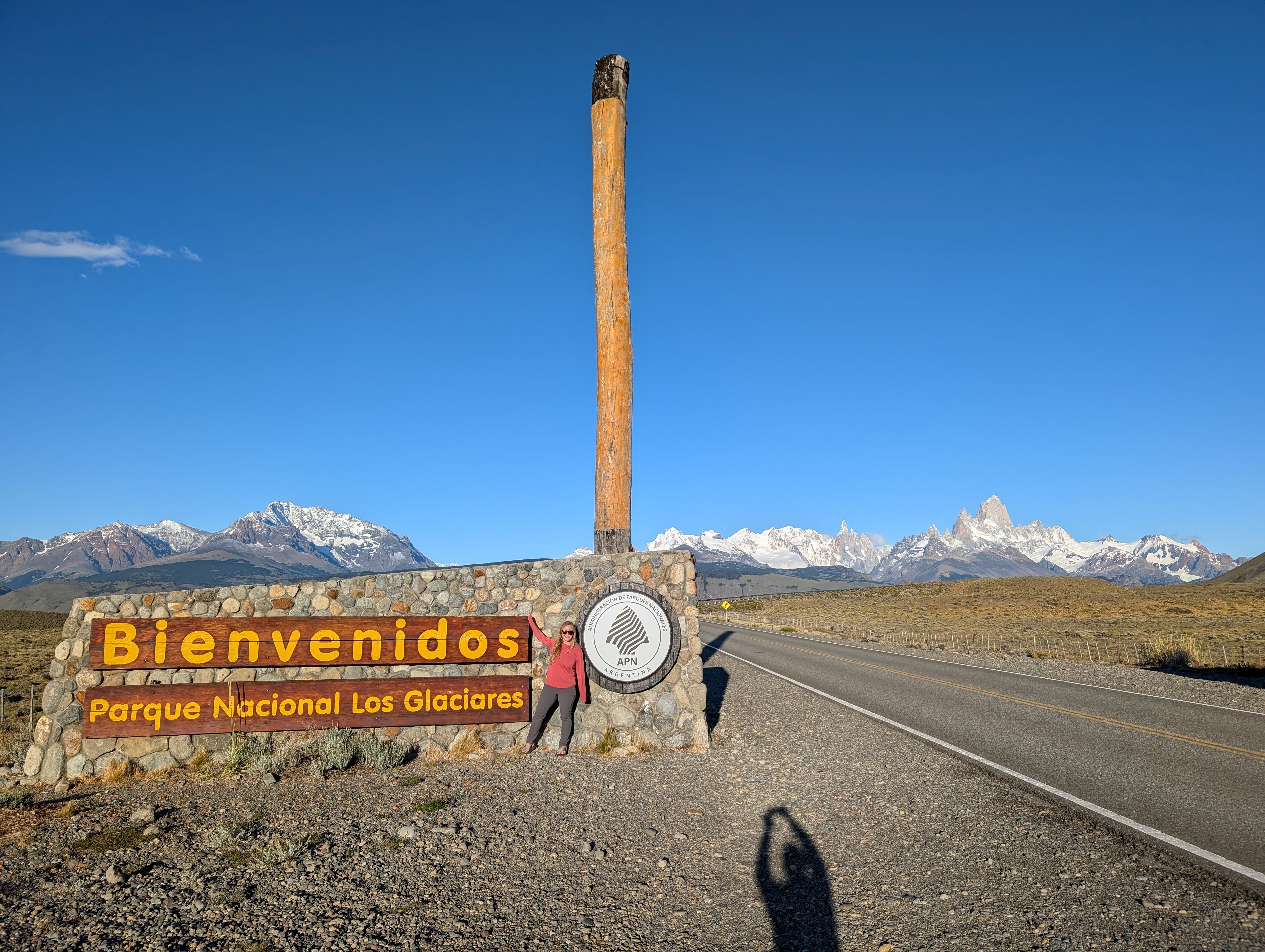
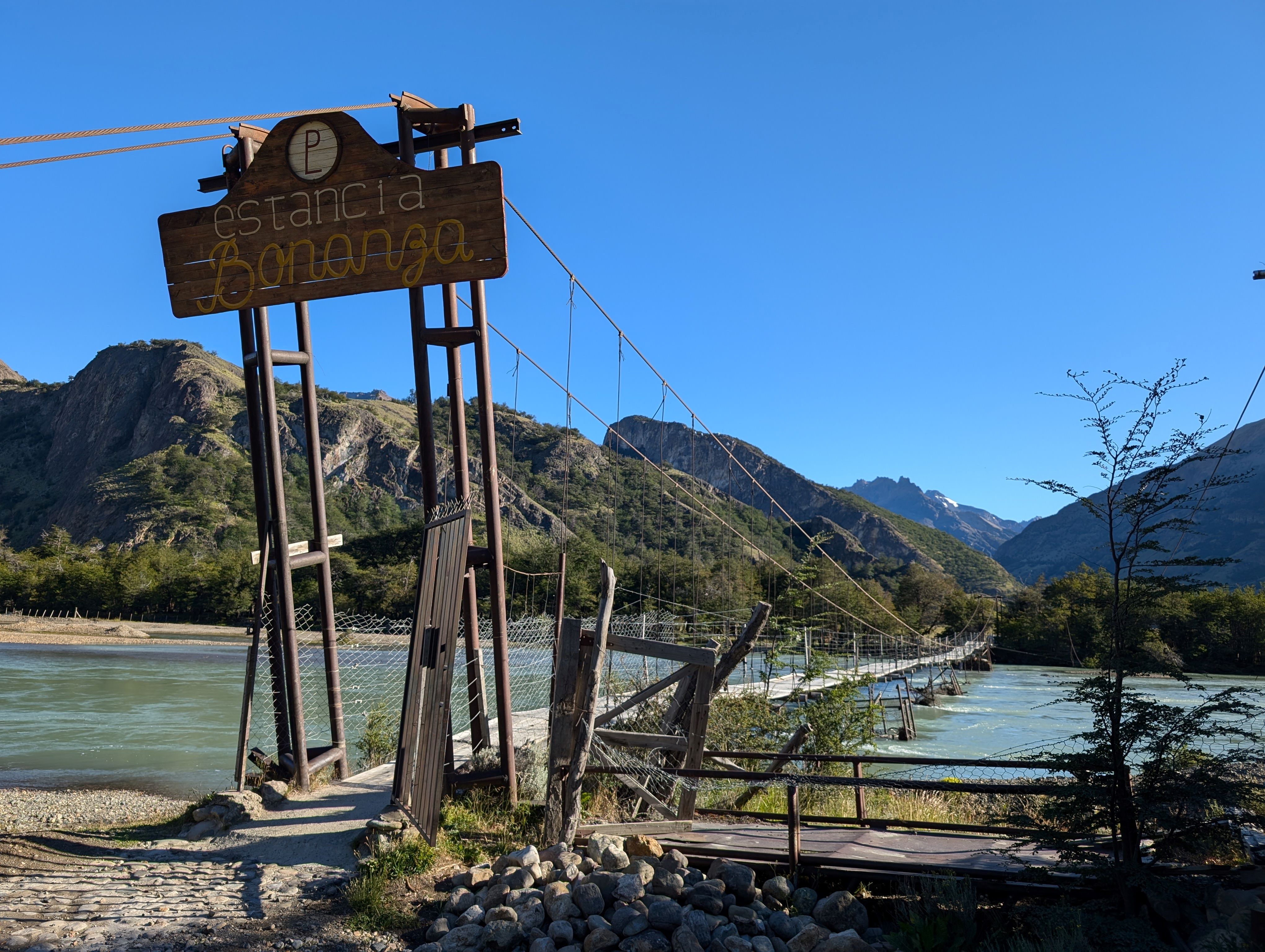
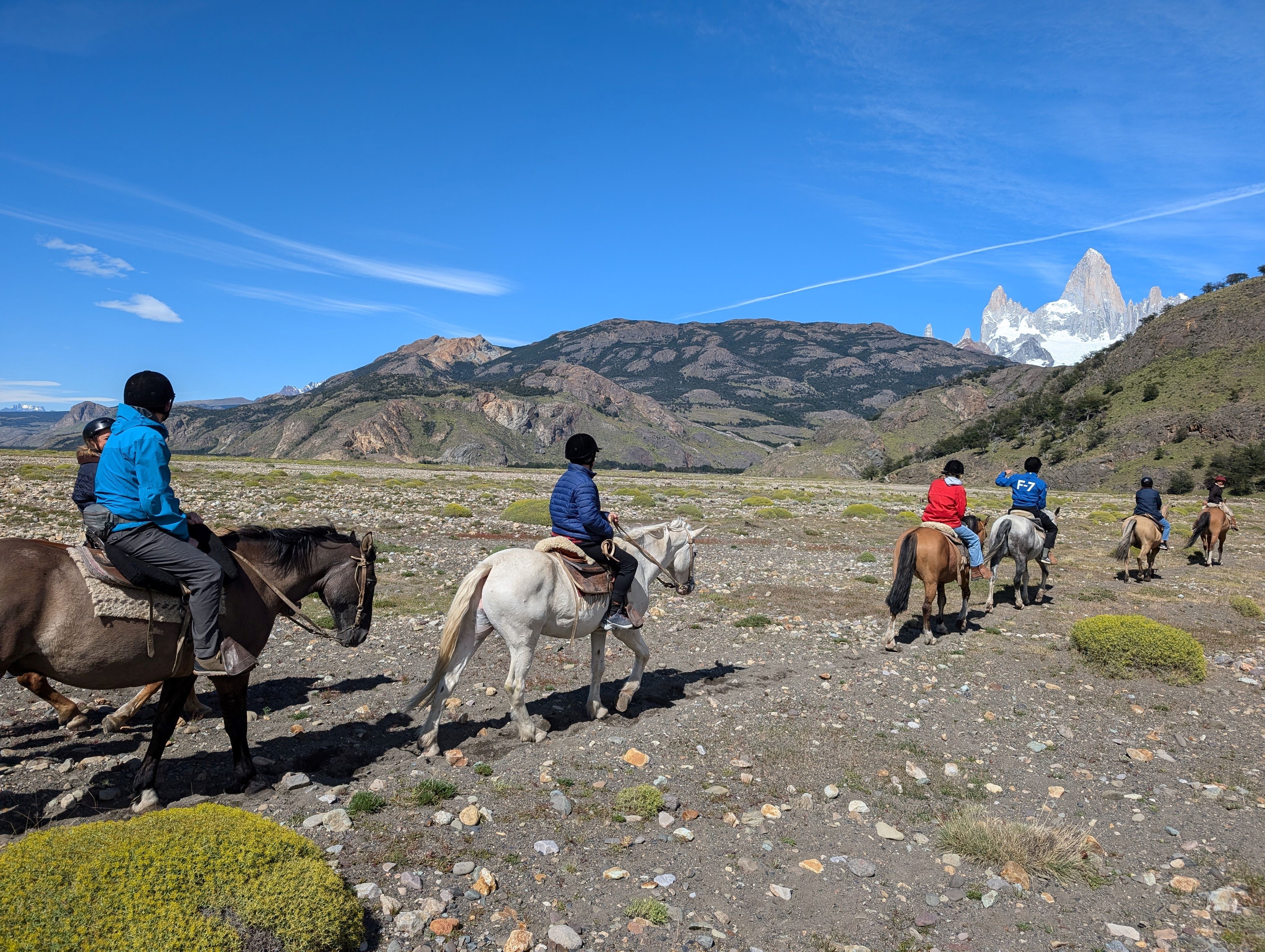
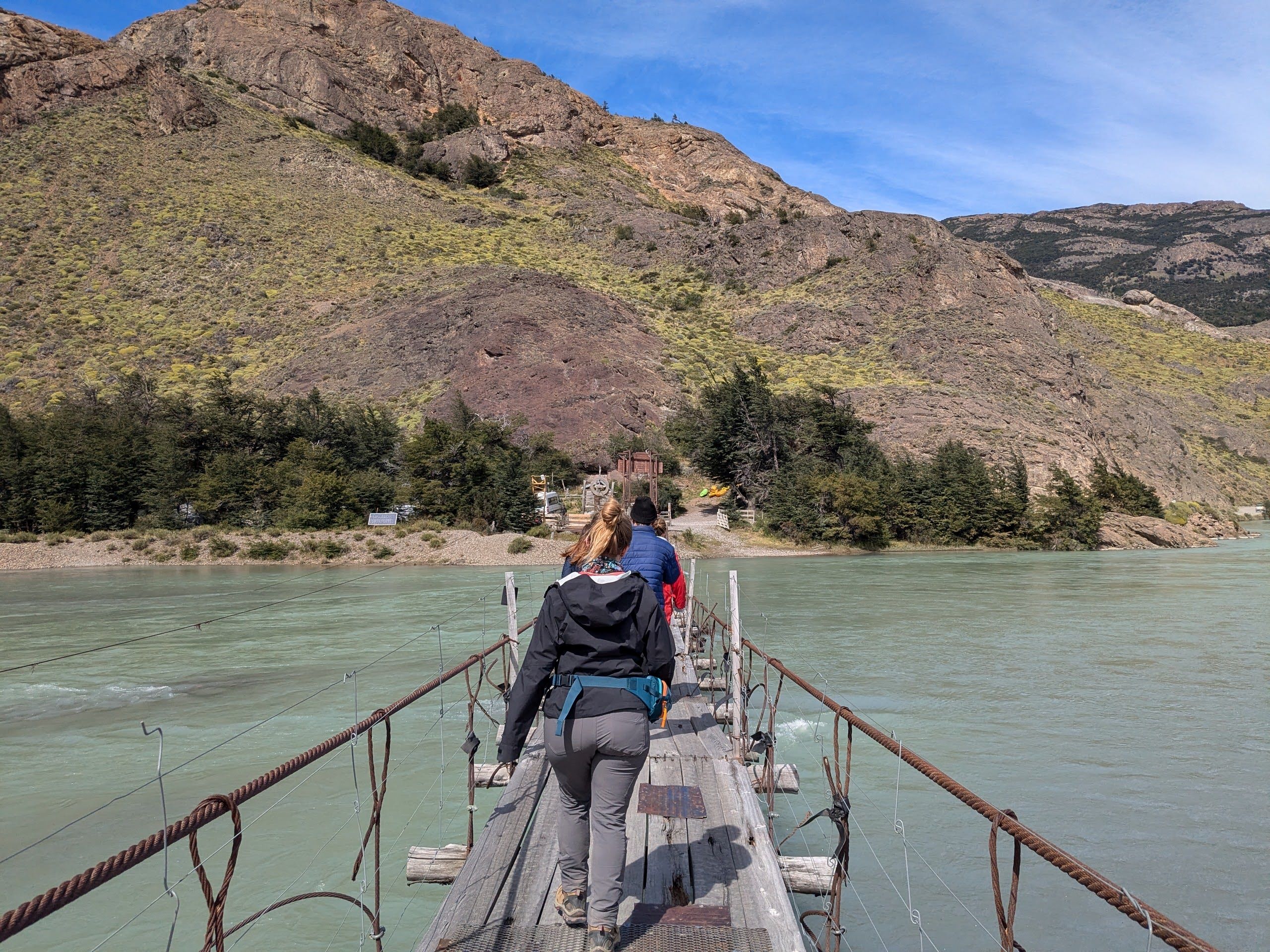
Our first stop was a horseback riding tour at Estancia Bonanza. In Patagonia, estancias are large, wealthy ranches or farms, usually with a historic or cultural significance. We met our guides at a small office in town and loaded into a shuttle van that took us north. The gravel road followed a glacial river to a swinging wooden foot bridge that led to the estancia across the turquoise glacial river, Rio las Vueltas.
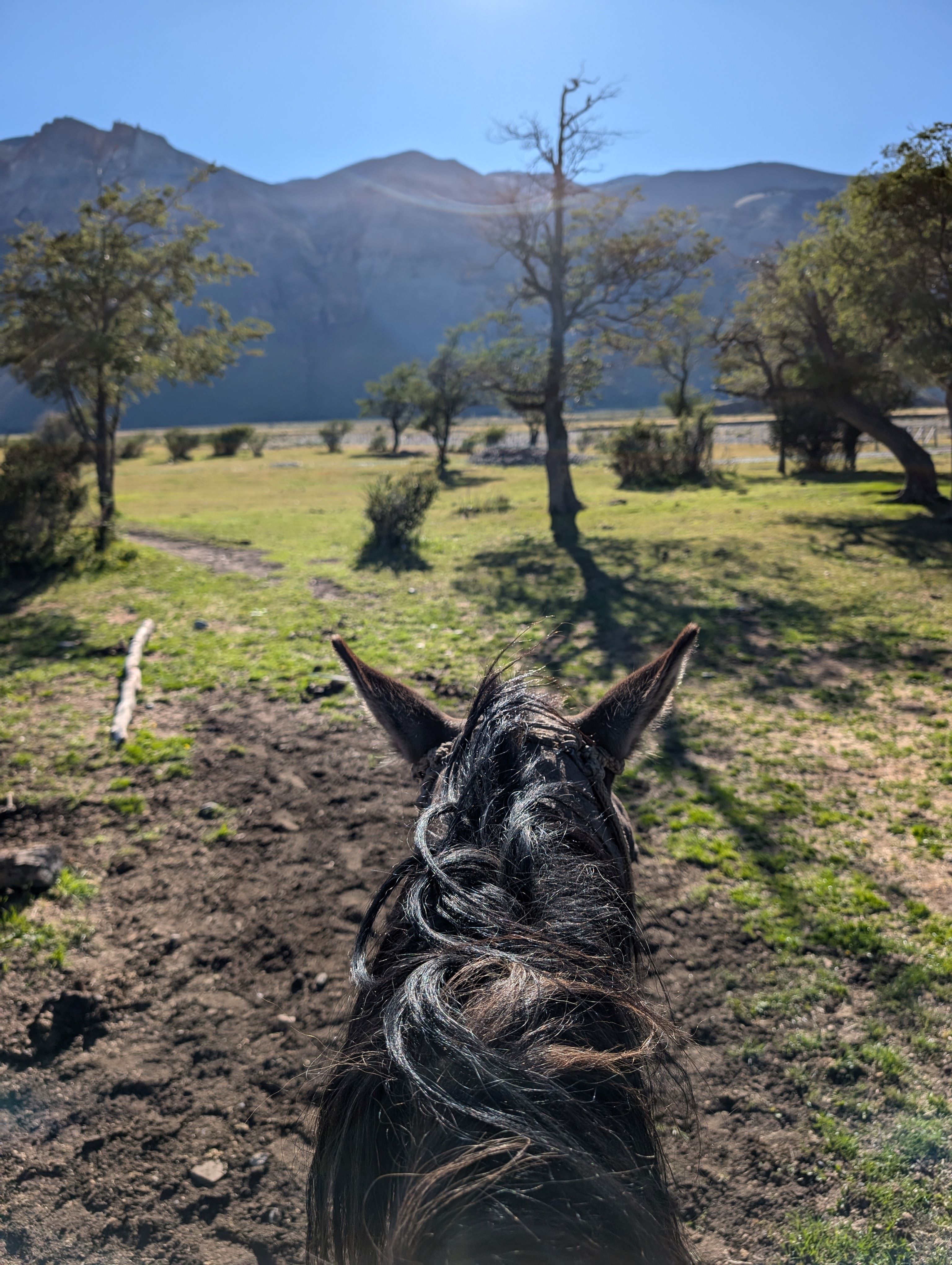
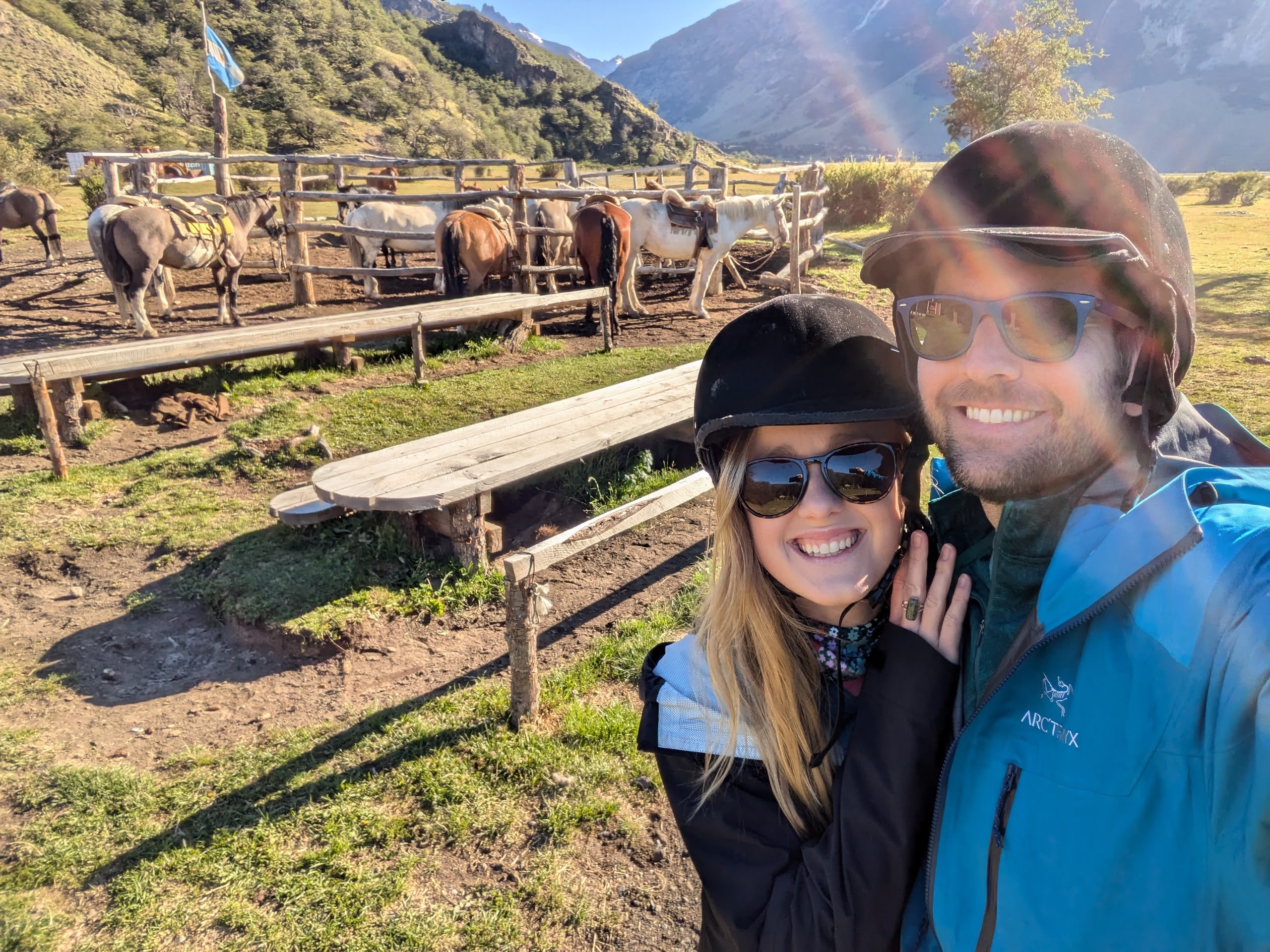
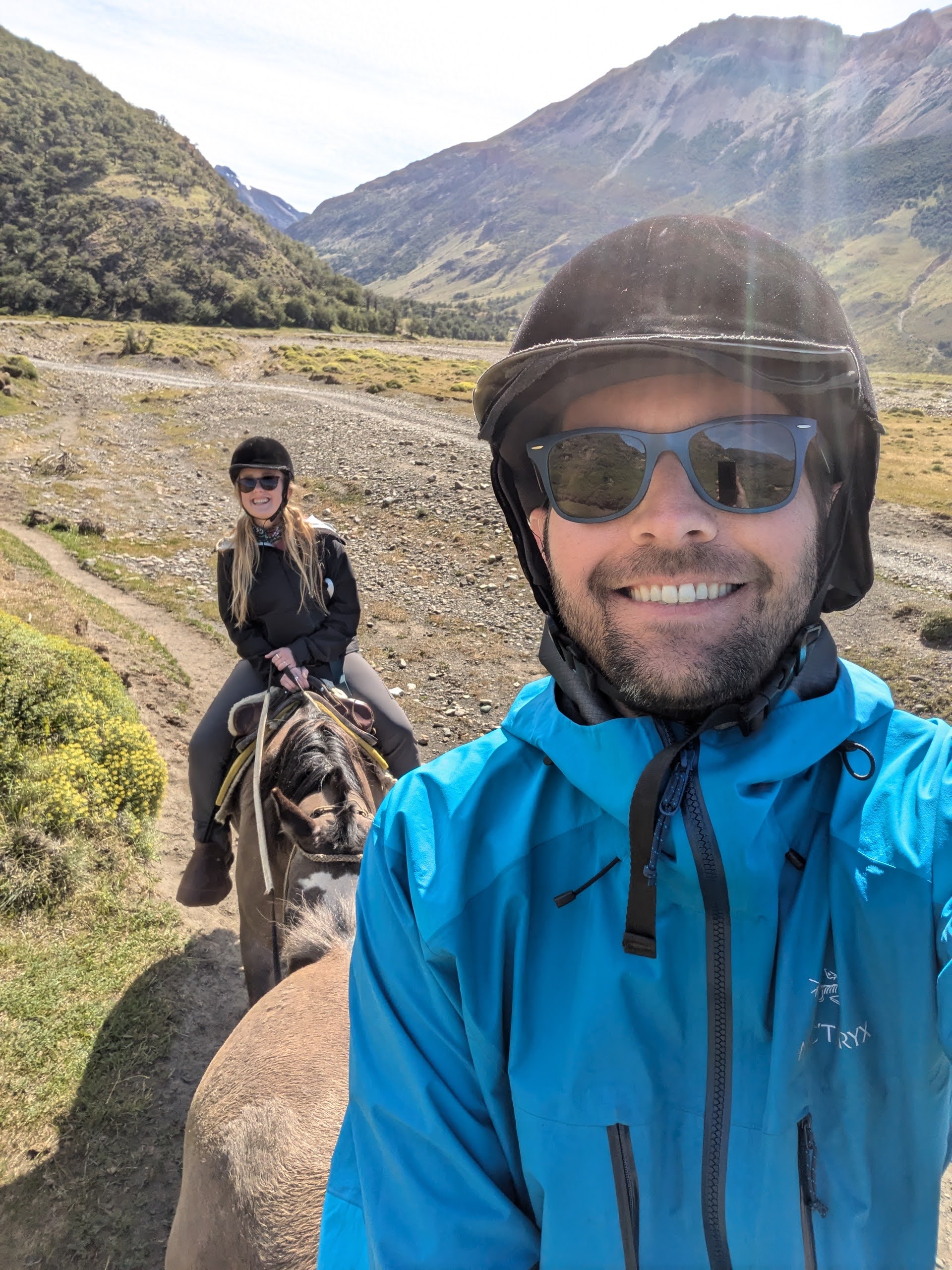
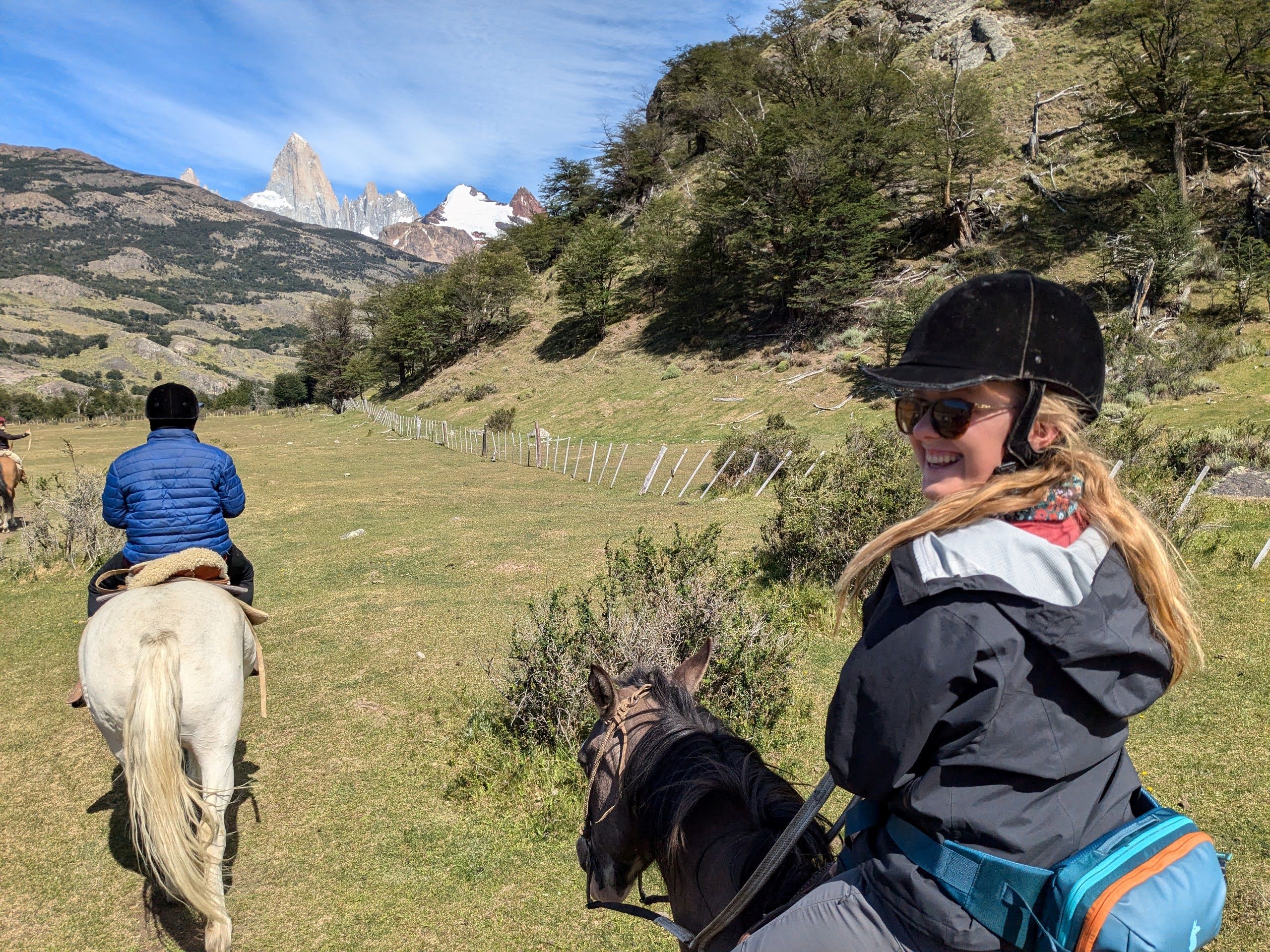
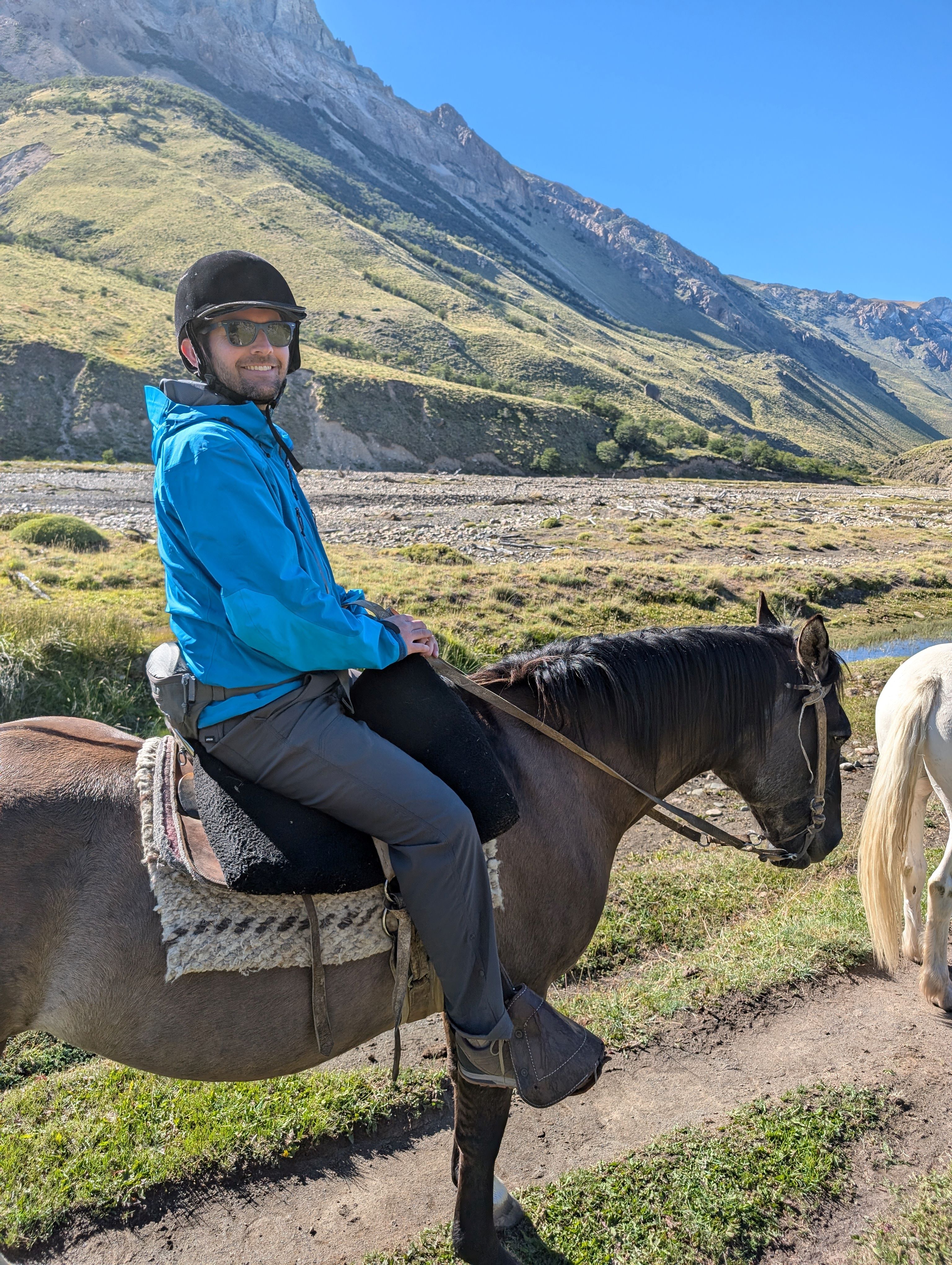
The guides matched us with horses, mine a gray and white mare named Poppy, and John with a charcoal horse with a black mane named “bigote” (Spanish for moustache). As we set off down the property along the river and around the foothills, our guide taught us about the ecology and culture of the Argentine Patagonia region. Five other young travelers were with us, along with another guide who did not speak English but did a great job making sure our horses kept up.
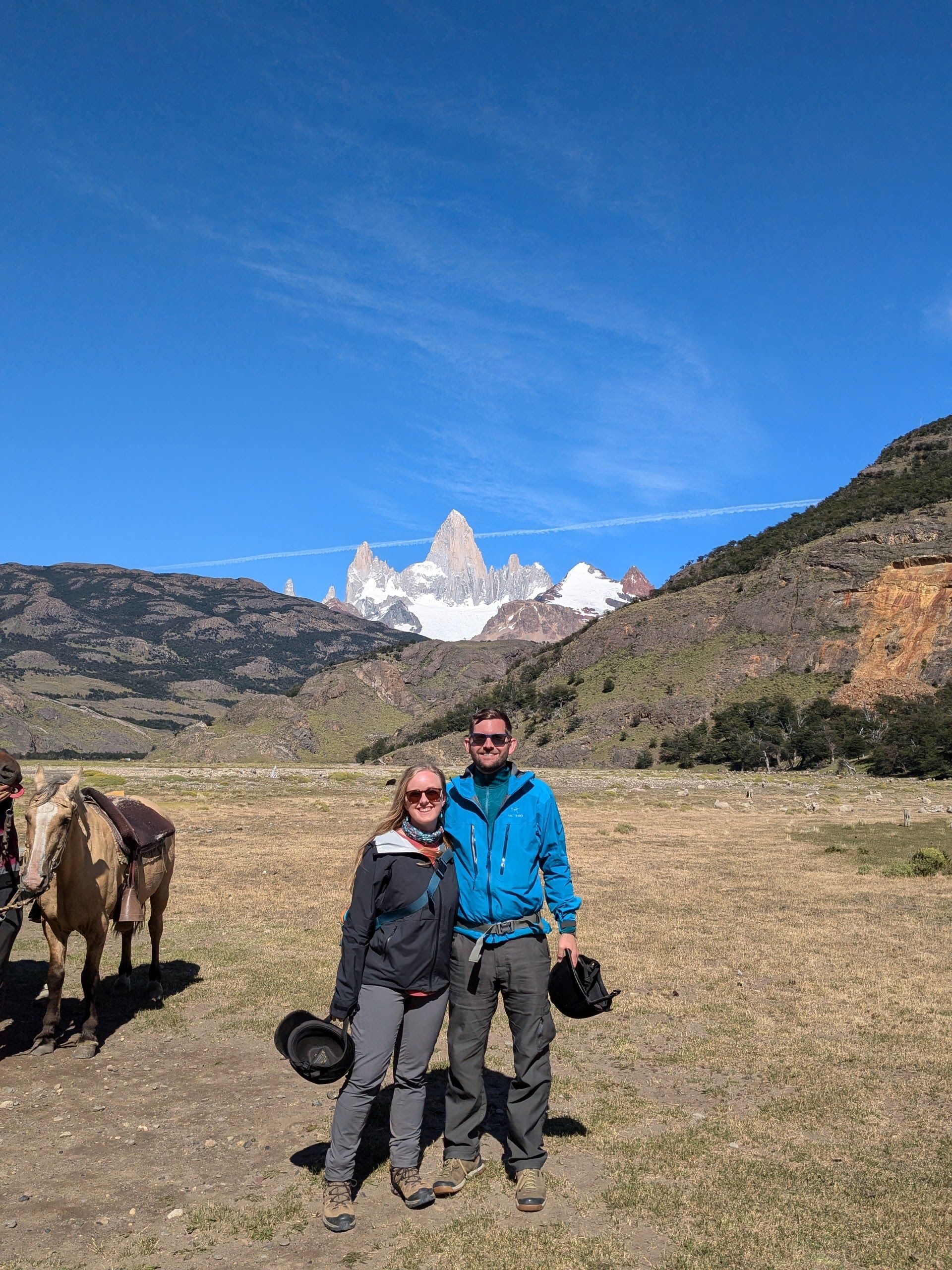
We rode through forests and meadows, crossed creeks and climbed steep mountain trails to get a view of Mt. Fitz Roy while we rode. The skies held completely clear and blue. I hadn’t been on a horse since I was a kid, and my heart was giddy with excitement.
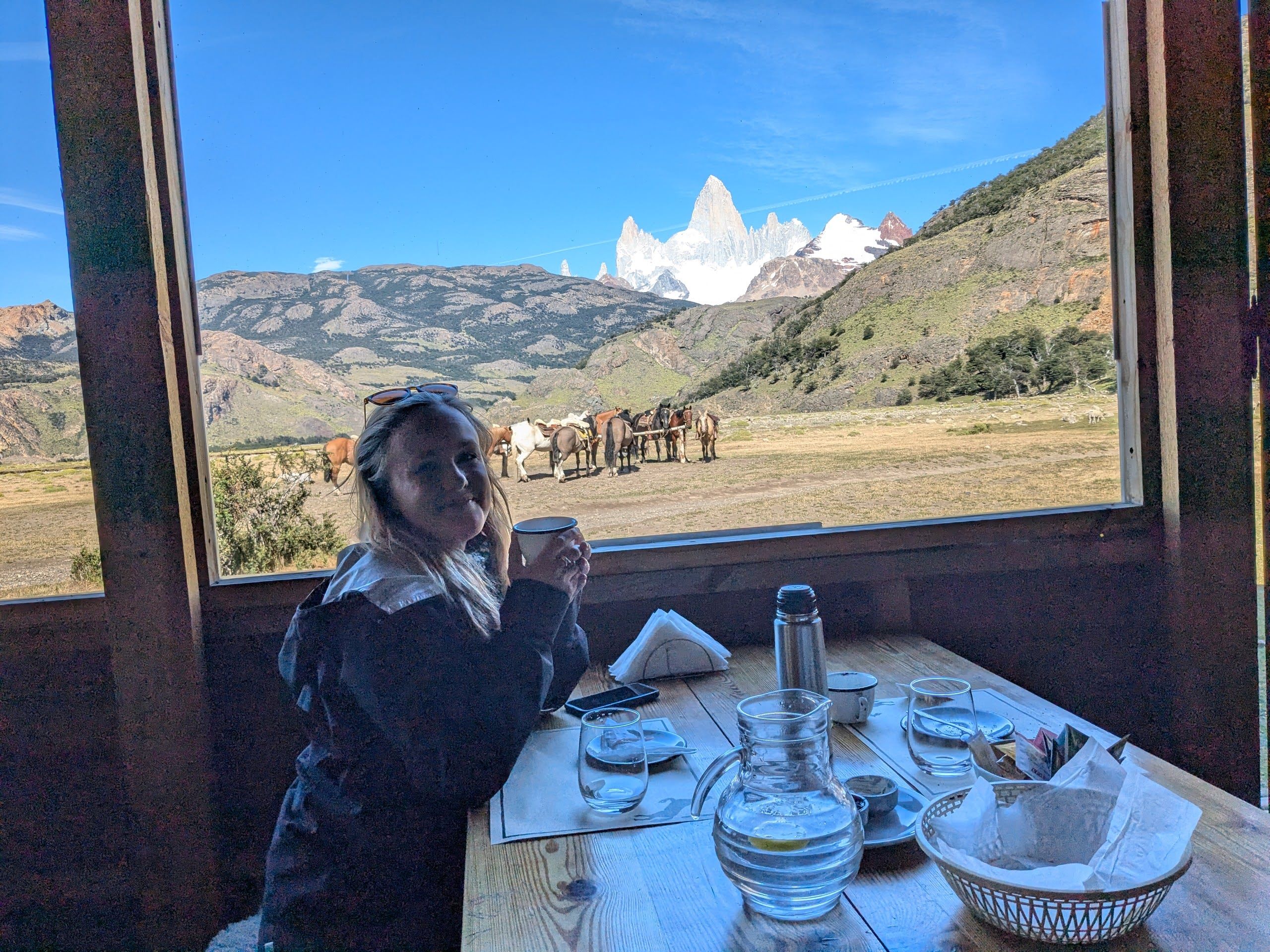
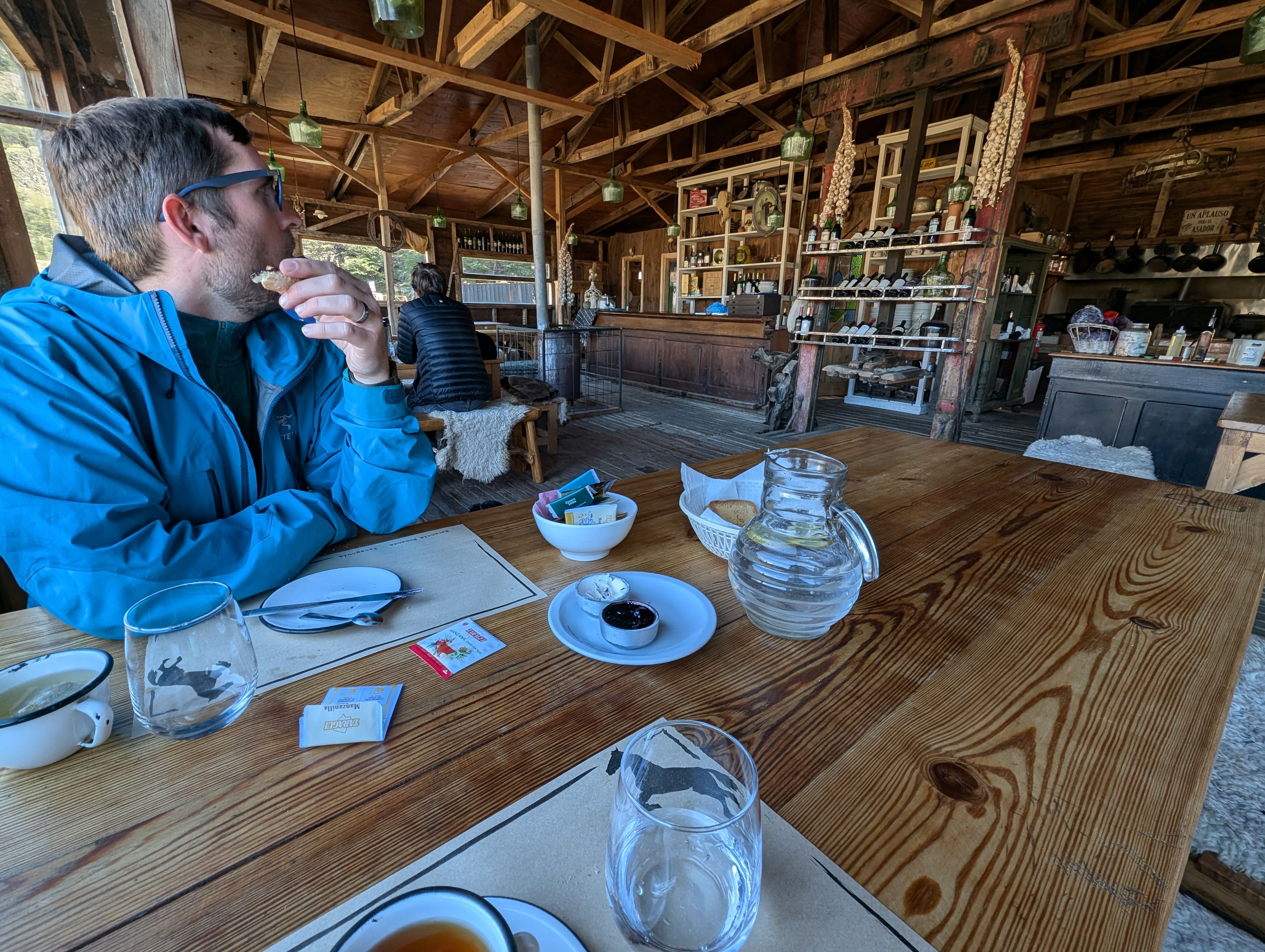
After an hour and a half, we stopped at a dining hall with a view of the mountains for tea, bread, and cream cheese and calafate (a local Patagonia berry) jam before trotting back to the entrance of the estancia.
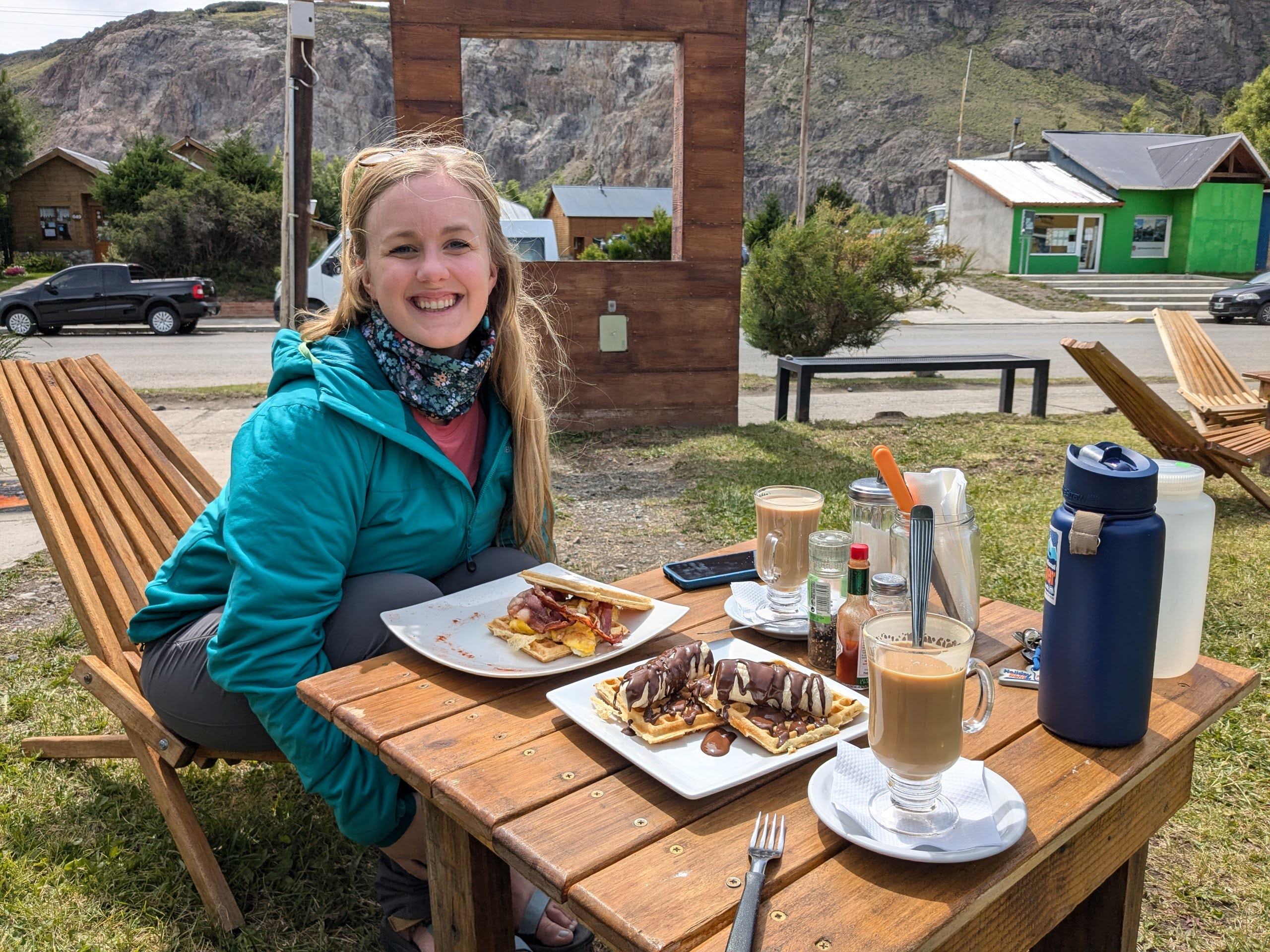
Back in town, we sat on a lawn and feasted on Nutella banana and egg & bacon waffles. We explored, shopped, and ate gelato. Our camper was parked in town, so we returned to our home to nap and regroup.
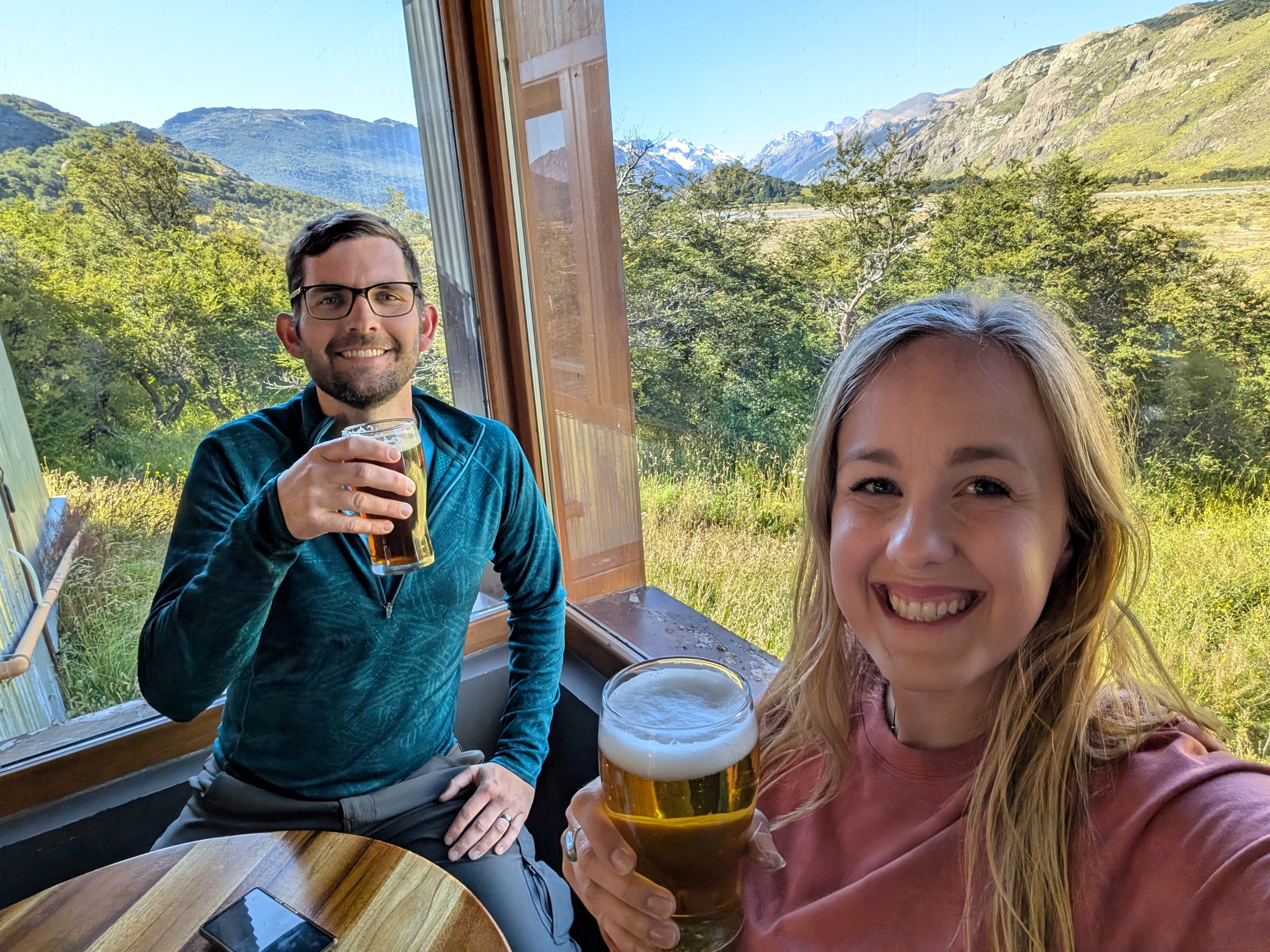
In the afternoon, we found a cozy window alcove at La Zorra (translation: “fox”) Taproom for happy hour, and played our Fox in the Forest card game. We had a view across the river, to the mountains and headwater glacier at the top of the valley. John volunteered to go to the hardware store alone for a water hose adapter we needed, and while he was away, I took some time to listen to and respond to messages from friends and family.
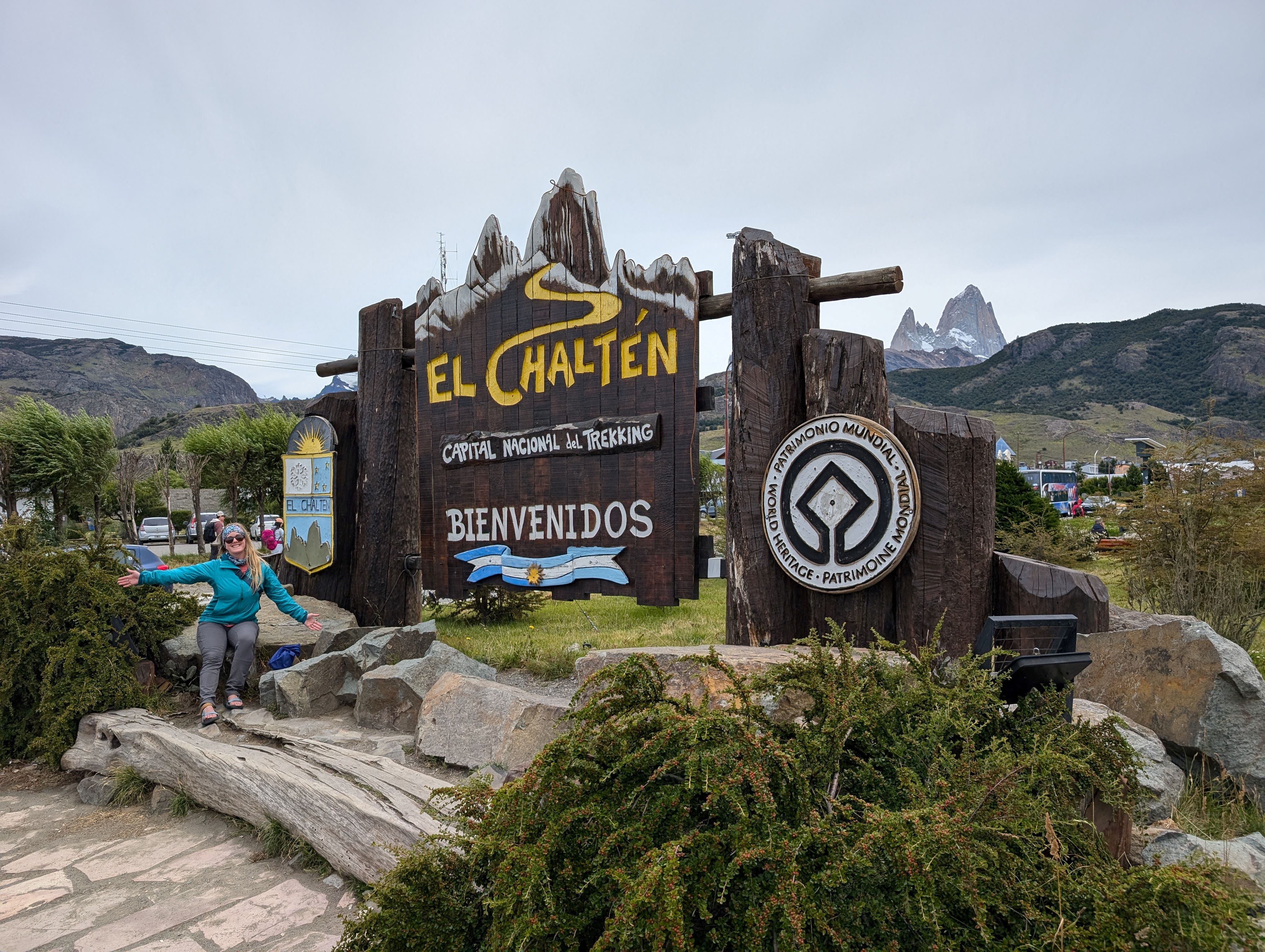
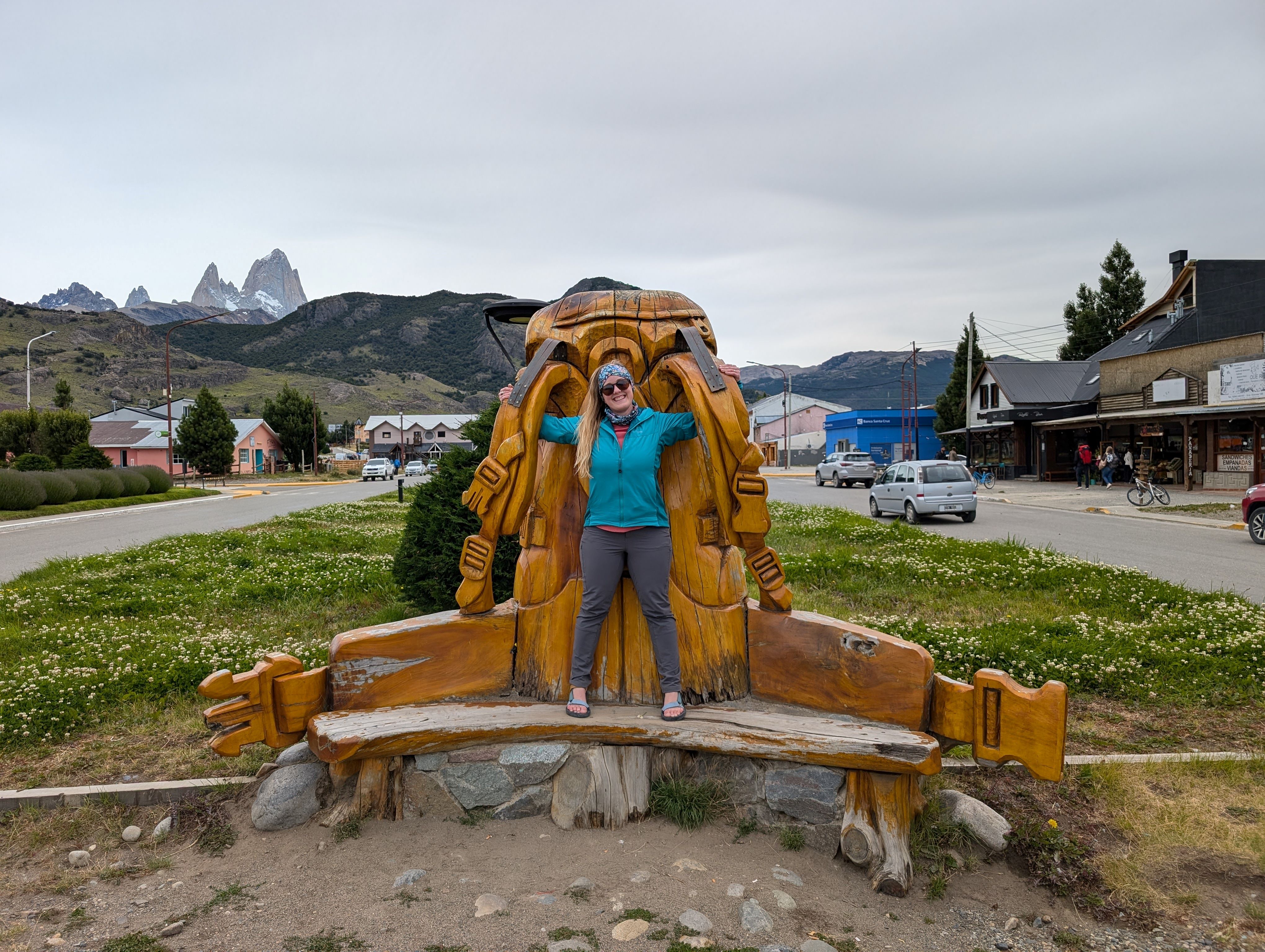
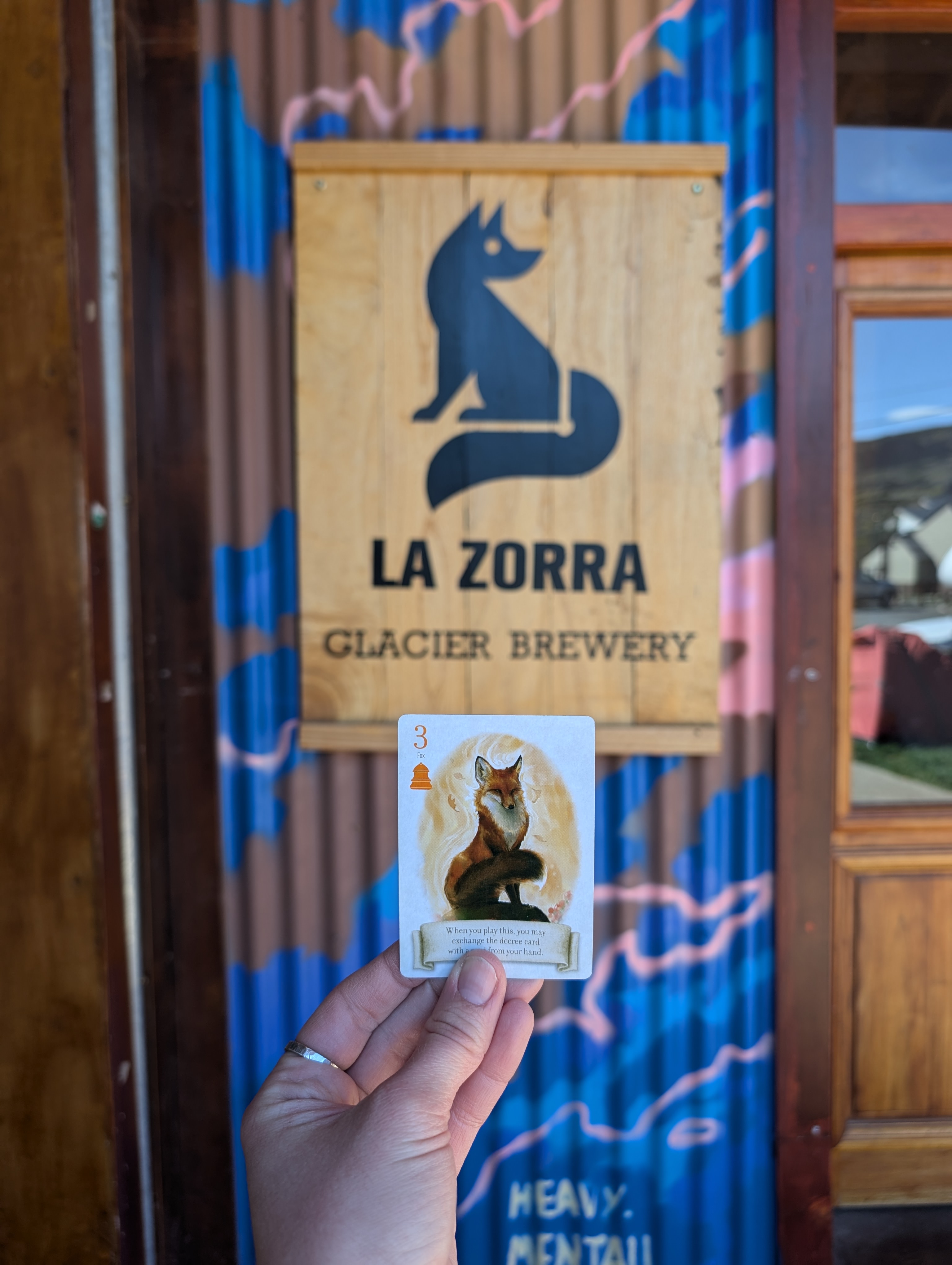
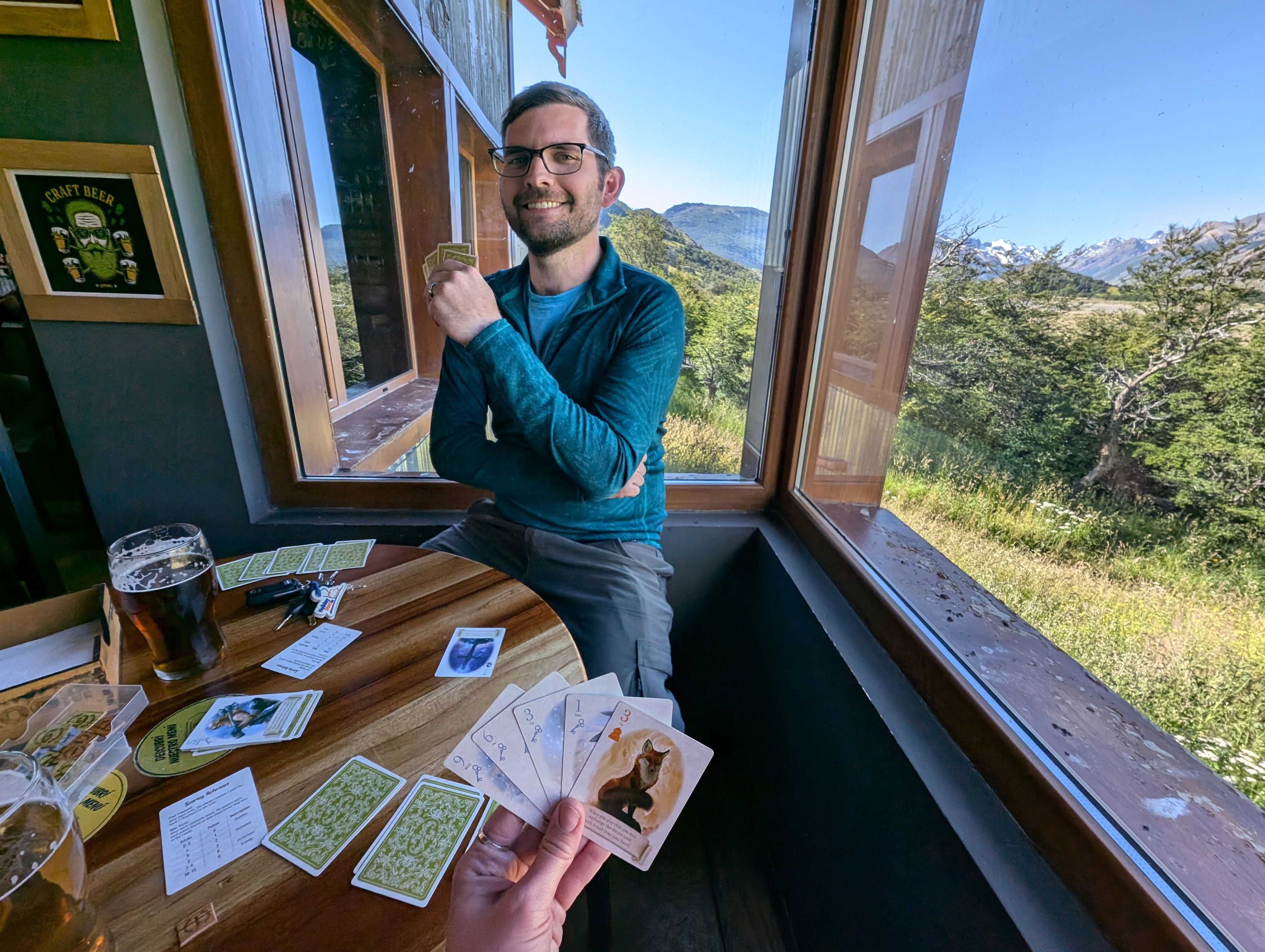
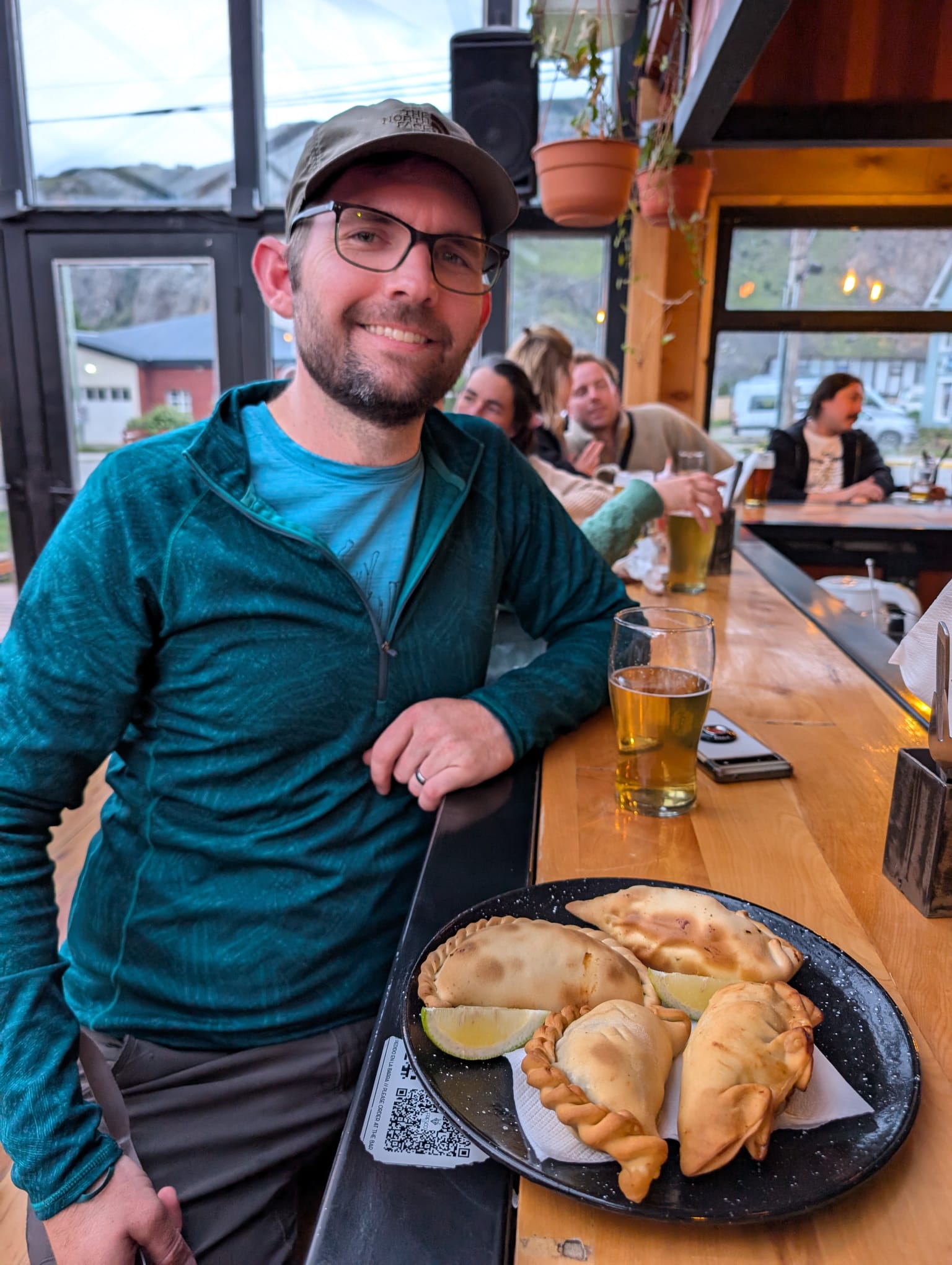
More time strolling the streets and then dinner. Instead of camping in town at the crowded free camper van site, we decided to drive 15 minutes south again to our gravel road-side (and private) campsite with a view of the mountains. We’ve always preferred the quiet spots, even if it means no amenities. The mountains and skyline were backlit by the setting sun at 10:30pm.
Since there was easy water access in town, we started the hot water heater for the first time and I tested out the camper shower as a final birthday gift to myself. It was amazing to have our own personal shower (even if I was showering over the closed toilet) and the perfect end to an incredible day. The water was hot and melted the chill in my bones from the 40-degree dry night air outside.
By the end of the day, it still hadn’t sunk in that I was 30 years old. The new decade snuck up on me in subtle ways in the previous weeks and months—beginning to worry I hadn’t accomplished enough yet, didn’t have enough money, or wasn’t where I was supposed to be. But those feelings only creep in when I compare myself to others in the world. If I concentrate on what matters most to me—love, passions, social connection, and adventure—then I feel like one of the luckiest people on earth. I am grateful for my close friendships, my goofy family, my inherited family and nieces and nephews, a life in a beautiful city, a career I am passionate about, and all of the adventures I have been lucky enough to take, many of which are recorded in this very blog.
Ten years ago, a version of myself I barely recognize was brave enough to move to the Great Smoky Mountains for the summer to hold an internship with the National Park Service. It was the hardest thing I’ve ever done, and I spent many nights crying myself to sleep because I was so homesick for my family and my college home. Yet because of that internship, I would never be the same. I was set on a path that would lead me to Denali, where my spirit was awakened in so many new and beautiful ways. I met a friend and loving travel partner who would become my husband, and together we continued to explore the continent and the world. I’m grateful for my winding path of exploration in my twenties, and going back I wouldn’t change a thing.
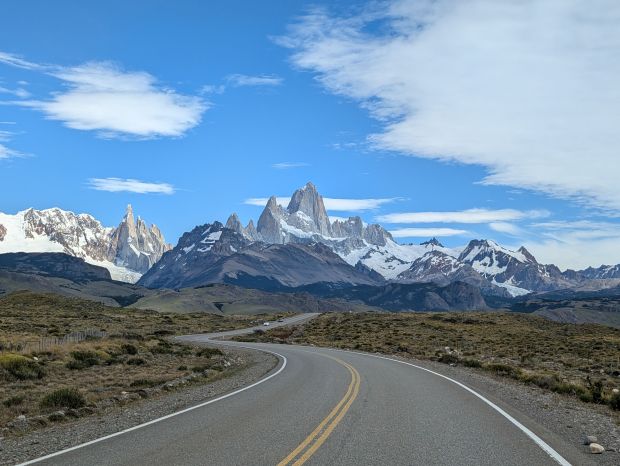
The next day was another exercise in taking things one thing at a time and relaxing into the flow of the trip. Our loose plan: eat, hike, eat. What else could you ask for in a day?
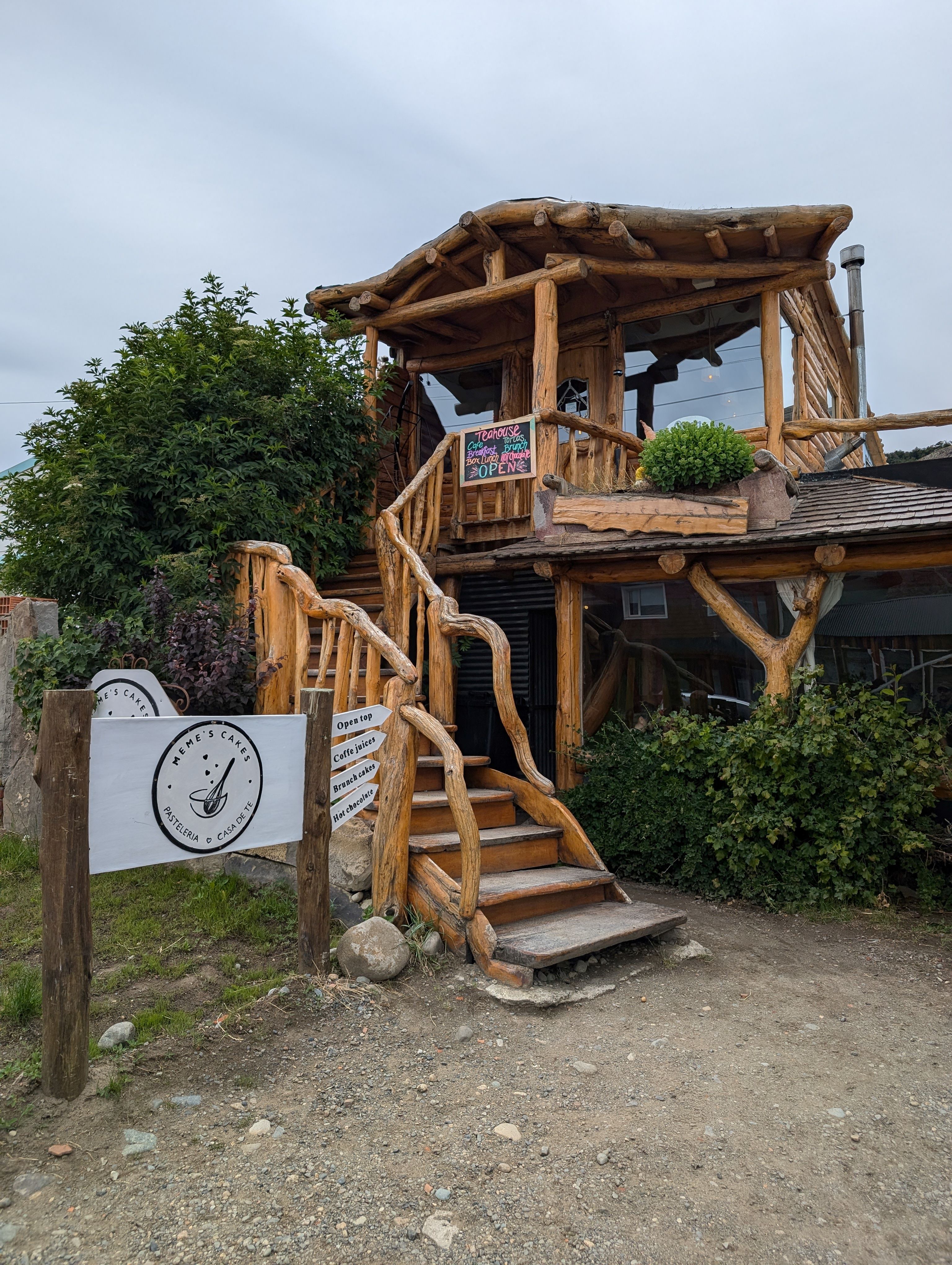
I awoke to more sunny mountain views, and while John slept, I started the morning painting watercolor birds in a workbook that my sister-in-law gave me for Christmas. When we drove into town a couple hours later, we spotted an idyllic log “tea house” on the main street with a pasteleria (bakery) on the second floor. We had no idea what to expect, but decided to check it out for breakfast.
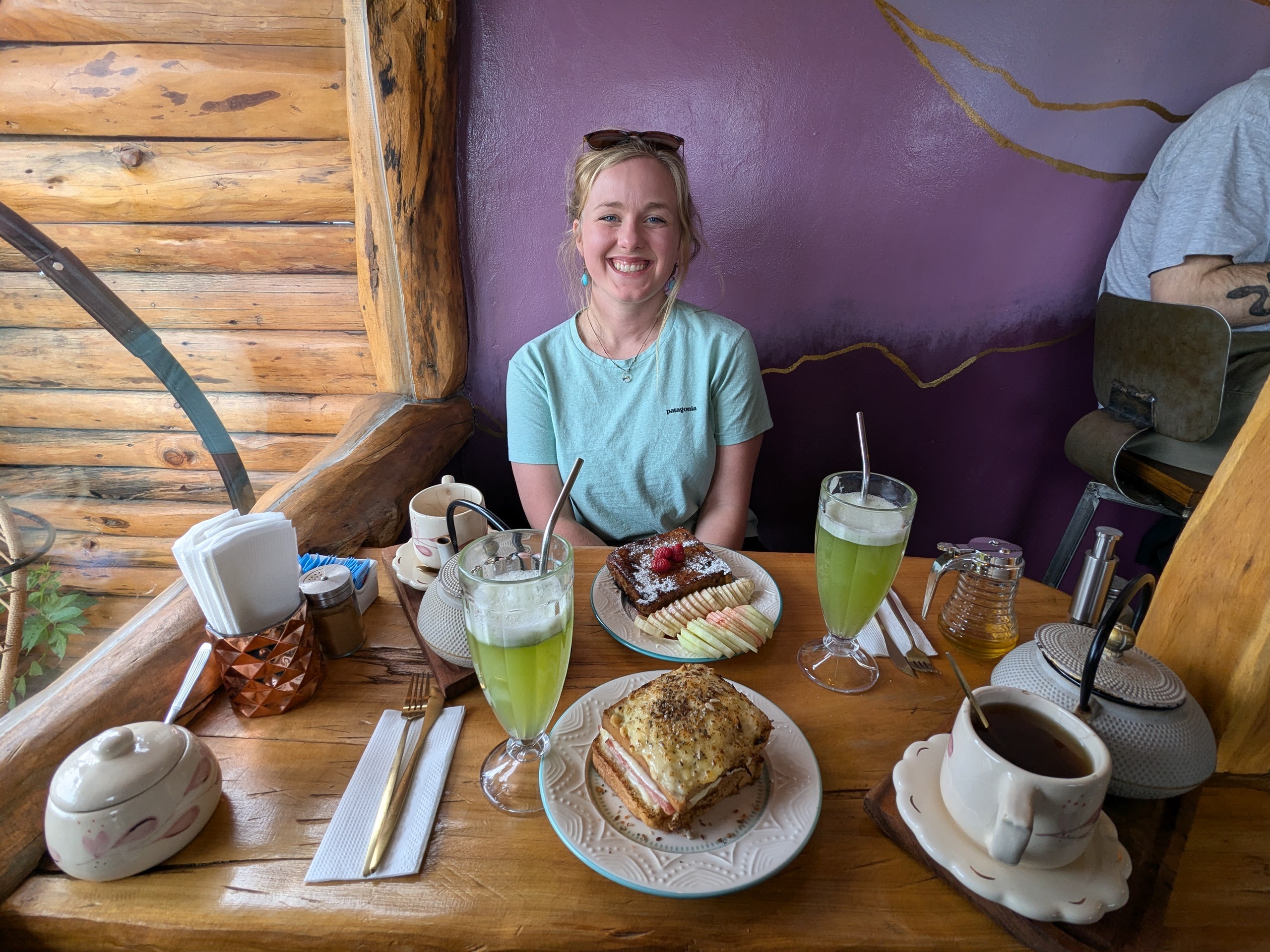
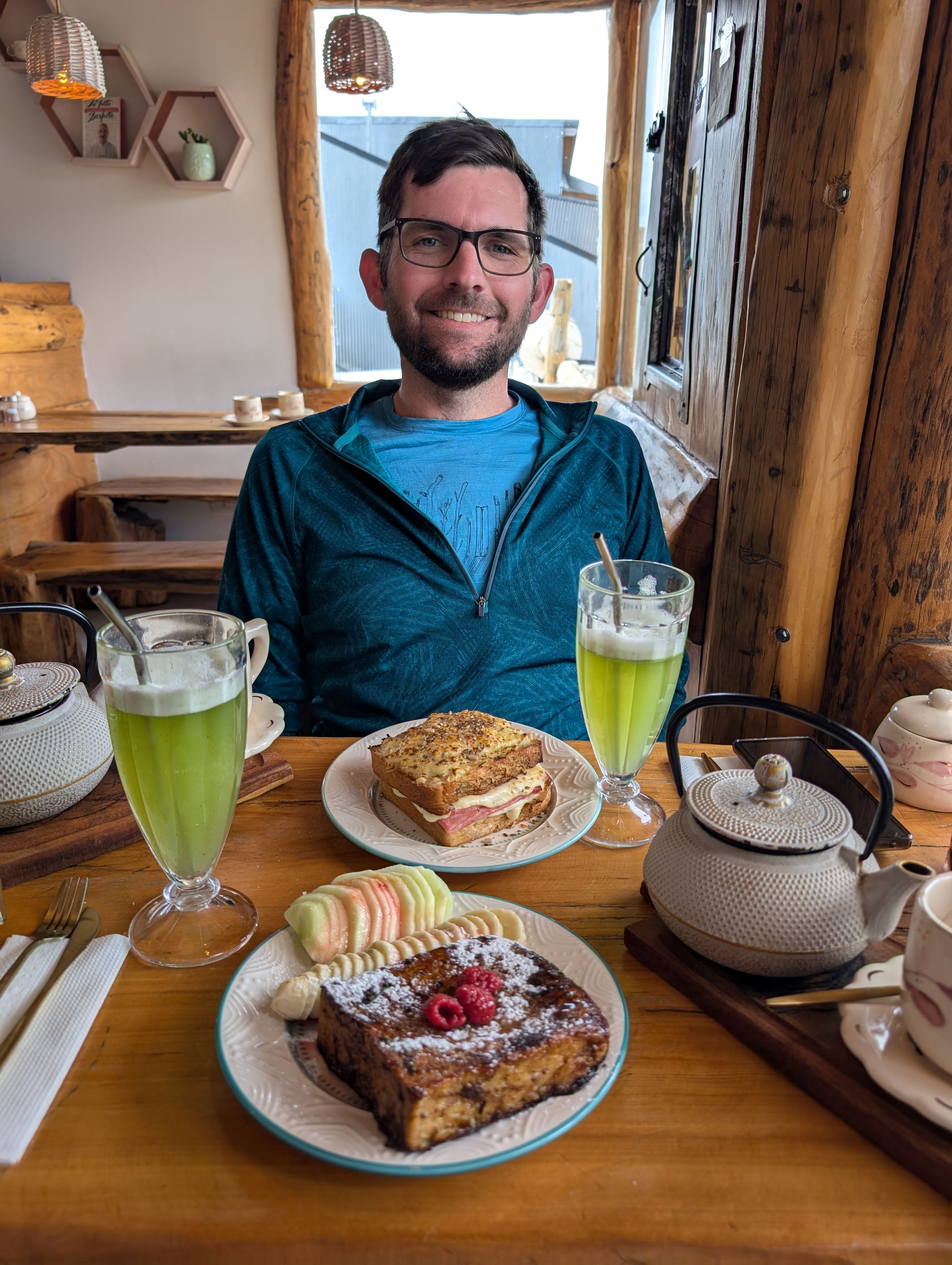
We were welcomed into a small room just large enough for two floor tables and two high tops, all made out of hewn logs. We sat near the window and ordered the brunch special: two pots of locally-made tea, two tall glasses of fresh mint lemonade, two entrees (french toast and a croque monsieur), a piece of apple crumble cake, and a brownie (to-go, because by that point, we were stuffed!). All together it only cost $60.000 pesos, or $47 USD. We gorged ourselves on the sweet and savory meals, the sour lemonade and the soothing tea that warmed our hearts, just like the owner who visited us ten times throughout our meal to make sure we were enjoying ourselves. More than the meal itself, it was an experience, one of those rare places that made me wish I didn’t live halfway across the globe.
Too stuffed to hike as planned, we moved the camper down the street and decided to rearrange some of our trip plans. The long days of driving (and the joy the laid-back days brought us) led us to cut a major stop from our trip—the Perito Moreno glacier—to reduce our driving and save an extra day at the end of our trip in Ushuaia, Argentina, the southern-most city in the world.
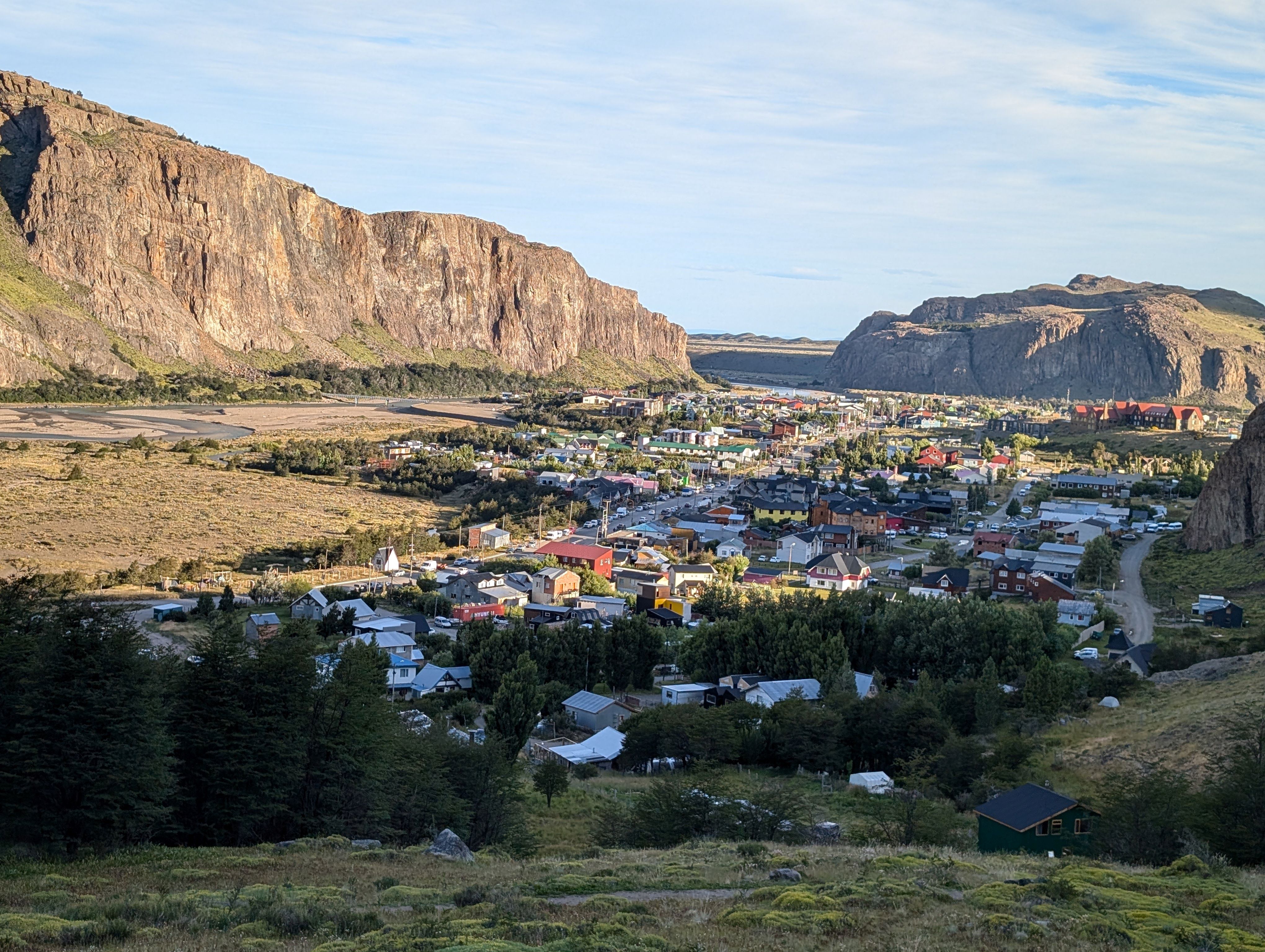
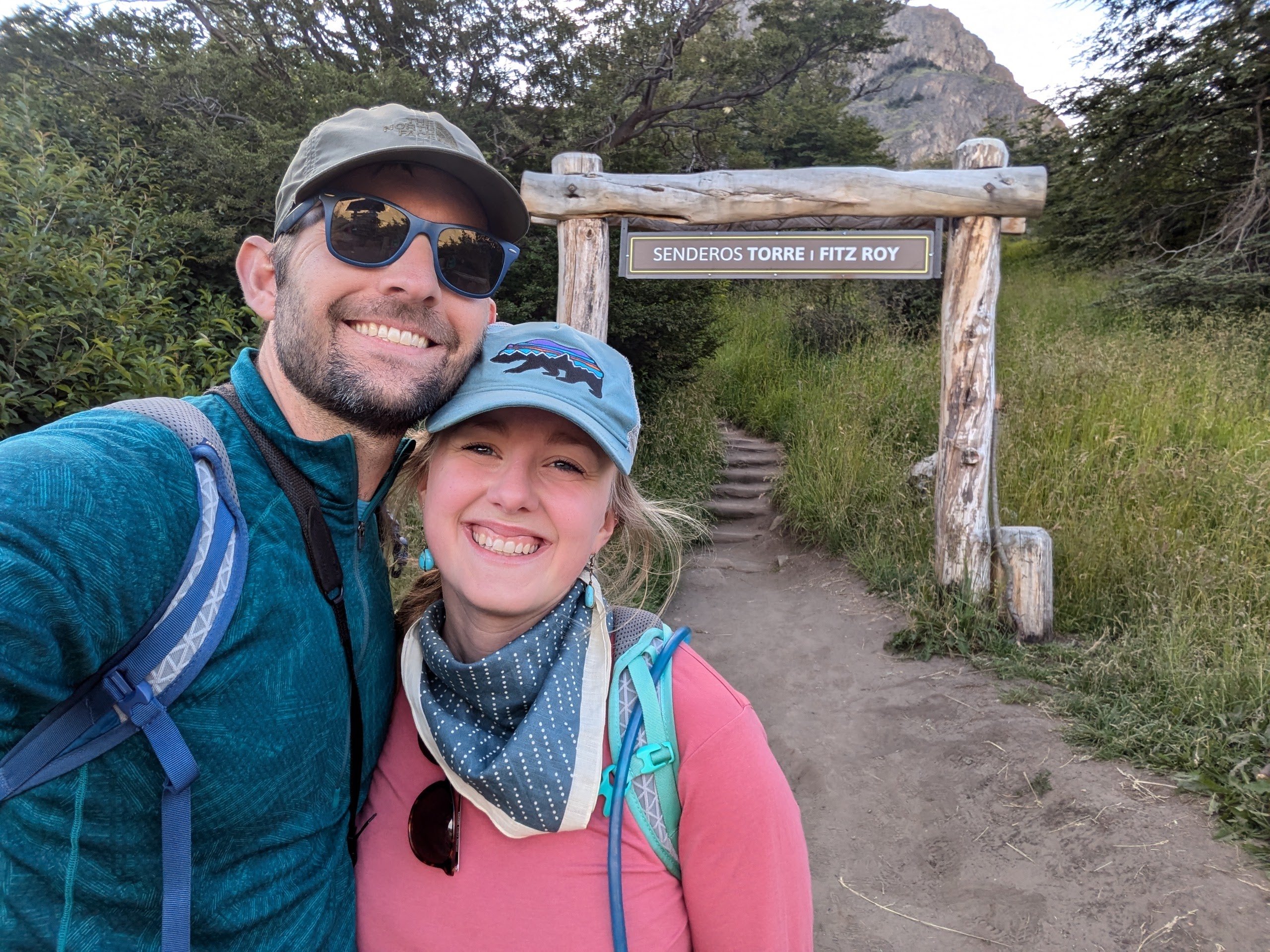
Rearranging multiple other stops and reservations took us hours, and we set off for our hike much later than planned, around 4pm. There is a reason El Chaltén is one of the premier hiking locations in Patagonia: most of the trails leave directly from the town perimeter, which means globetrotters can be from hostel (or camper) to trailhead in less than five minutes of walking in every direction, granite peaks just a couple miles and thousand feet away. In less than five minutes from leaving our camper, we were at the trailhead and climbing up.
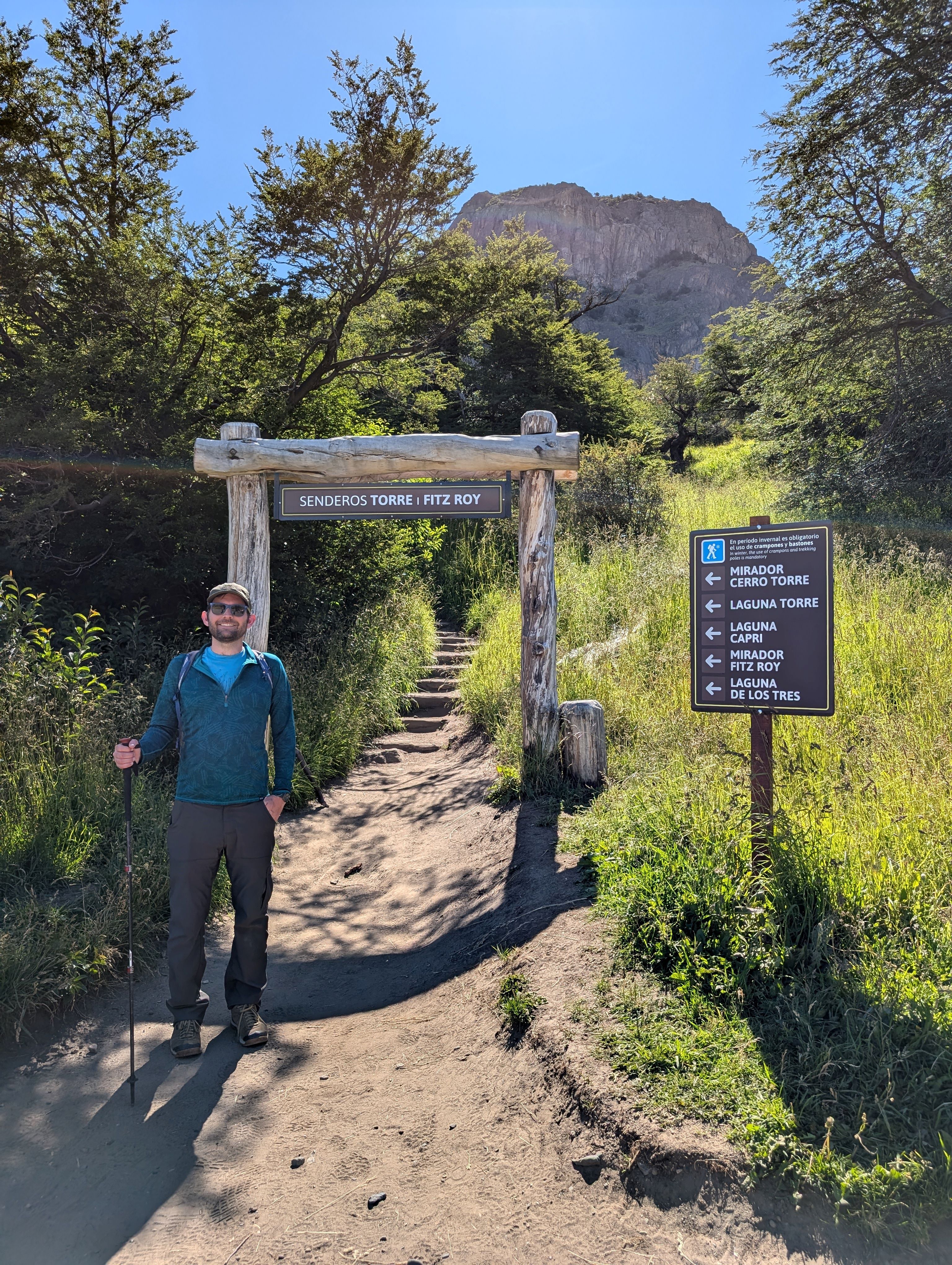
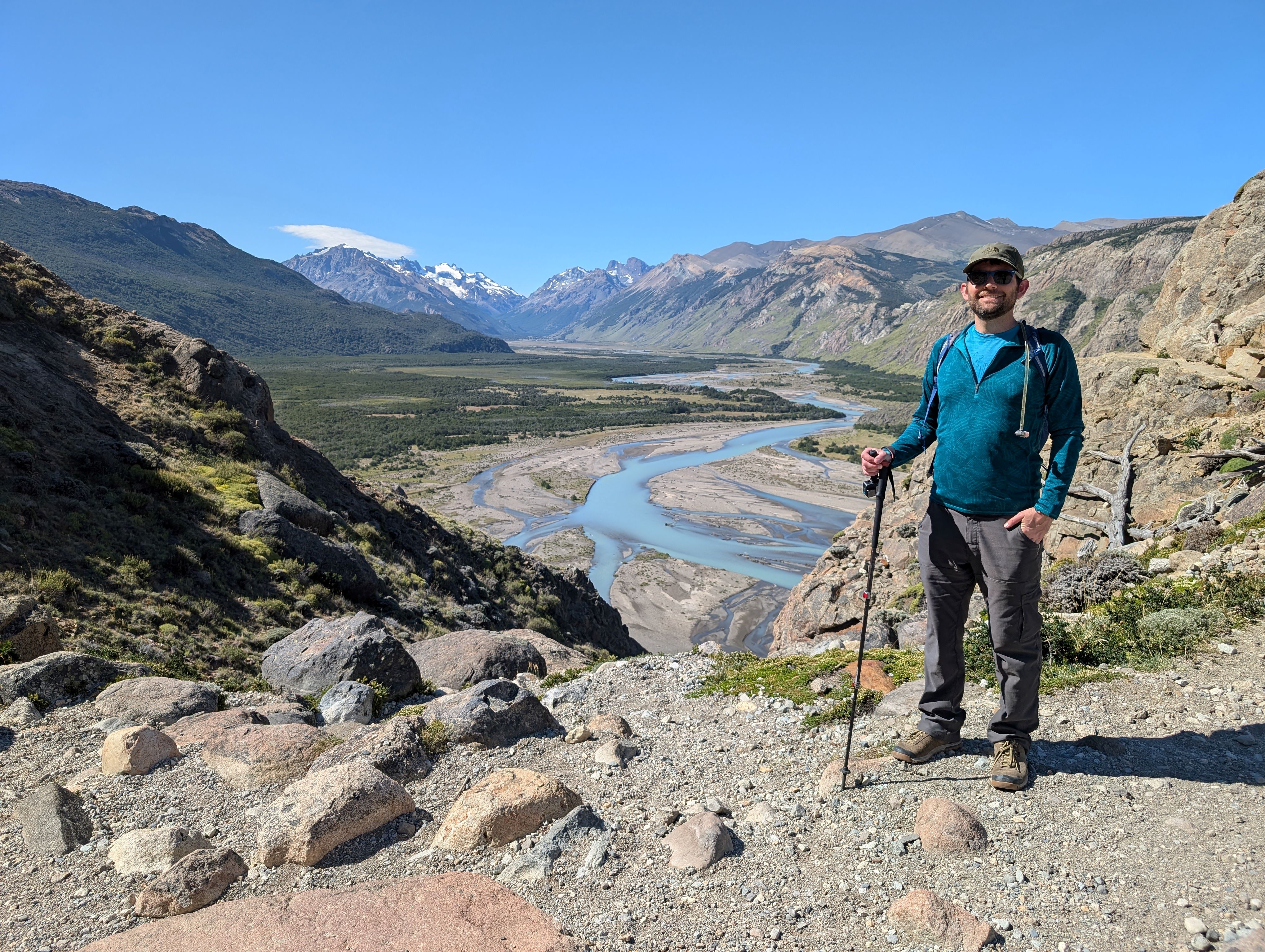
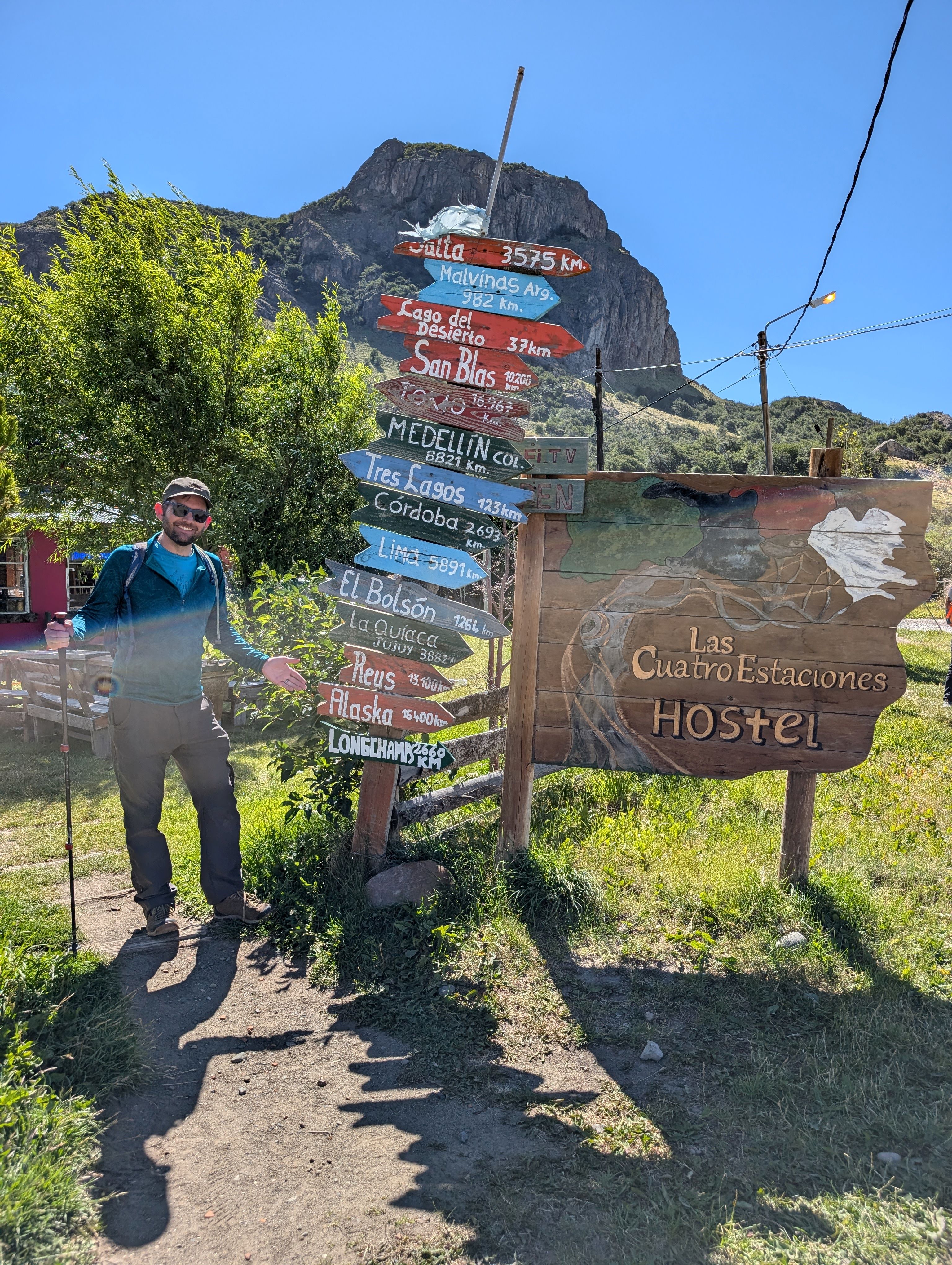
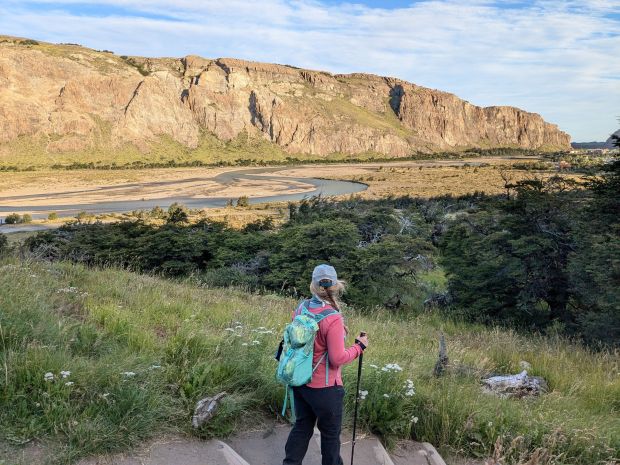
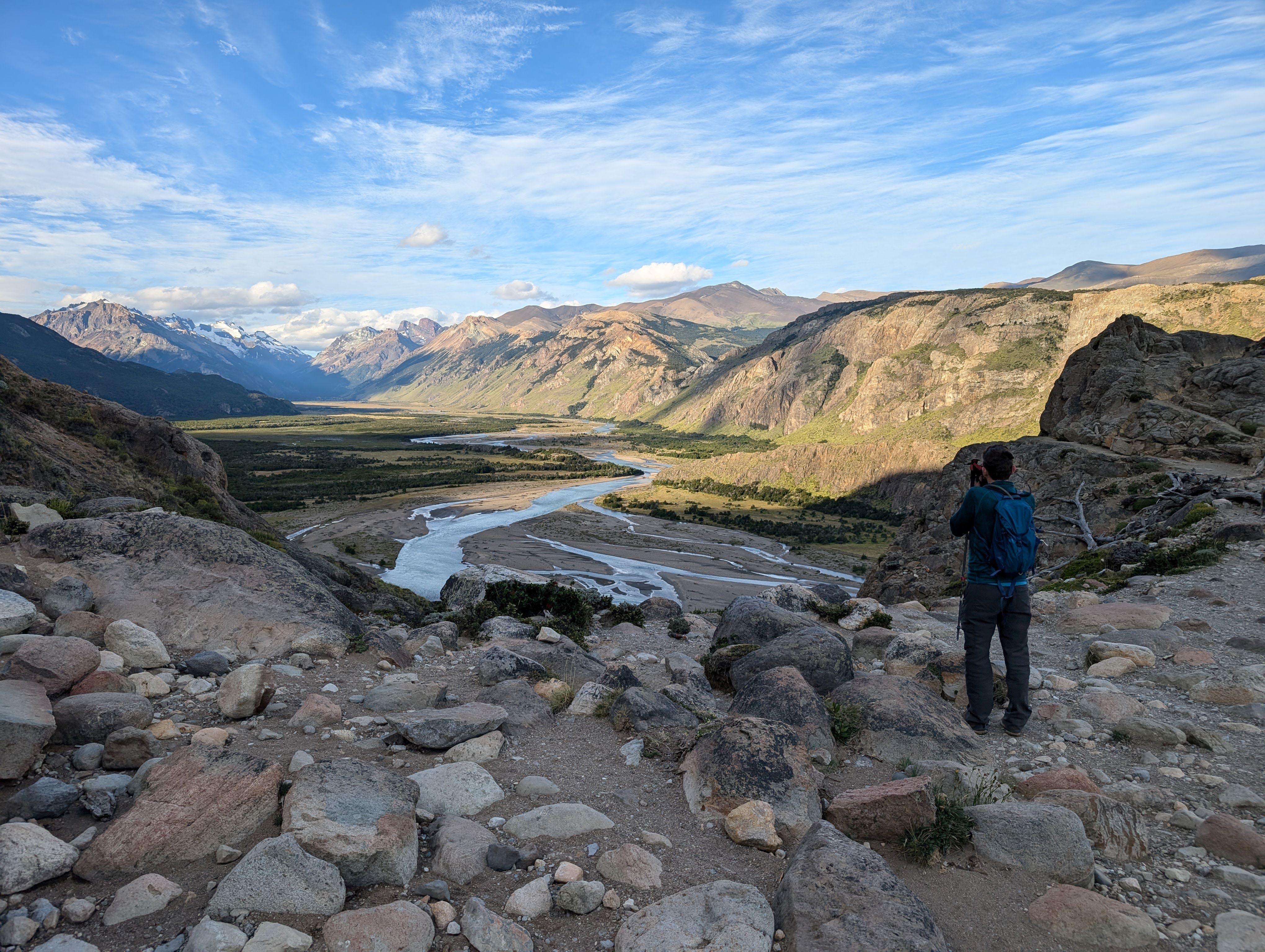
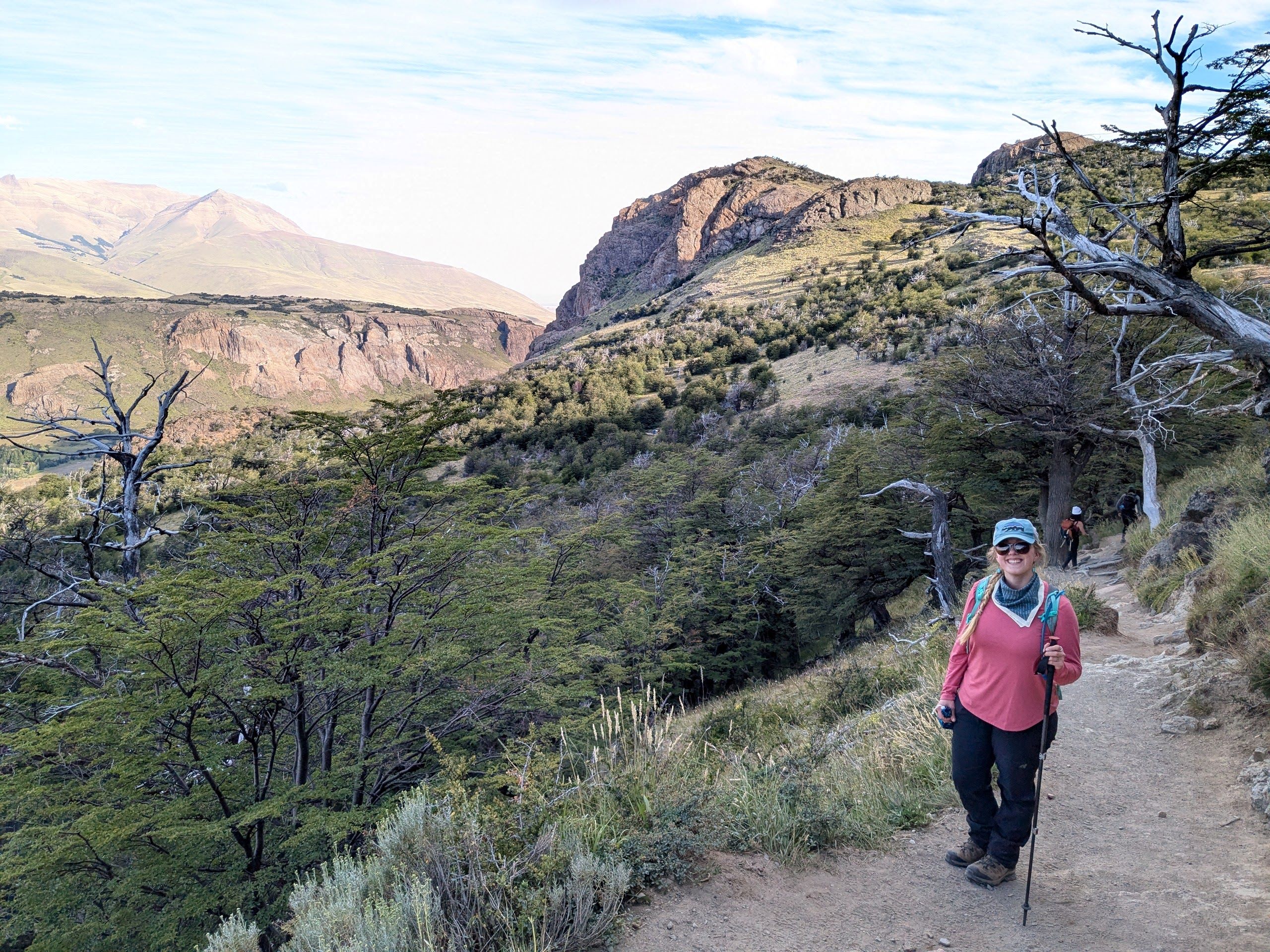
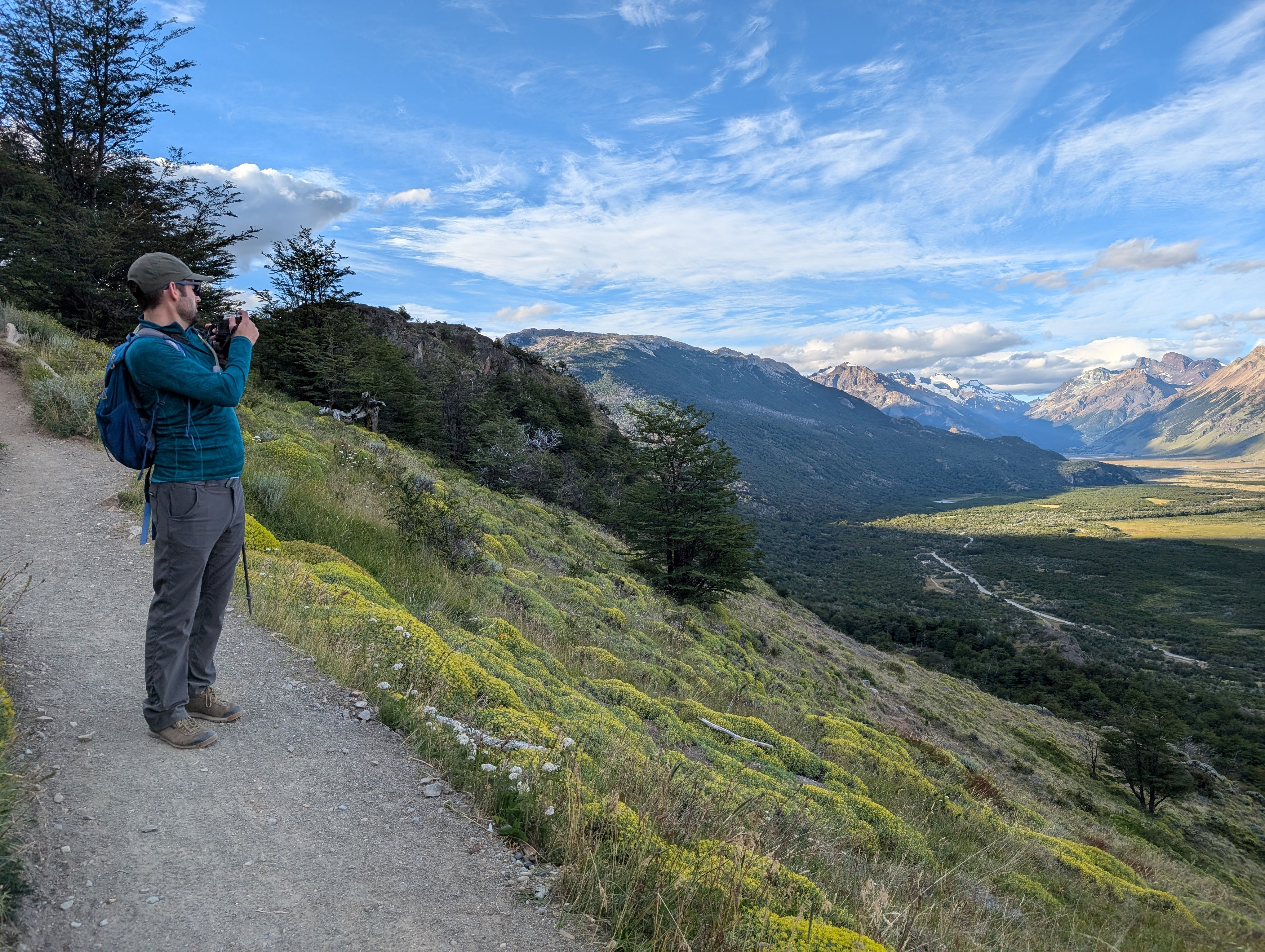
I was slightly apprehensive after our first hike in Torres del Paine (ranked “easy”) felt challenging to me, but looking back, I had still been recovering from our stomach pains and had only been eating buttered noodles for two days through the nausea. This hike, on the other hand, was just under 6 miles and around 1,300 feet of elevation gain, and brought us to Laguna Capri and the Mirador (viewing point) Fitz Roy. We had clear blue skies and so many views of the Rio Los Vueltos valley below. It ended at a beautiful lake where we took a snack and water break to enjoy Mt. Fitz Roy in the background. It was spectacular. While I’m not at all a fair-weather hiker, I never take awe-inspiring views for granted, and they inspire me to push higher and farther. I felt strong.
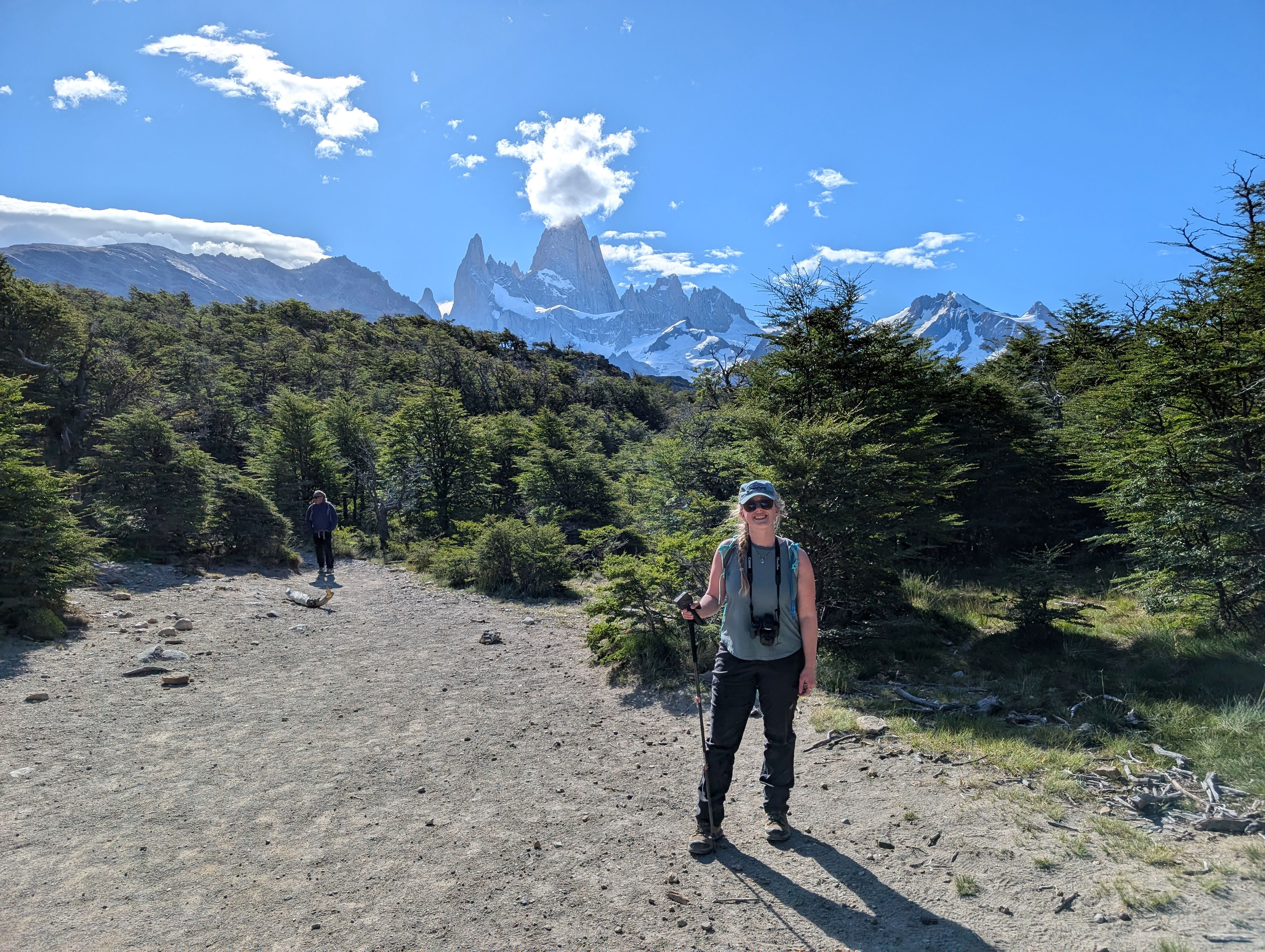
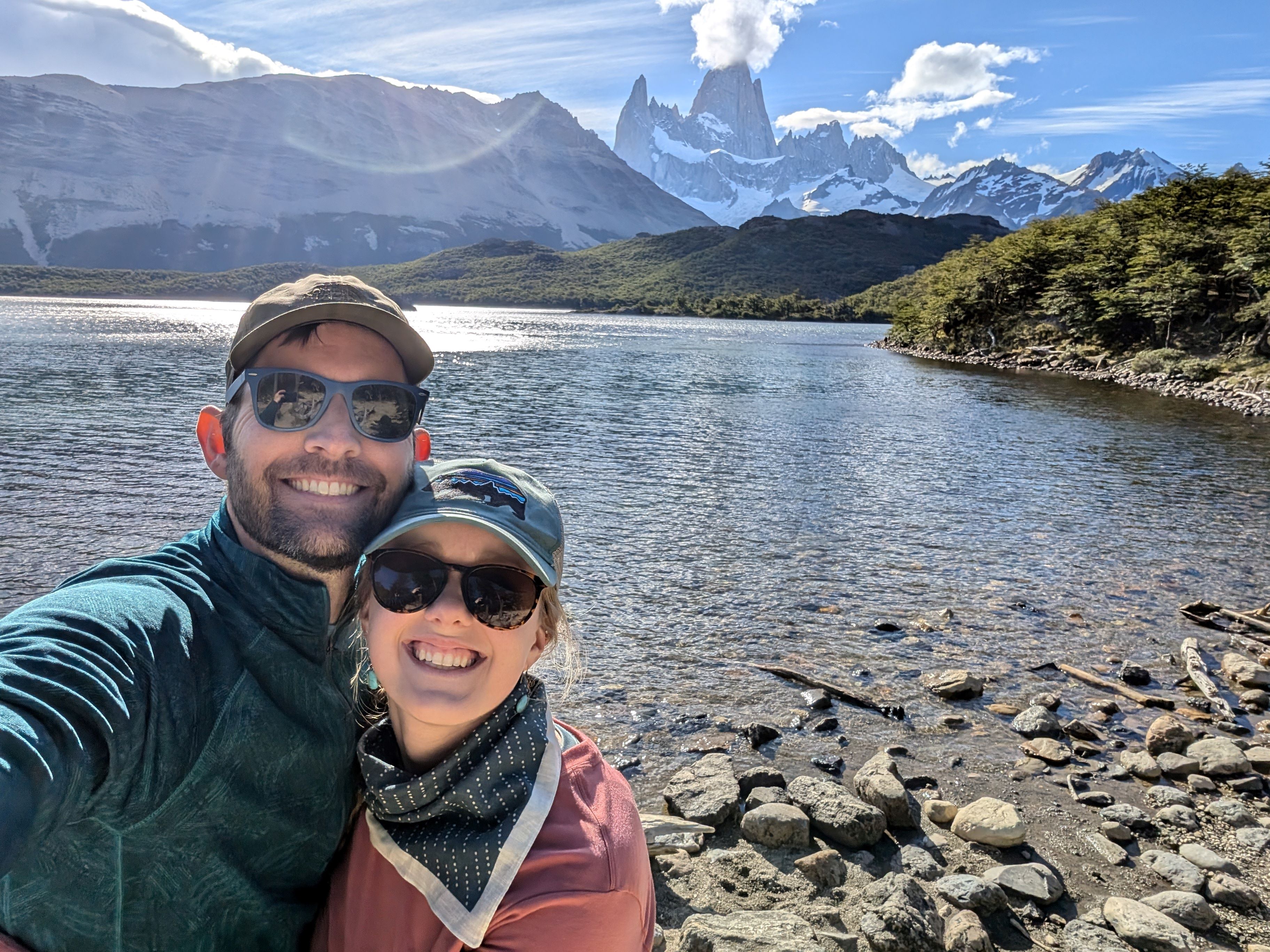
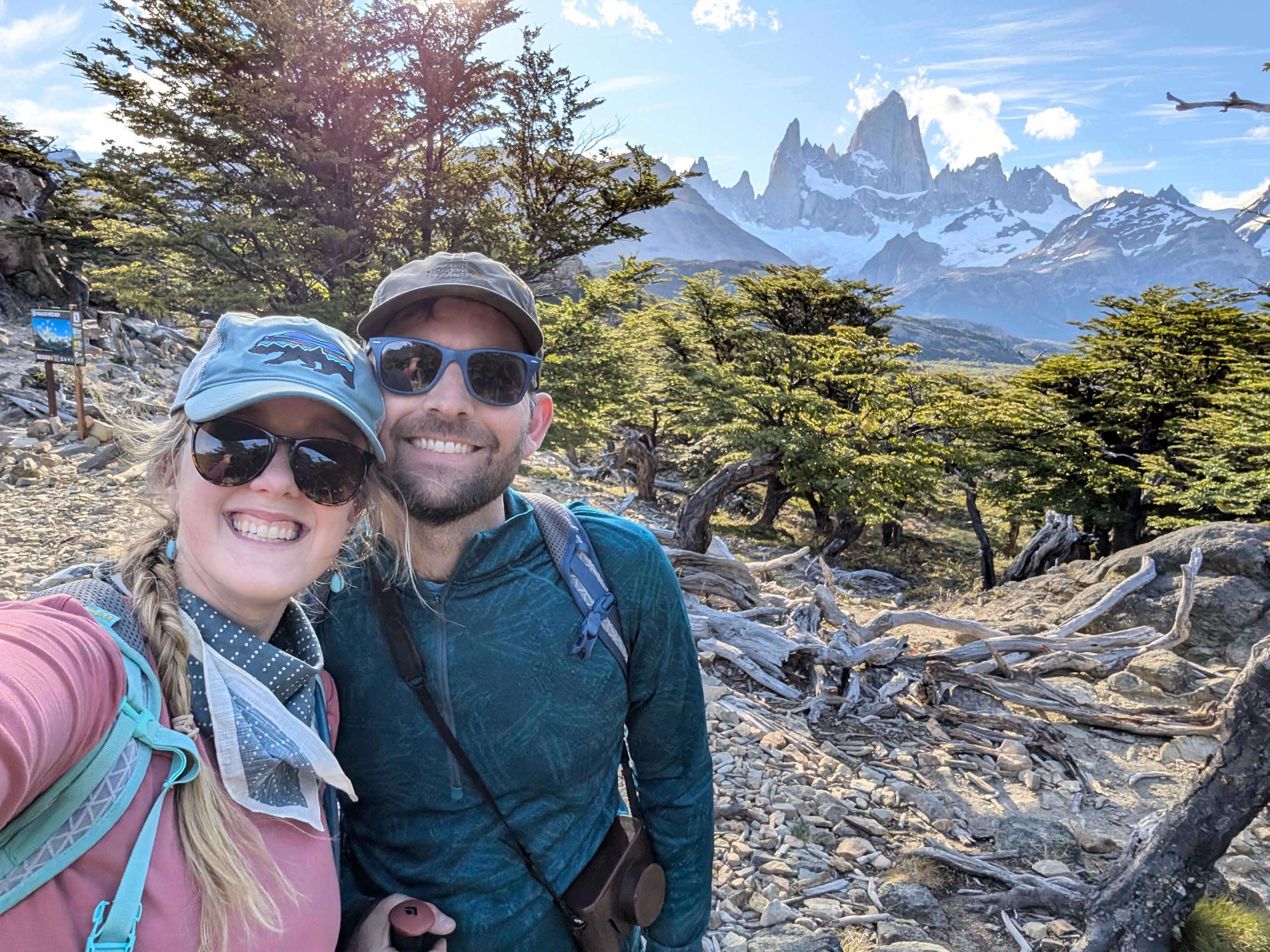
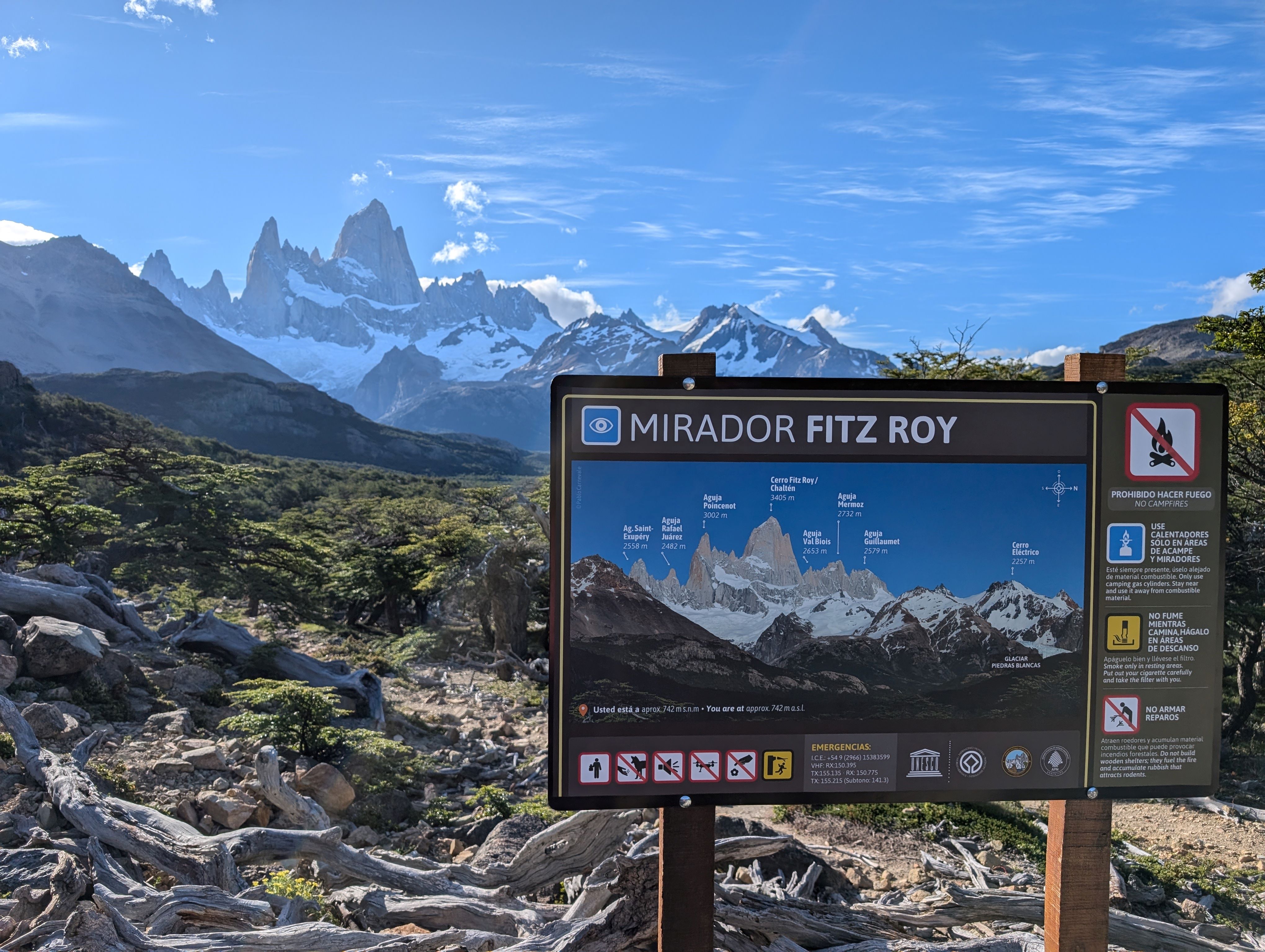
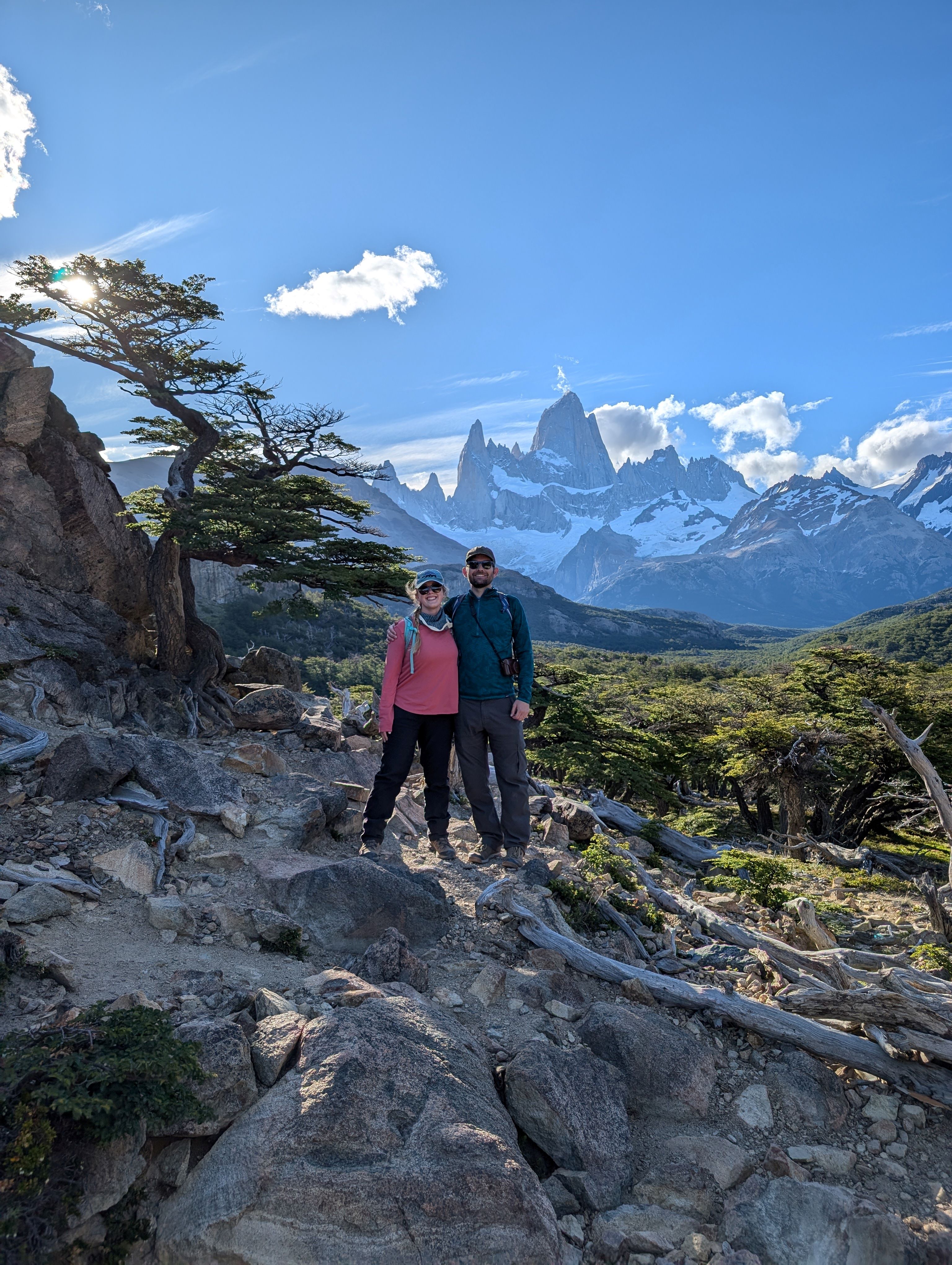
On our hike up, there was nearly a line coming down the mountain, but as it was already 6:30pm when we left the lake, we mostly had the trail to ourselves on the hike back. Just another way that our delayed timing ended up being serendipitous—had we left for our hike around 1pm as planned, we wouldn’t have enjoyed so many quiet moments to ourselves in the fading sunlight, as if the landscape was breathing a sigh of relief with us that we had finally arrived.
Though my feet brought me back to town, my heart continued to soar above the mountains long after the hike was completed.
Next stop: Tierra del Fuego.
 The Curiosity Chronicles