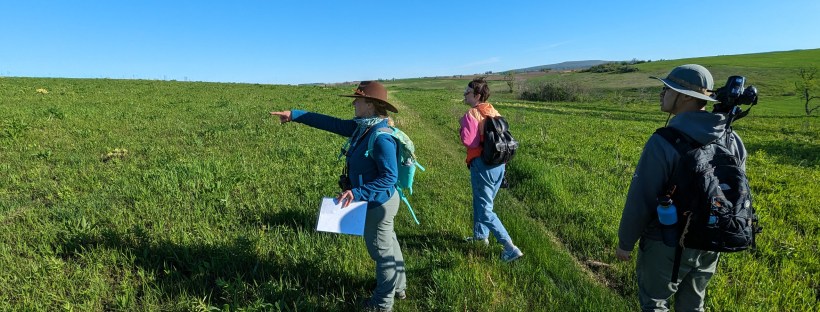
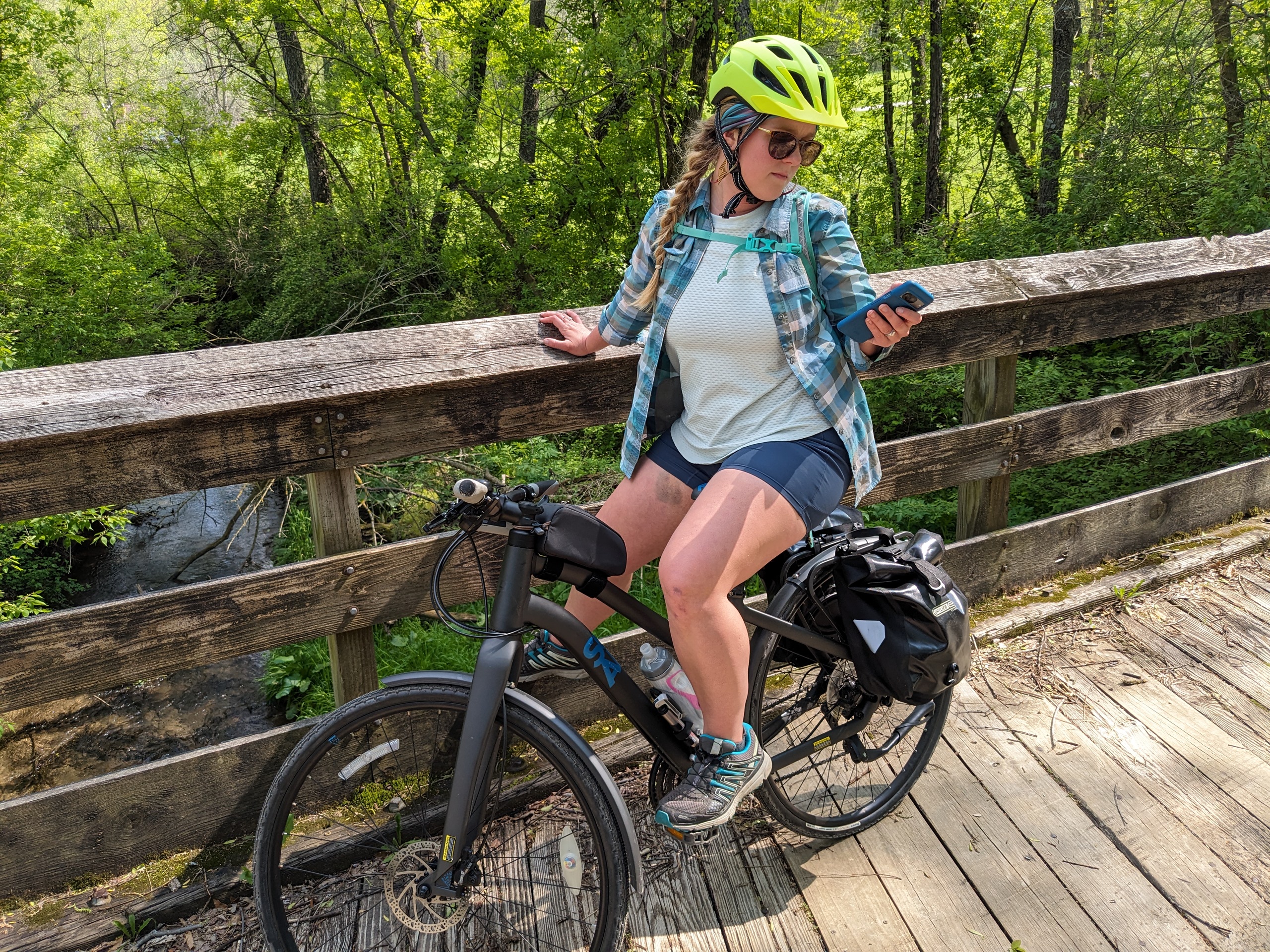
John & I set off on our two-day journey on Friday morning, packed and ready for the longest bike ride either of us had ever done.
Our destination: Mounds View Grassland, a property owned and managed by The Prairie Enthusiasts that was sure to have specialist grassland bird species I would have a hard time finding by bike in Madison. Still, it was 35 miles away.
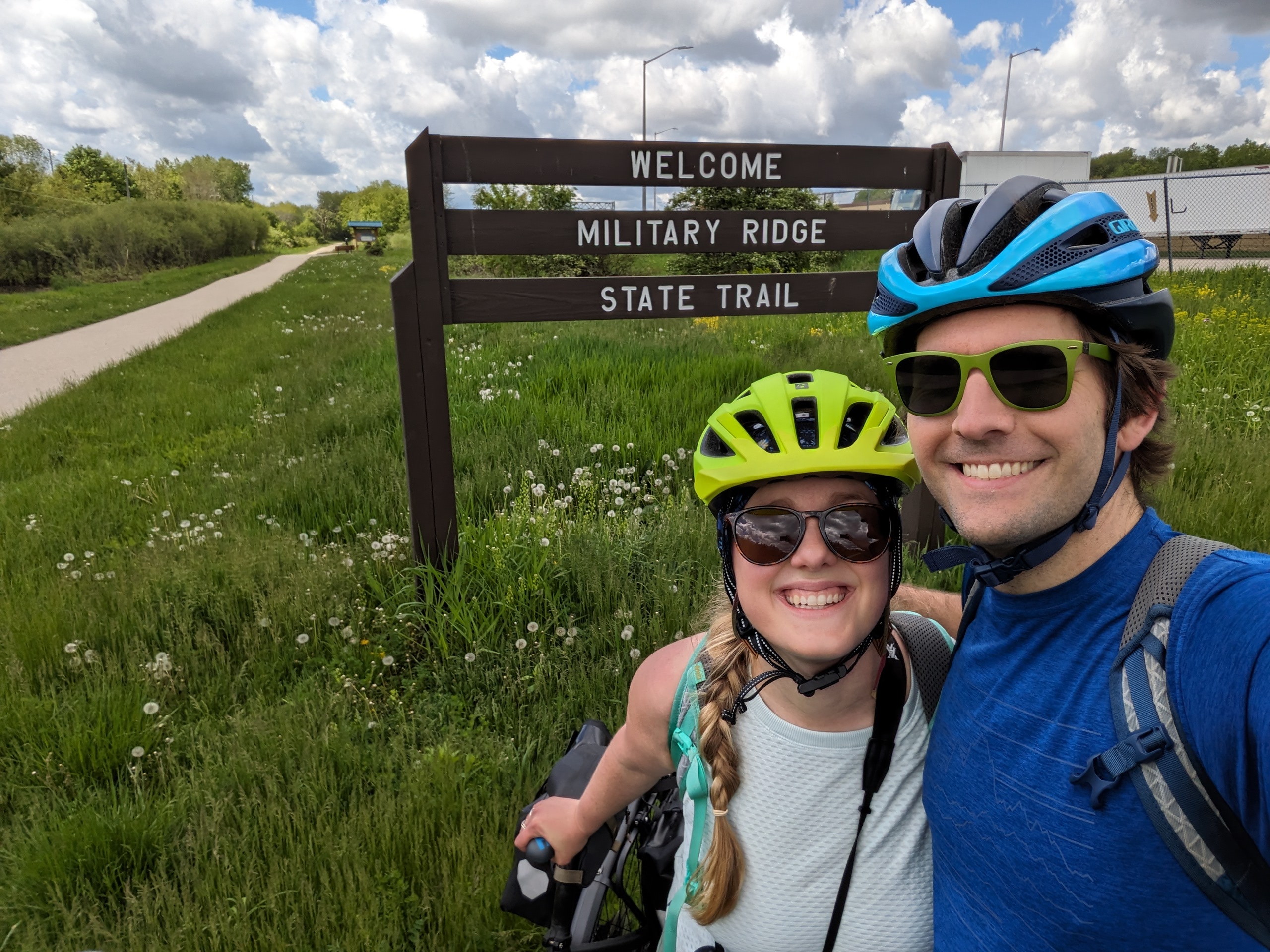
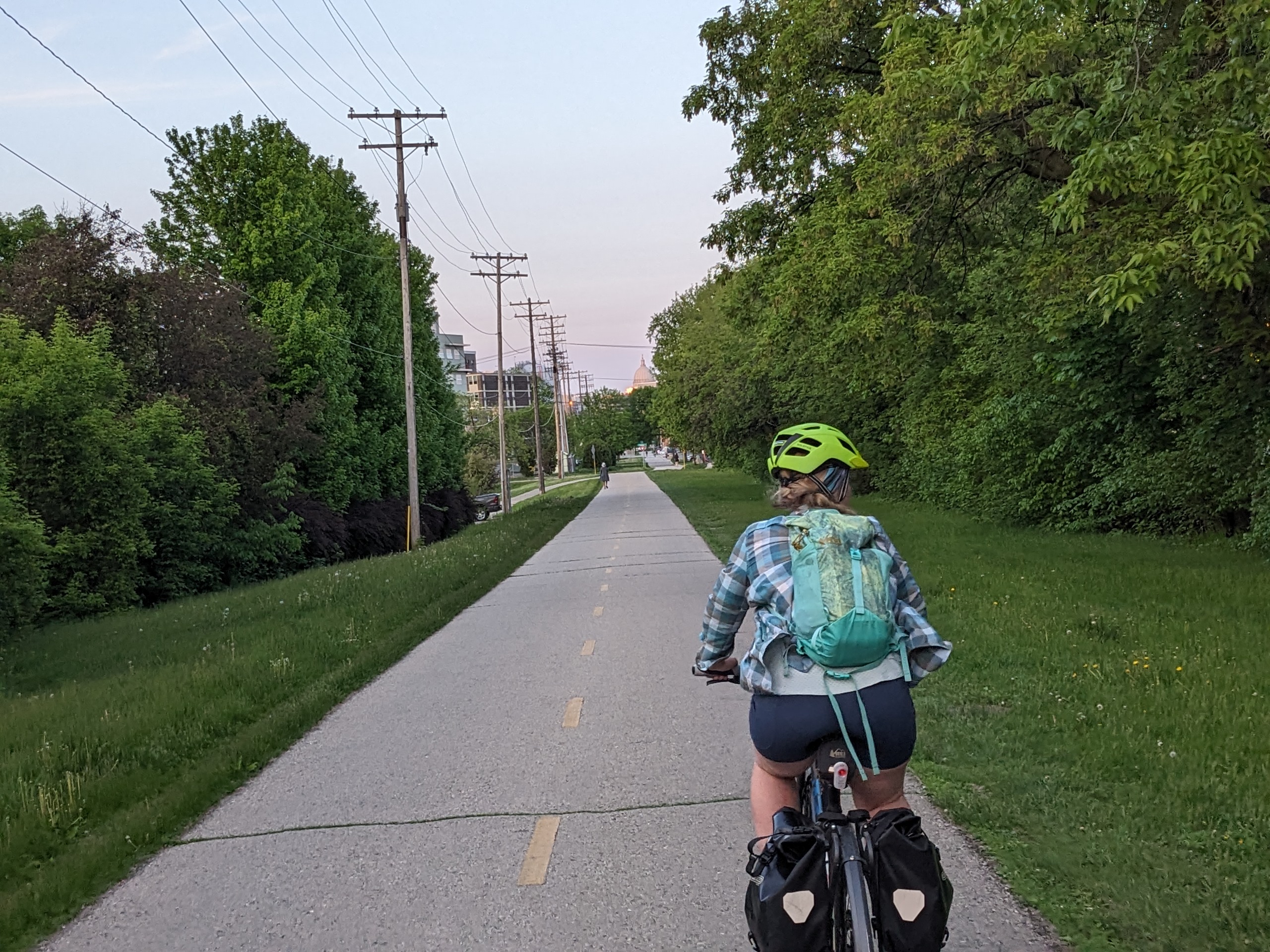
We were able to bike through Madison taking bike paths and then connected to the Military Ridge State Bike Trail, a 40-mile bike trail that connects Madison and Dodgeville to the west. This trail follows a centuries-old path & road that was turned into a railroad in the 1880s. In the 1980s after the railway closed, it was turned into a “rail trail” for biking and walking. Once we got out of Madison and Verona and into the countryside, it was like we were spreading our wings. Our journey had begun.

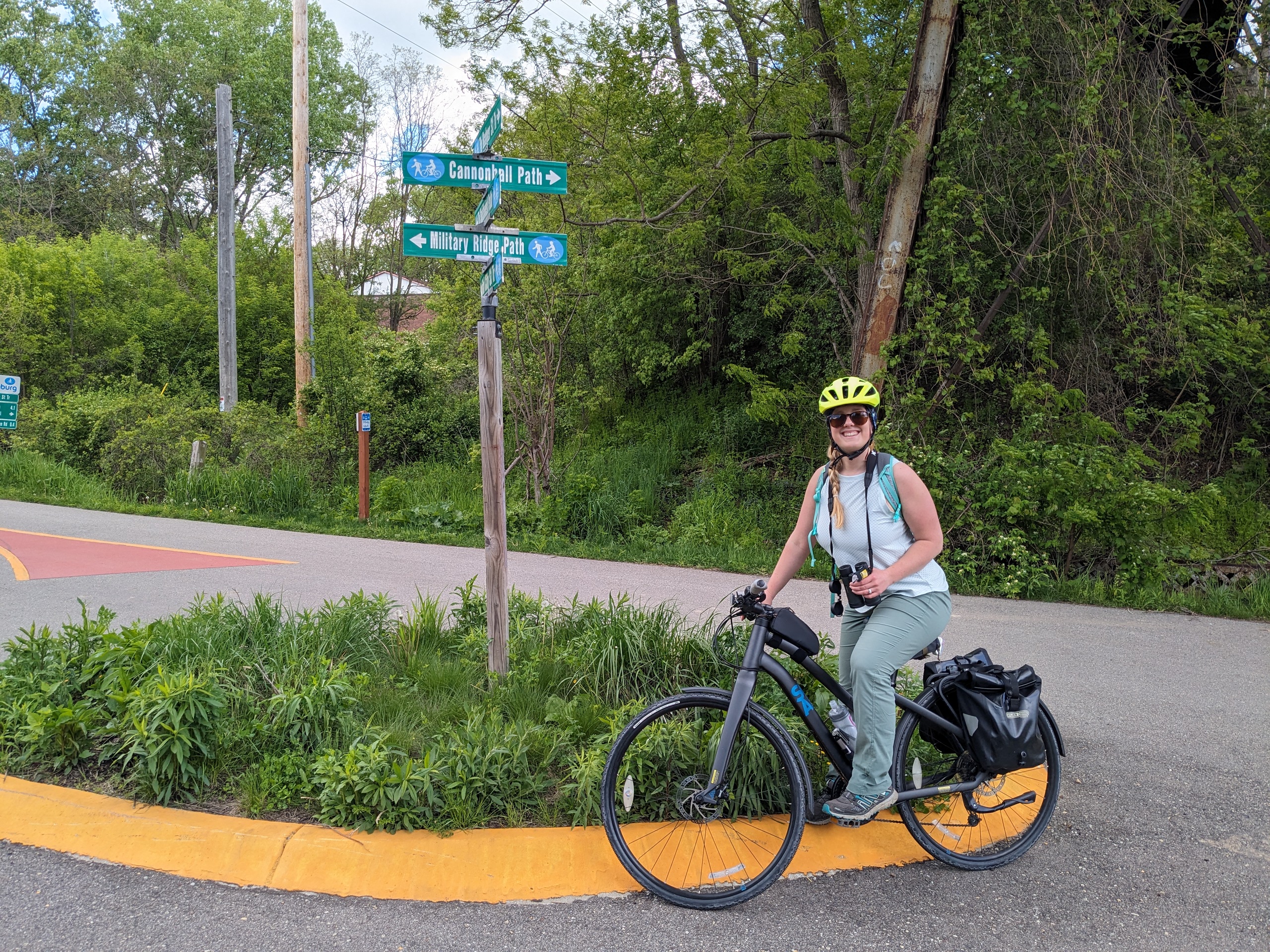
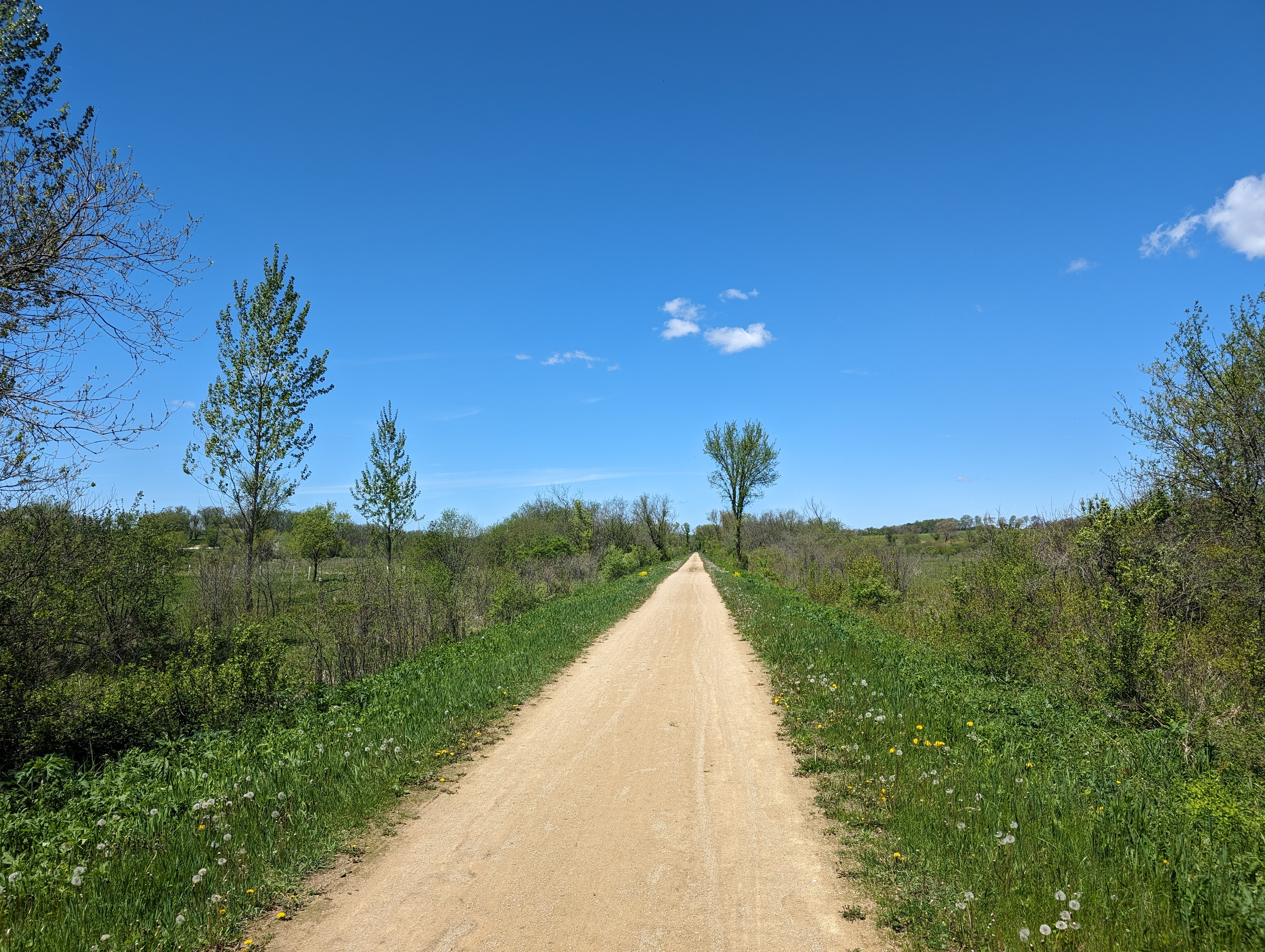
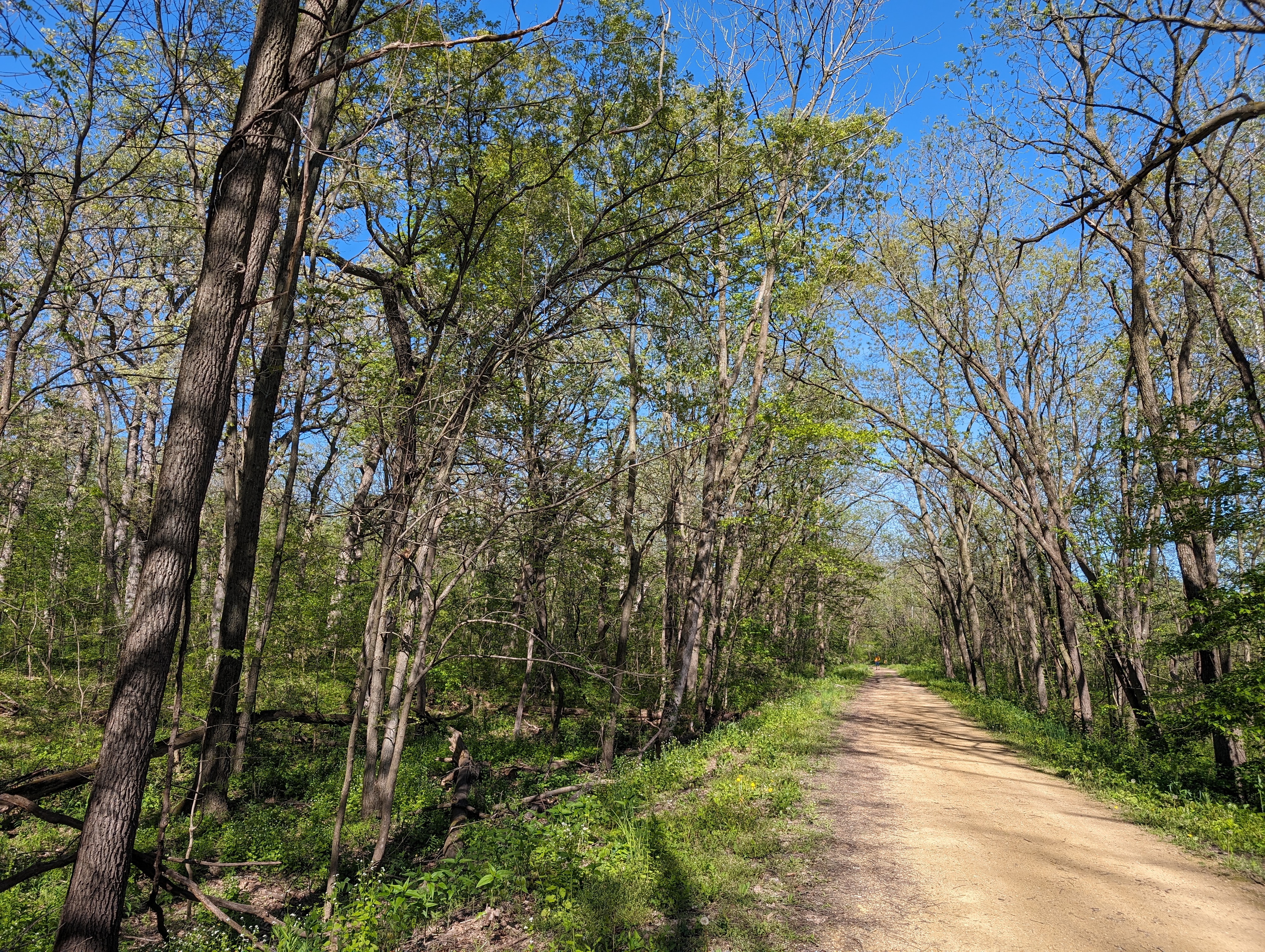

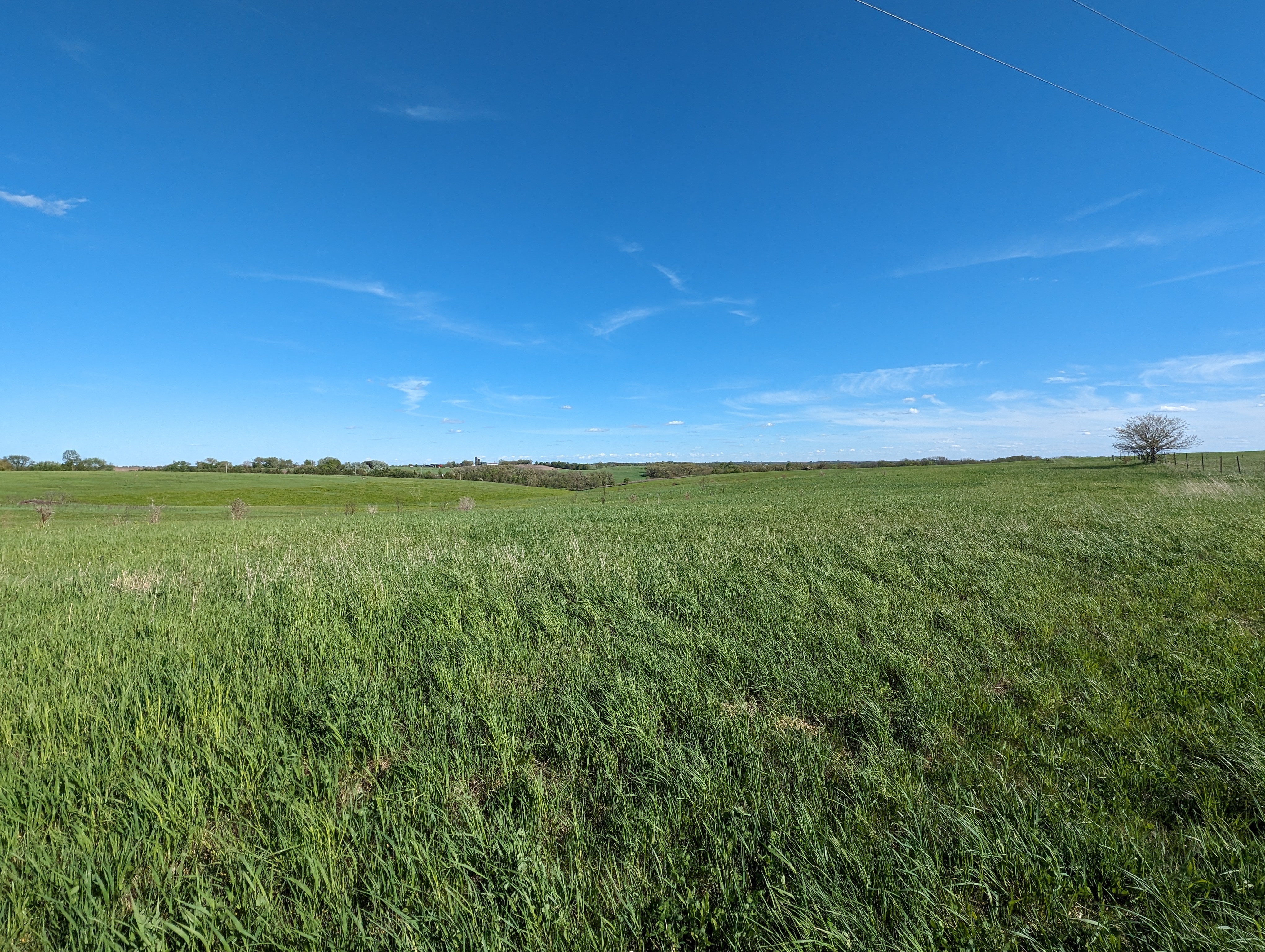
Eventually past Mt. Horeb we turned off of our bike trail onto a county road. On our ride up and down rolling hills, I stopped and spotted an eastern meadowlark on a distant shrub – my first new bird. Years of childhood wildlife-watching in the western national parks with my parents had trained me well to be a birder.
We also pulled into Thompson Memorial Prairie, a remnant of dry prairie left untouched by agriculture mostly due to the fact that the limestone bedrock below was too close to the surface to cultivate the land. We heard an upland sandpiper whistle and grasshopper sparrows singing, and saw eastern meadowlarks and bobolinks. To most of the world, this looked like a 700-acre patch of grass. To these birds, it was everything.



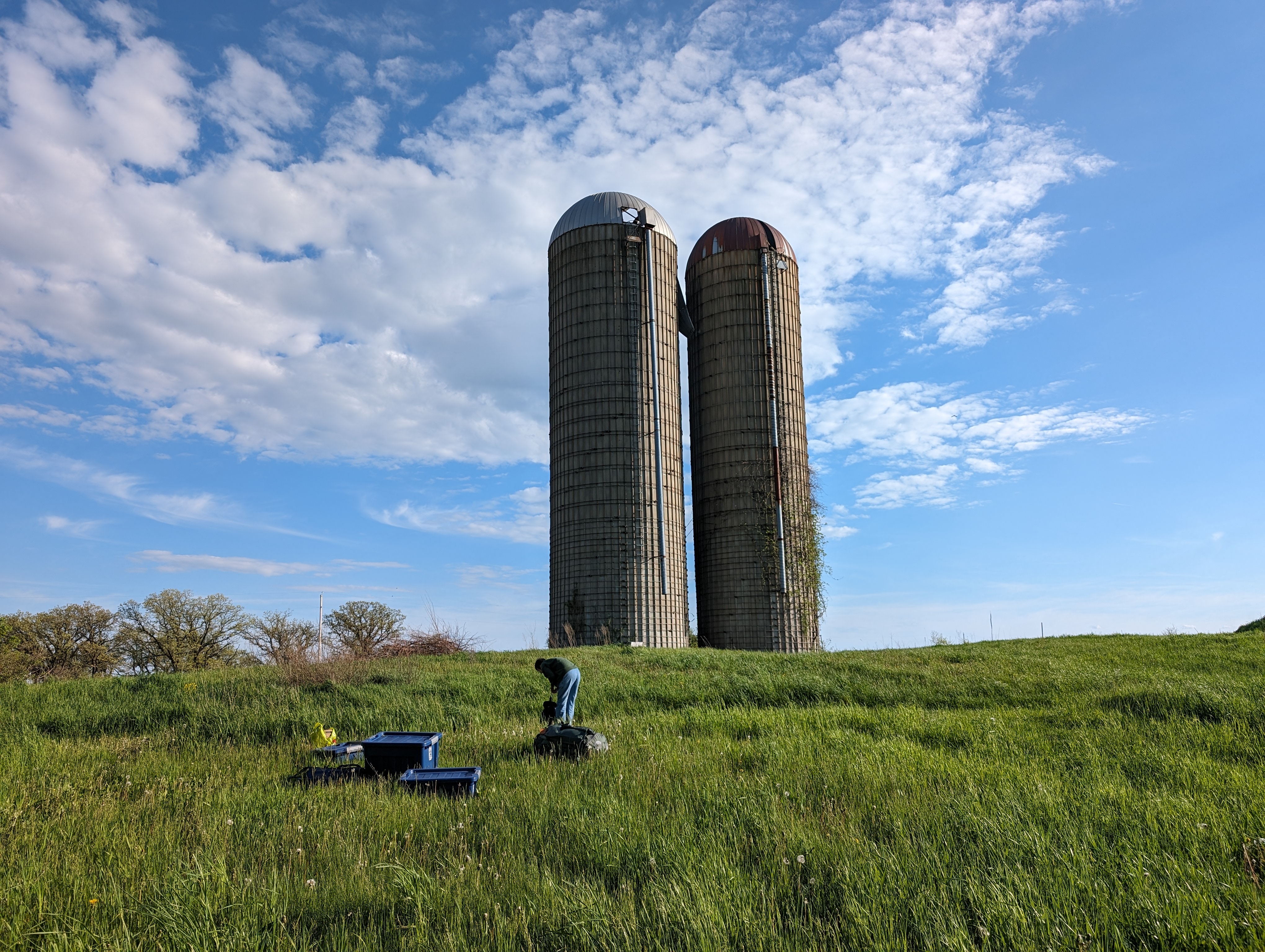
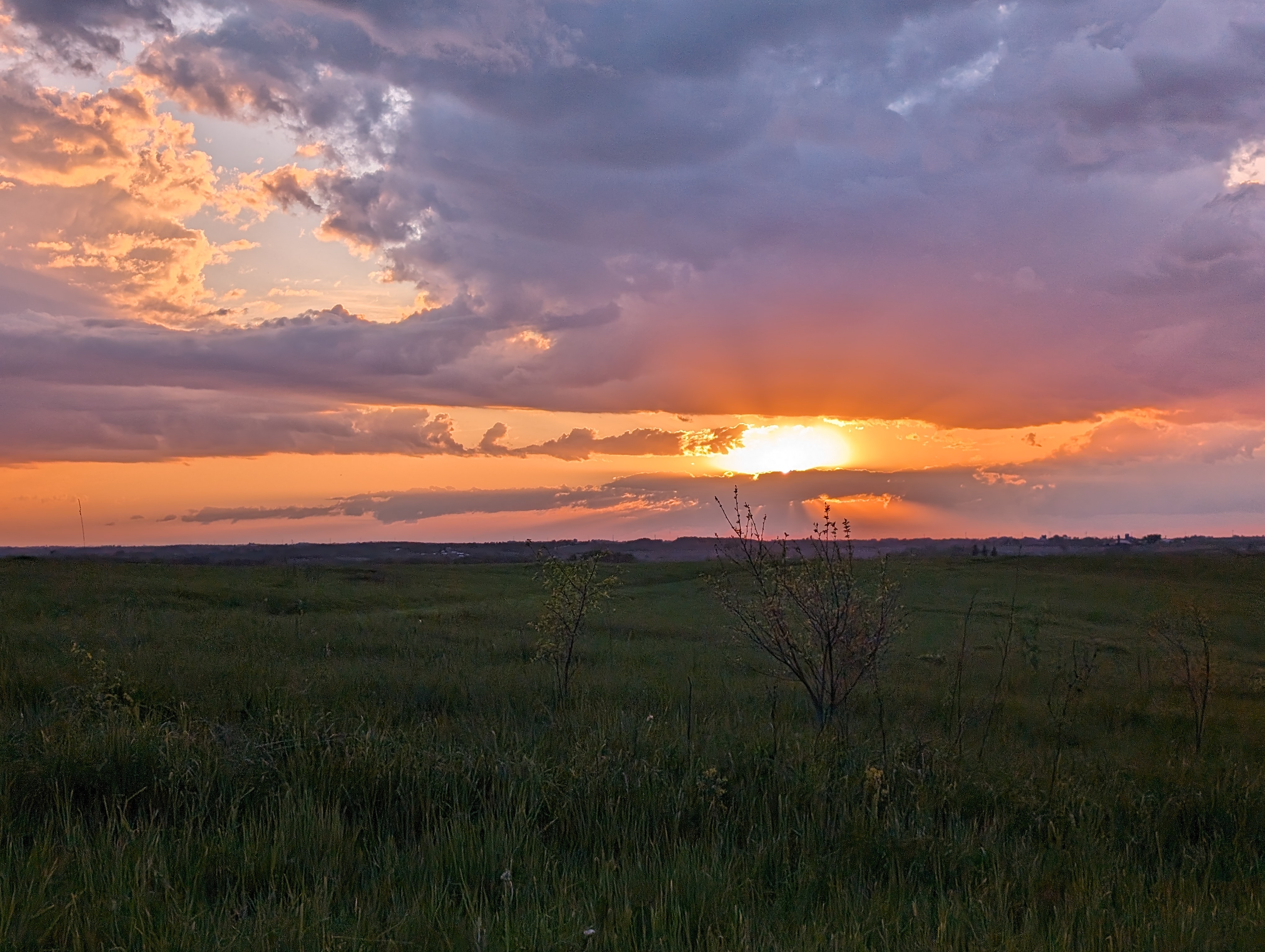
We made it to our camping location at a friend-of-a-friend’s farm near the grassland by 6pm after birding throughout the ride. Thanks to our loyal friend, we didn’t need to pack our camping gear by bike, and she met us at our camping stop with gear, food, and water. After setting up our tents, the three of us looked out over the preserve to enjoy the setting sun, and I added orchard orioles and a pheasant to my Green Big Year list. The sunset washed the sky in golden-hues against the dark rain clouds and the grass was a bright spring green.



After bed we were welcomed by a rare and miraculous sight for southern Wisconsin—the northern lights. A geomagnetic storm was pushing aurora visibility into our state, and as the rain passed, the sky cleared. We waited eagerly. Around 1 in the morning I stuck my head out of our tent and looked up at the stars. I first scanned the sky and then my mouth dropped open in amazement and shock. While John & I had seen the northern lights numerous times during our summers in Alaska, I had never expected to see them overhead in the Midwest.
Waves of bright green and purple columns stretched from the west to the east and danced directly over our tent. I leaned back out of the tent door with my hands in the grass to prop me up, still warmly tucked into my sleeping bag. I watched the green waves dance for the better part of an hour, absolutely in awe. As we watched, I heard a great horned owl call in the distance, its deep soft hoots echoing across the prairie—hoo-h’HOO-hoo-hoo—a new bird for my Green Big Year list.
It has always been hard for me to go back to sleep when the sky is awake, but as the light began to fade, so did I.


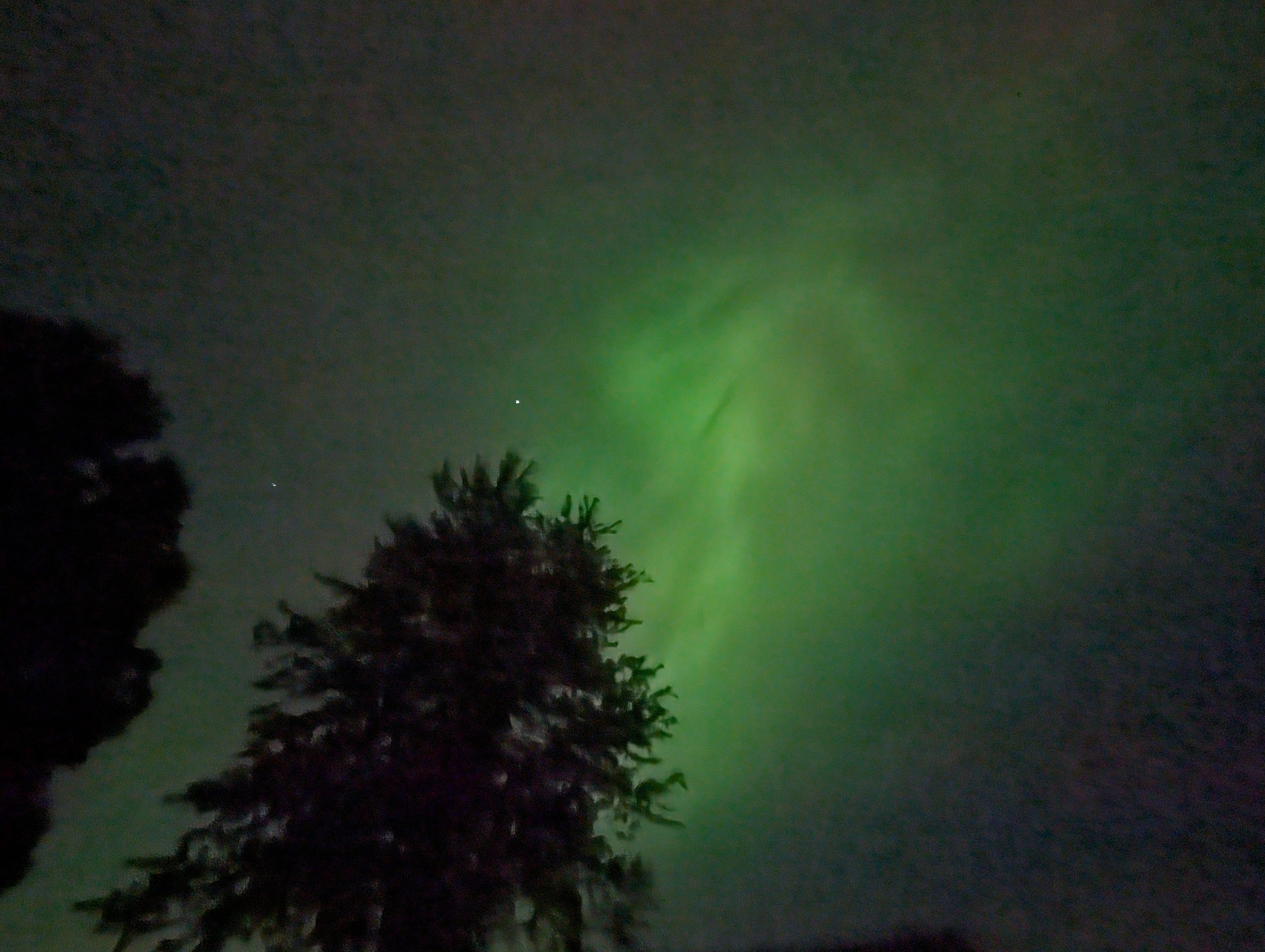
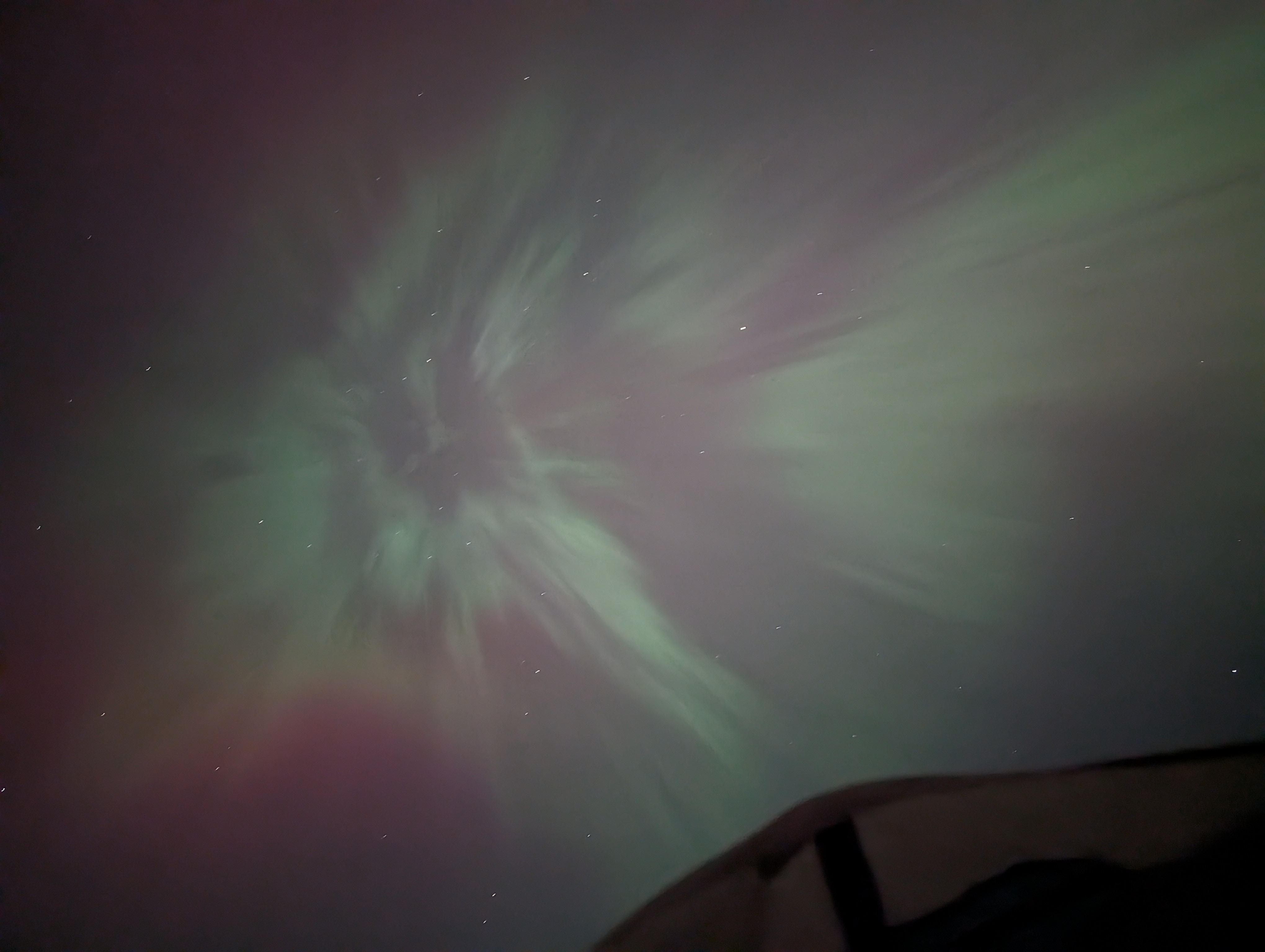

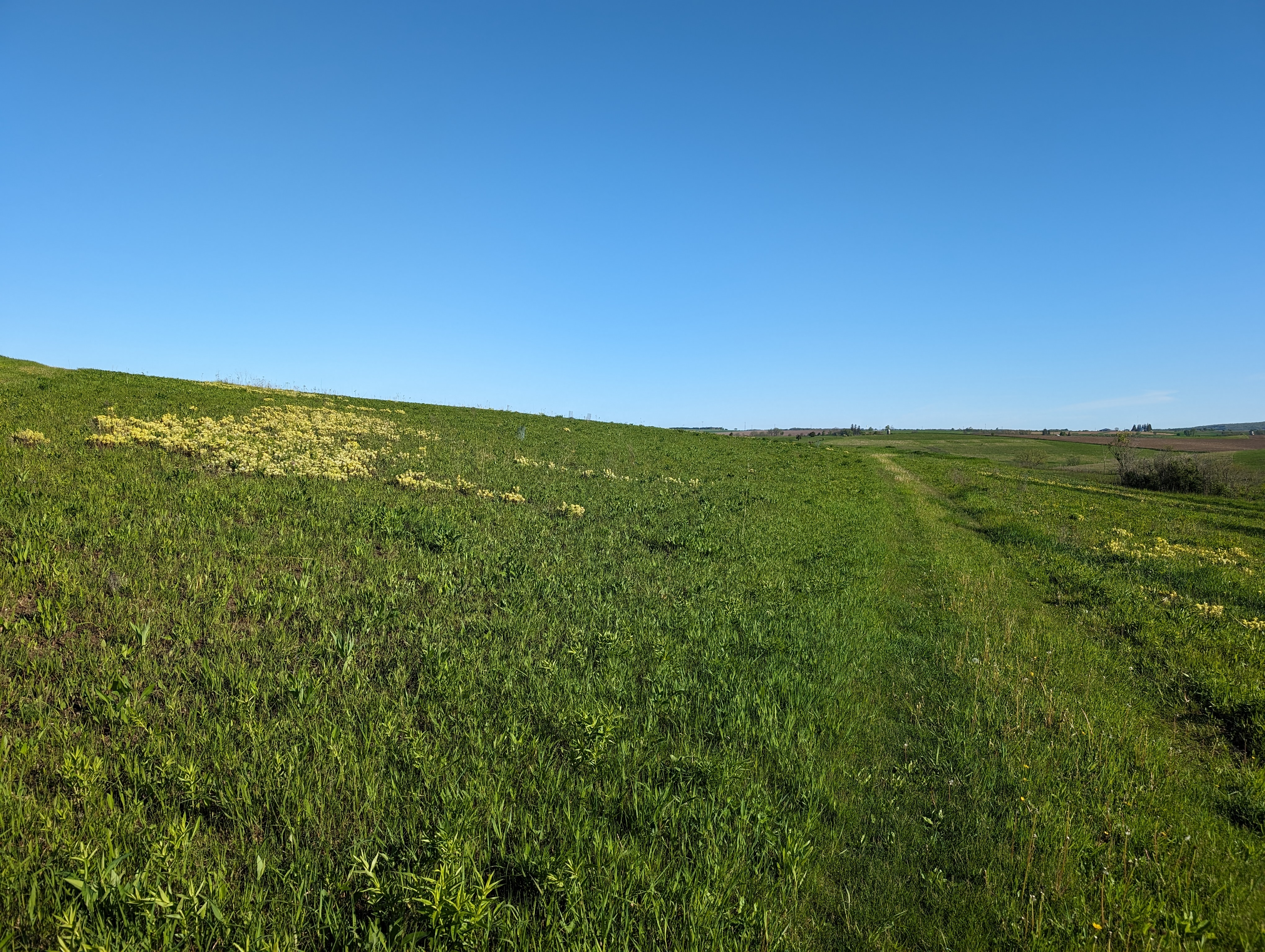
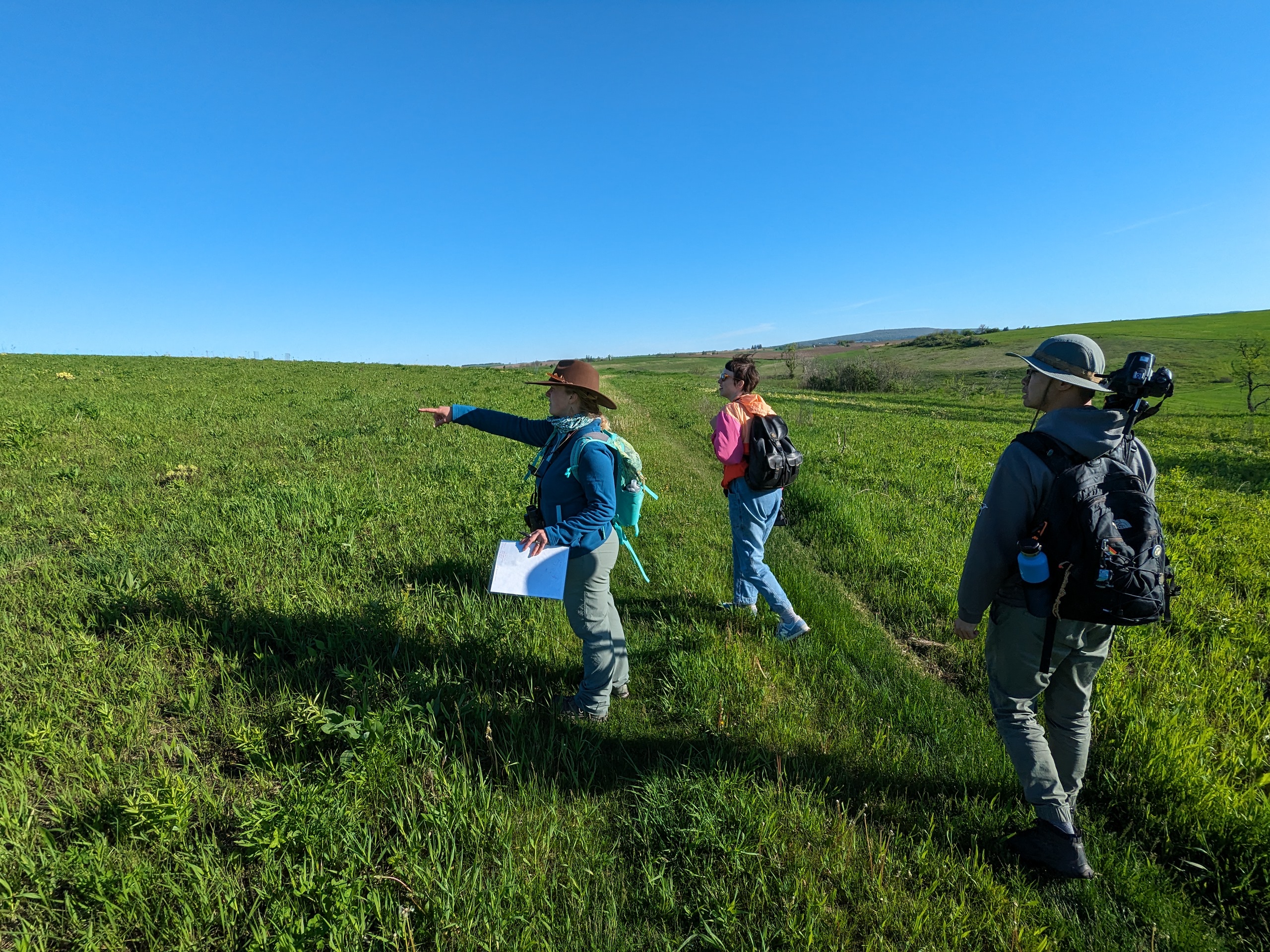
The next morning we rose and rode early and completed the last mile to our grassland by 7am. Another friend joined us to search for grassland birds and I was grateful for another listening ear. Red-headed woodpeckers greeted us on the driveway as we entered the property and parked our bikes. From the parking lot I heard savannah sparrows, eastern wood peewees, orioles, eastern meadowlarks, and Tennessee warblers.
In the grassy fields, we heard the elusive Henslow’s sparrow’s song, more grassland sparrows, and heard and saw a clay-colored sparrow that has thus far evaded me in Madison, bringing my count from the trip up to 10 new birds.
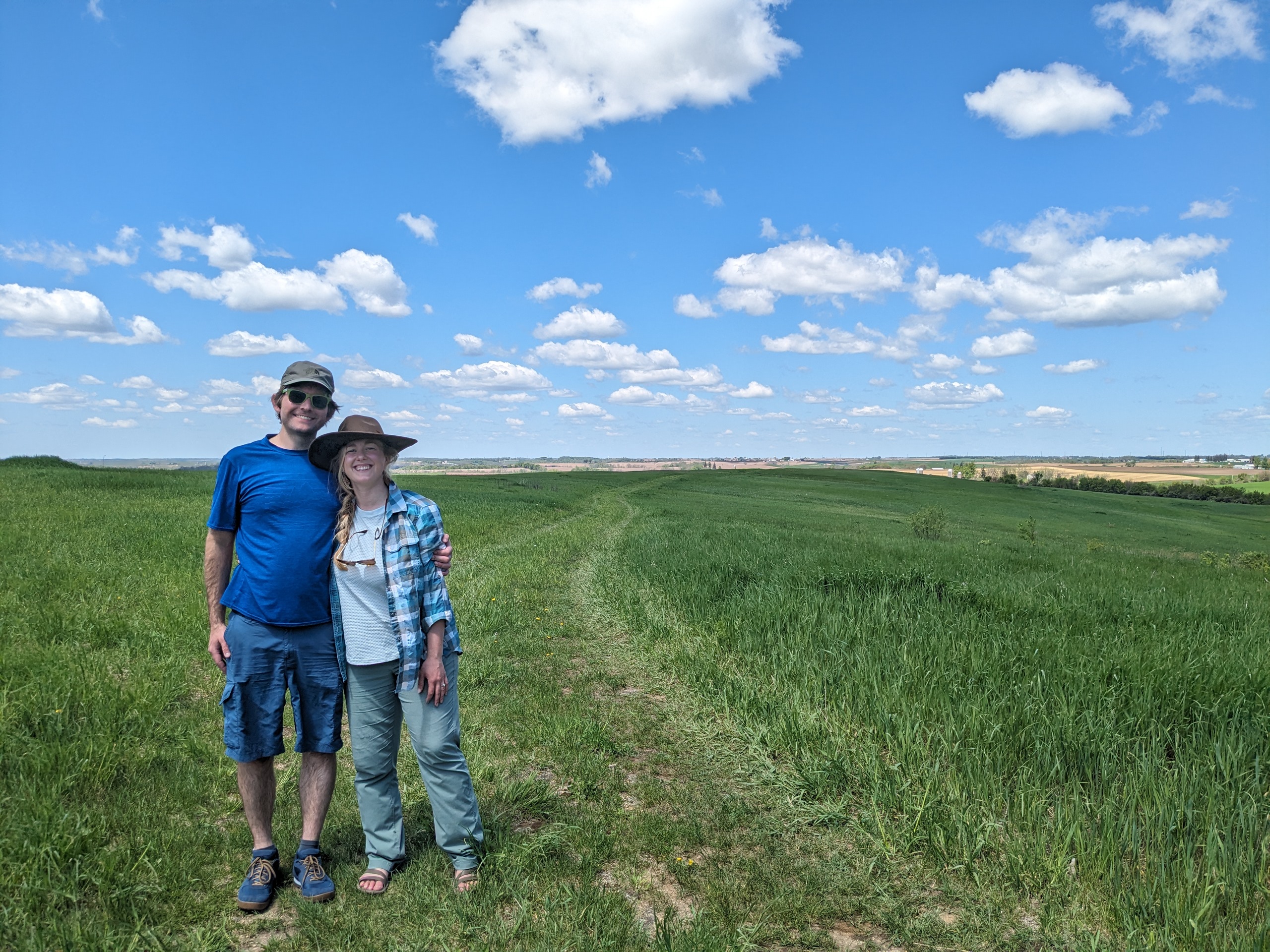
As we climbed over grassy ridge lines, I fully settled into the beauty of this place and recognized the effort it takes to create such a healthy prairie habitat. Once a working farm, The Prairie Enthusiasts have been working with the owners to restore the original grasslands and prairies to provide habitat for the endangered and threatened species that find a home here. This site has more than 220 species of native plants that support butterflies and insects, as well as rare grassland birds, like the threatened Henslow’s sparrow. John and I reflected on how much land we had passed through on our way out from Madison, and I noted that even with all that space, so many of these grassland species had to come to this postage-stamp parcel for what they needed to survive.

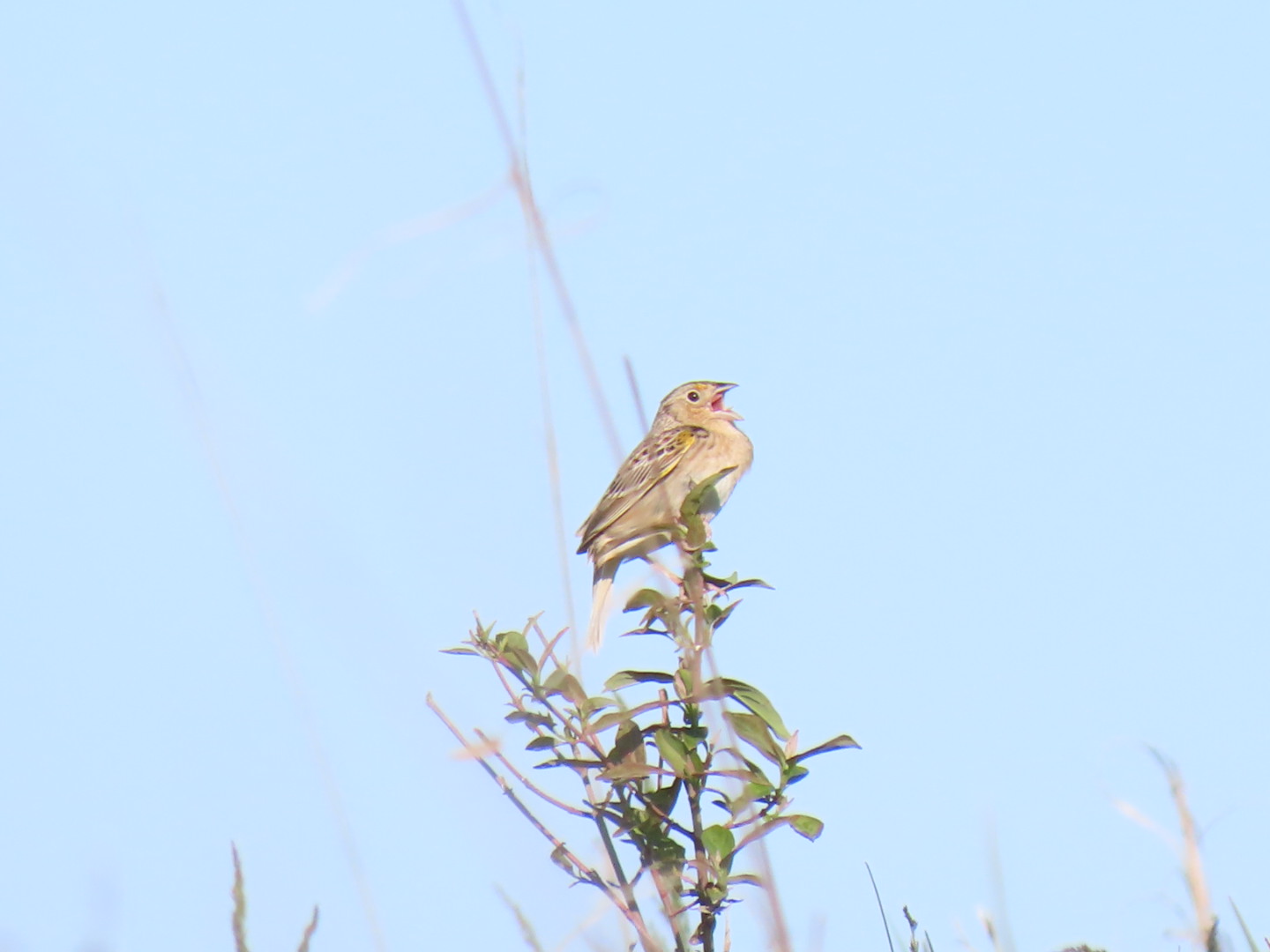
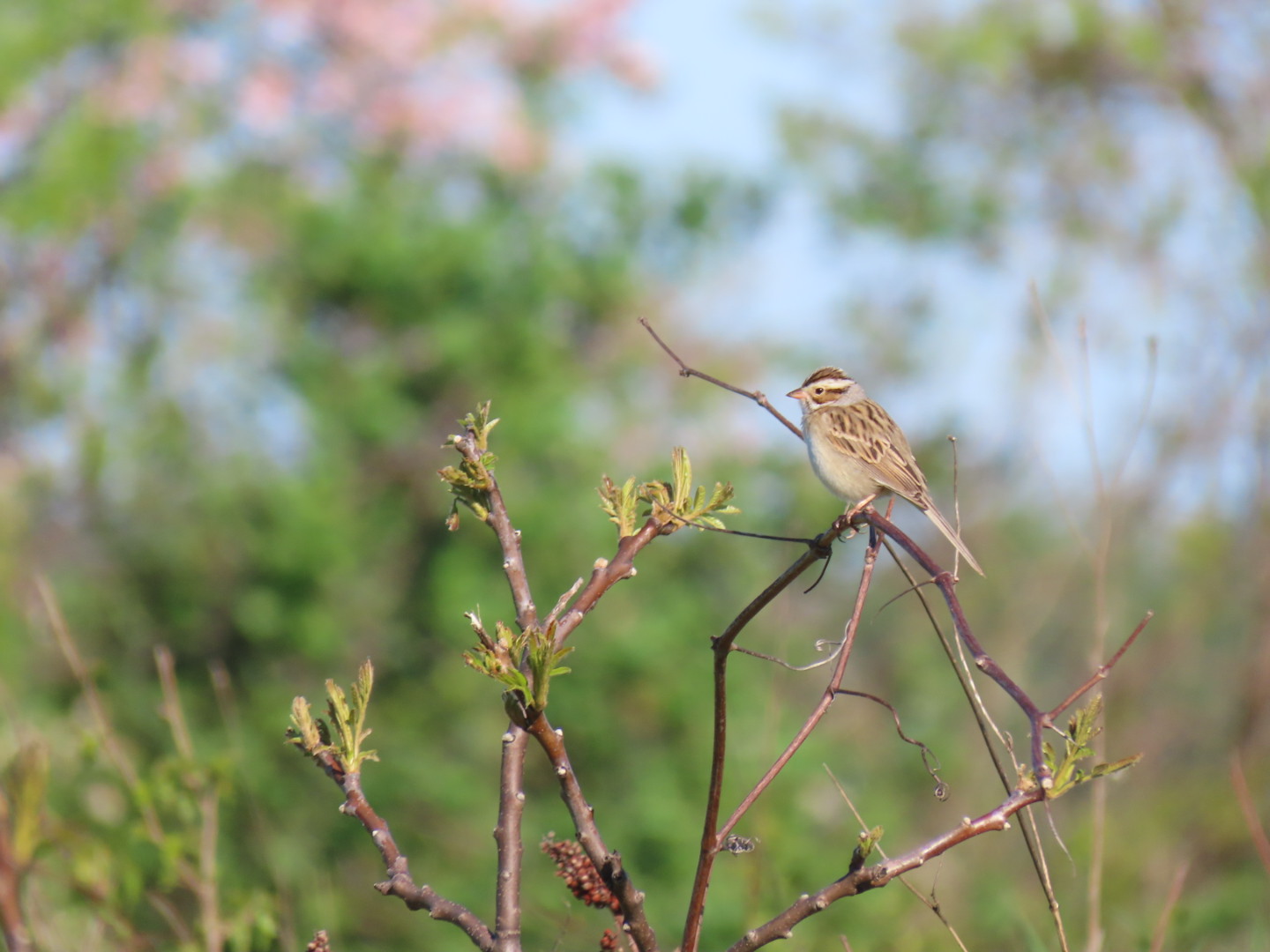

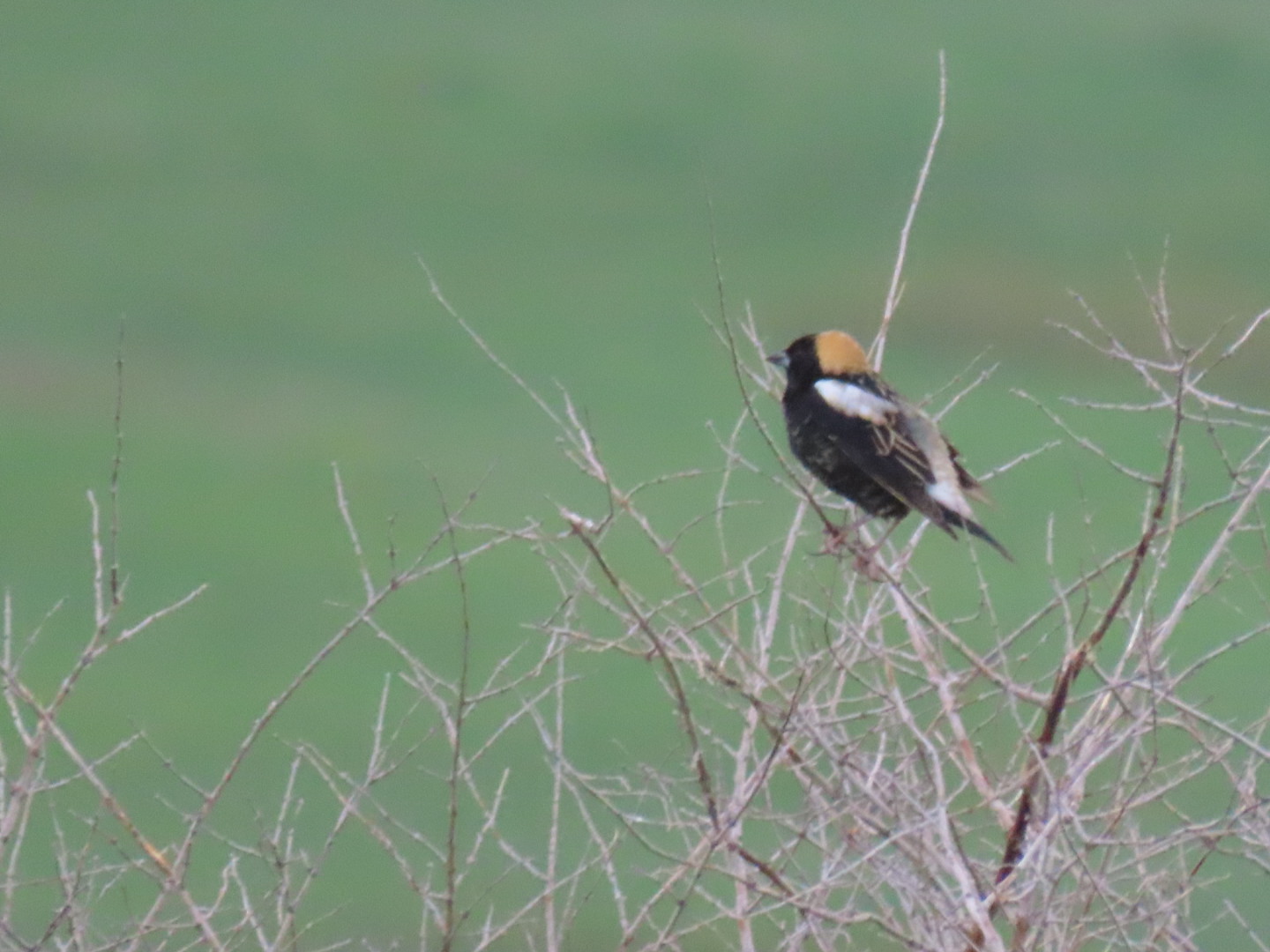
From top to bottom and left to right: red-headed woodpecker, grasshopper sparrow, clay-colored sparrow, and bobolink.
I hadn’t expected leaving the grassland countryside to be so hard, but I was sad to go. Red-headed woodpeckers bid us farewell as we left the property. Before getting back on the bike trail as we sped down the county road, I spotted an insignificant brown bird in the field to our left and slammed to a halt. I snapped a few grainy photos, and after some deliberation I realized it was a female horned lark, a life-list first for me and an important find for the Green Big Year. I was astonished and thrilled.
Luckily the ride home was mostly downhill for miles, a grade so low that we hadn’t realized we’d been biking uphill for hours the day before. The last hour of riding is always the hardest after a long day, but the commuter paths in Madison made our final miles fly by.
For two days, we were transported to another world outside of our usual patterns that we so easily take for granted. I am still in awe of where we managed to take ourselves by bike, and the next time I drive out of town with my car I’ll be reflecting on how much energy and fossil fuel it takes to go every mile.
Trip bike mileage: 72.7 miles
New birds found: 11
Total Green Big Year birds: 162




 The Curiosity Chronicles
One thought on “Sanctuary in the Southwest: Mounds View Grassland”